
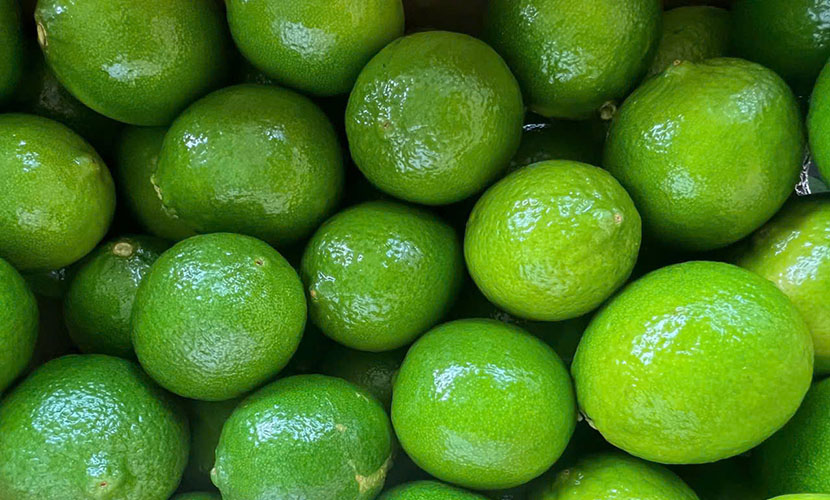
The agricultural sector is facing numerous challenges due to small-scale, fragmented production and increasingly complex market fluctuations. However, many cooperative linkage models of Vietnam’s green lime in Vinh Long Province have proven to be sustainably effective.
Building and strengthening the value chain from production to consumption helps farmers secure stable output markets. Also, such a value chain minimizes risks caused by market price fluctuations. This, in turn, increases farmers’ income and improves their living standards. Therefore, it lays the foundation for Vinh Long Province to develop modern agriculture.
Vietnam’s green lime
One of the most successful linkage models is the Thanh Chi Seedless Lime Cooperative in Tan An commune. Currently, each cultivation hectare of Vietnam’s green lime with the cooperative brings farmers a profit of 500–600 million VND. In comparison, this profit is many times higher than that of rice cultivation on the same land.
Mr. Tai, Director of the Thanh Chi Cooperative, said that this partnership model has maintained for many years. To date, the cooperative has established a 185-hectare raw material area for Vietnam’s green lime cultivation. The cooperative cover large areas of seedless lime in the communes of Tan An, Song Loc, Luong Hoa, Hoa Hiep, and Hieu Thanh.
Meanwhile, it has 10 official members and 103 affiliated households. The entire output from this lime-growing area is purchased by a Vietnamese exporter for shipping to the Netherlands. At the same time, the purchase prices are always higher than market rates.
According to Mr. Tai, the investment cost for one hectare of Vietnamese seedless limes is about 100–130 million VND. If investing in automatic sprinkler irrigation system to reduce labor, the initial investment is around 170 million VND per hectare. After 18 months of planting, Vietnam’s green lime trees begin to bear fruit.
Also, from the third year onward, they yield a stable output of 50–70 tons of fresh seedless limes per hectare per year. With a harvest cycle of twice per month, farmers can recover their initial investment after only 12–20 harvests. The seedless lime trees have a lifespan of over 20 years.
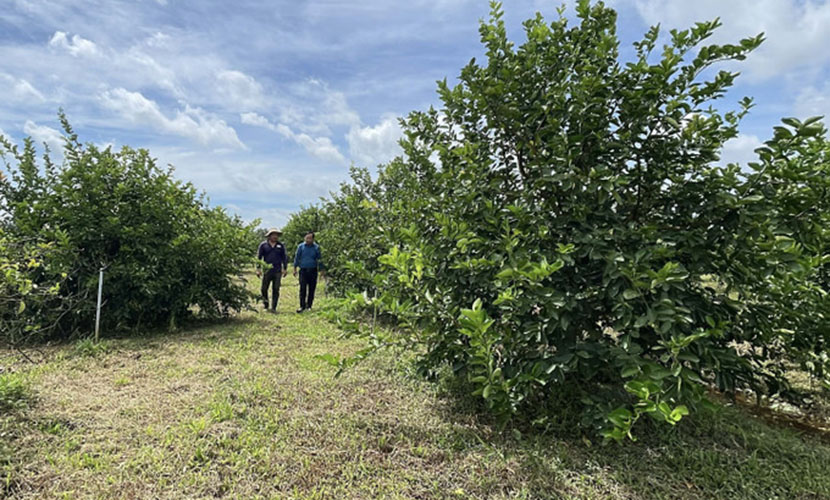
Vietnam’s green limee farm
Currently, the cooperative purchases and supplies an average of 120–150 tons of Vietnamese fresh lime per month. During peak season, this yield increases to 200–250 tons per month. However, due to high import demand from its partner company, the cooperative is encouraging farmers to expand the cultivation area. Therefore, it aims to establish a 300-hectare raw material zone by 2027.
The cooperative will provide farmers with seedlings and technical support to ensure compliance with export standards. In particular, they can access preferential loans of 50 million VND per household to invest in production. At harvest time, the cooperative guarantees product consumption at prices higher than the market rate. Specifically, the price is not lower than 10,000 VND per kilogram.
Over the past three months, market prices of fresh limes have dropped sharply to only 6,000 VND per kilogram. However, the cooperative has maintained its purchasing price at 14,500 VND per kilogram. Previously, from February to May, the cooperative’s purchase price reached as high as 28,000 VND per kilogram.
After recovering the initial investment and production costs, average profit reaches 2,000–3,000 VND per kilogram. As a result, farmers can achieve very high profits from Vietnam’s green lime cultivation.
Mr. Quoc, a farmer from Tan An Commune, joined the Thanh Chi Cooperative’s seedless lime program at the end of 2022 with an initial area of 0.9 hectares. Eight months later, he expanded his cultivation of Vietnamese seedless lime by another 0.4 hectares.
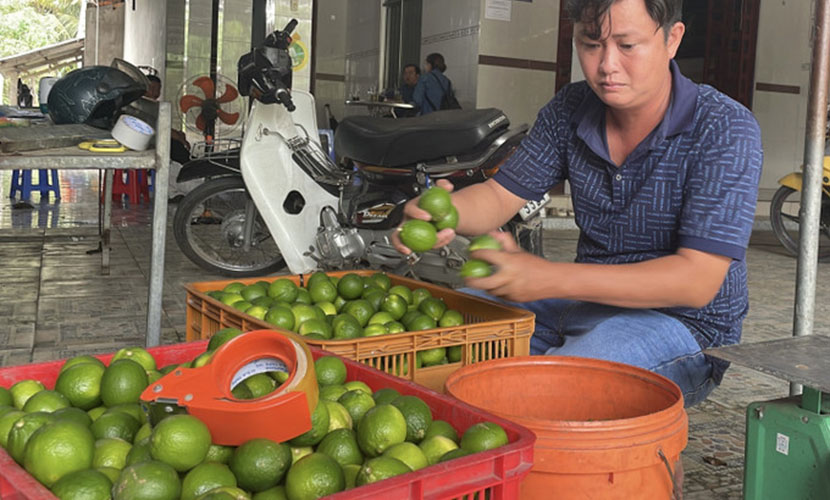
Green lime from Vinh Long
To reduce labor costs, he installed an automatic sprinkler irrigation system. Consequently, the total investment for his 1.3-hectare lime orchard reached over 200 million VND. This amount includes a 50 million VND preferential loan from the Farmers’ Support Fund.
From Lunar New Year 2025, Mr. Quoc’s lime orchard began bearing fruit. He estimates that by the end of the year, the yield will be able to reach about 16 tons. Therefore, his family will have fully recovered their initial investment.
From 2026 onward, the orchard is projected to produce around 60 tons of Vietnam’s fresh limes per hectare. After deducting costs for fertilizers, pesticides, and labor, the family anticipates a stable annual profit exceeding 600 million VND per hectare. This income is significantly higher than their previous income from rice cultivation.
According to Mr. Thuc, Head of Tan An commune, Tan An has a total agricultural area of 5,700 hectares, including 3,500 hectares of rice fields. As part of its agricultural restructuring program, the local government has promoted converting low-efficiency rice land to alternative crops and livestock. This is done with the aim of increasing profitability per unit area while adapting to climate change.
In recent years, converting low-yield rice land into seedless lime cultivation in partnership with the Thanh Chi Cooperative for export to the Netherlands has proven highly effective. This model ensures stable market outlets amid price volatility, supports climate resilience, and delivers high profits to farmers.
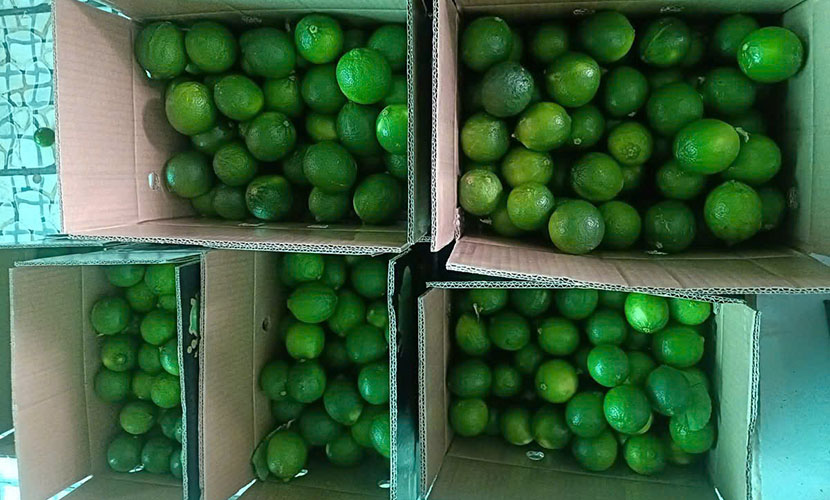
Vietnam’s green lime boxes
Local authorities are now actively encouraging farmers to expand seedless lime cultivation. In addition, they are assisting farmers in accessing support policies from the Cooperative Alliance and Farmers’ Association for production transformation.
Agricultural production in Vinh Long remains largely small-scale and fragmented, making it vulnerable to market and price fluctuations. Linking production through new-style cooperatives is considered a fundamental solution. Therefore, it helps stabilize markets, improve productivity and quality, and enhance the added value of agricultural products.
Vinh Long currently has 377 agricultural cooperatives with a total registered capital of over 292 billion VND. These cooperatives not only support members during production. In addition, they collaborate with enterprises to build sustainable value chains, increase added value, and promote long-term agricultural development.
To date, the province has 94 cooperative groups, 85 cooperatives, and 4 linkage groups. In total, they participate in the value chains of key local agricultural products.
Mr. Loc, Chairman of the Vinh Long Cooperative Alliance, highlighted the growing role of new-style cooperatives in reorganizing agricultural production toward larger-scale, market-oriented operations. Through cooperatives, members receive training and technology transfer to apply scientific advances.
As a result, they gain access to preferential credit, high-quality crop and livestock varieties, and reasonably priced inputs. These benefits help farmers reduce production costs while improving productivity and product quality.
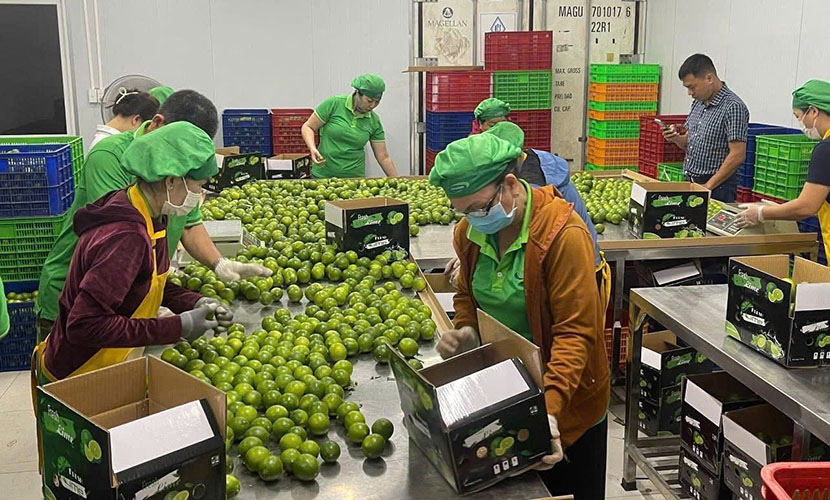
Vietnam’s green lime factory
Cooperative members also have opportunities to participate in trade fairs, conferences, workshops, and trade promotion programs to showcase their products. Moreover, they can identify business partners and secure stable, sustainable supply contracts with enterprises.
“Farmers no longer have to ‘swim alone’ in a risky market economy. When cooperatives operate effectively, they receive comprehensive support from production to consumption,” Mr. Loc affirmed.
Looking ahead, the Vinh Long Cooperative Alliance will strengthen communication about the role and importance of cooperatives. In doing so, it aims to build consensus among officials, party members, and the public. This is crucial to overcome lingering misunderstandings or prejudice toward old-style cooperative models.
Simultaneously, the Cooperative Alliance will promote and replicate successful advanced cooperative models to spread effective practices. The success of these cooperative linkage models confirms that developing a collective economy is a sustainable path to increasing agricultural value and stabilizing farmers’ livelihoods. Furthermore, it advances Vinh Long’s agriculture toward modernization, efficiency, and global integration.
Vietnamese source: https://dantocmiennui.baotintuc.vn/lien-ket-trong-chanh-khong-hat-nong-dan-lai-nua-ty-dong-moi-ha-post361800.html
If you are interested in Vietnamese green lime exports, please contact us:
Company: Agrideco Vietnam Co., Ltd.
Address: No 02, Alley 325 Kim Nguu, Vinh Tuy Ward, Hanoi, Vietnam
Tel/Kakao Talk/Whatsapp: +84 989 649 804
Website: https://agridecovietnam.com
Email: agridecovietnam@gmail.com