
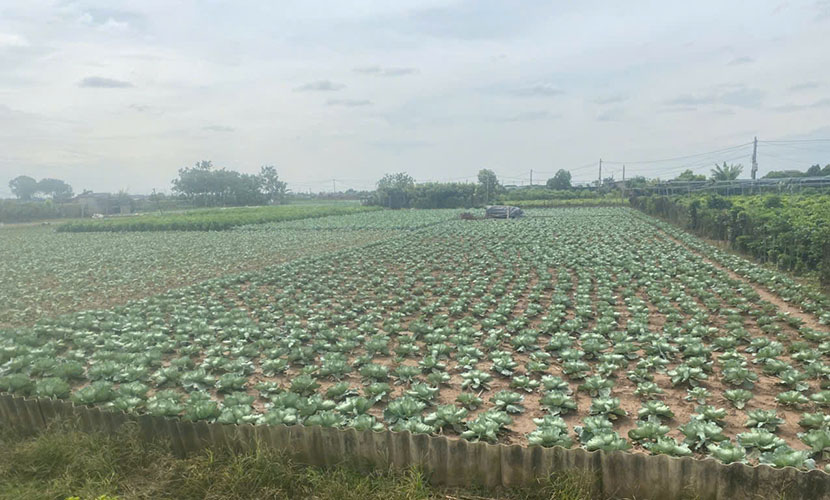
Van Duc commune (Gia Lam district) is one of the largest production areas of Vietnamese vegetables in Hanoi. Recently, the capital has supported with implementing good agricultural practices. As a result, Van Duc vegetables have officially received safe certifications, such as Vietgap standards.
Nguyen Van Minh is the director of the Van Duc Agricultural Production and Service Cooperative. He stated that the cooperative has nearly 1,100 member households cultivating over 200 hectares of Vietnamese vegetables. Currently, the commune has 250 hectares of safe vegetables, including 15 hectares produced according to Vietgap standards.
Farms of Vietnamese vegetables in Van Duc commune
To ensure stable consumption of Vietnamese vegetables, the cooperative proactively partners with several companies, supermarket chains, and traders. It has signed annual supply contracts with supermarkets, as well as food companies supplying canteens.
On average, the cooperative supplies approximately 40–50 tons of various vegetables to the market daily. Of this, around 70% is sold through supermarkets and wholesale markets in Hanoi, with the remainder distributed to neighboring provinces.
To increase the value of Van Duc vegetables, the cooperative has organized training on safe vegetable production for members. Also, it has guided farmers to comply with food safety regulations while minimizing the use of chemical pesticides.
Additionally, the cooperative devides participating households into 20 groups and 5 inter-groups. In which, each consists of 25–30 member households. Each group or inter-group elects a team leader responsible for supervision and management. This ensures that all vegetable areas follows the production process under the guidance and supervision.
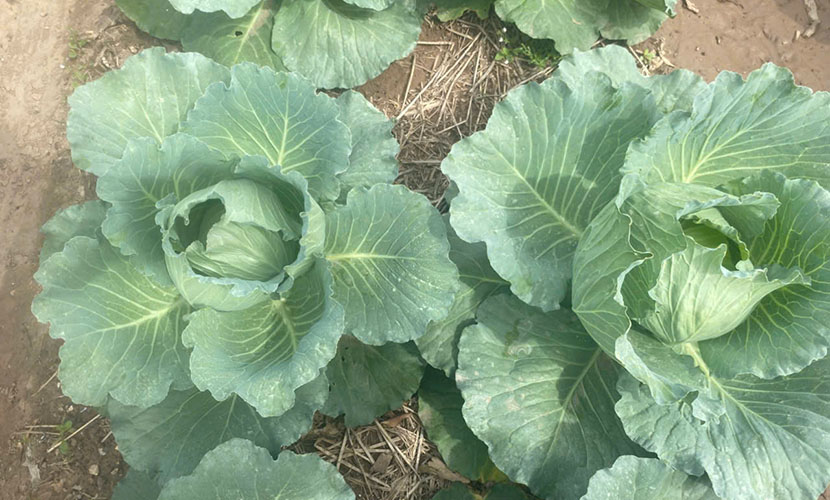
Vietnamese cabbage trees in Van Duc commune
Moreover, the cooperative has implemented a community verification model applying a Participatory Guarantee System (PGS) in safe vegetable production. Participating households receive a field diary, recording full details of the production process. It includes timing and methods of using fertilizers and biological pesticides.
This approach ensures strict supervision of the production process while promoting sustainable and safe farming practices. As a result, every product that reaches consumers is guaranteed to be clean and safe.
Dang Van Phuc is one safe vegetable farmer from Trung Quan 1 village, Van Duc commune. He said that his family cultivates 3,600 square meters of vegetables such as green cabbage and broccoli. His family, along with other local farmers, have received training techniques in safe production. This helps maintain stable selling prices and high economic efficiency.
Ms. Hang, an expert, stated that Van Duc’s vegetables meet consumer safety standards. Thanks to product quality, for many years, Vietnamese vegetables (in Van Duc commune) have not only been successfully sold domestically but have also begun to be exported.
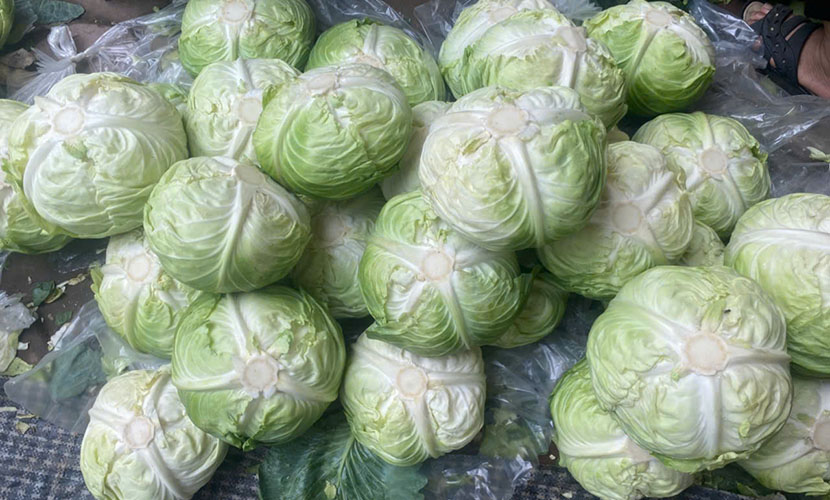
Vietnamese cabbage for export
Each year, thee commune exports 300–500 tons of Vietnamese vegetables to South Korea and Taiwan. This demonstrates that Van Duc safe vegetables have established both quality and export standards.
To further develop the Van Duc safe vegetable brand, the capital will continue to collaborate with local authorities and the cooperative to support farmers in producing according to proper procedures. This includes recording field care activities, pre-processing, and handling products to ensure food safety.
Additionally, the capital supports participation in trade fairs to promote Van Duc safe vegetables to consumers and facilitate sales contracts.
According to Mr. Minh, Director of the Van Duc Cooperative, to support the development of the supply chain, authorities need to strengthen market supervision of vegetable products to ensure fair competition.
Policies should also allow the cooperative to lease land at government-regulated prices, without competitive bidding. This would enable it to invest in building offices, pre-processing areas, cold storage facilities, and applying high-tech production methods..
Vietnamese source: https://hanoimoi.vn/rau-an-toan-van-duc-chinh-phuc-thi-truong-nuoc-ngoai-653897.html
If you are interested in Vietnamese vegetables for export, please contact us:
Company: Agrideco Vietnam Co., Ltd.
Address: No 02, Alley 325 Kim Nguu, Vinh Tuy Ward, Hanoi, Vietnam
Tel/Kakao Talk/Whatsapp: +84 989 649 804
Website: https://agridecovietnam.com
Email: agridecovietnam@gmail.com