
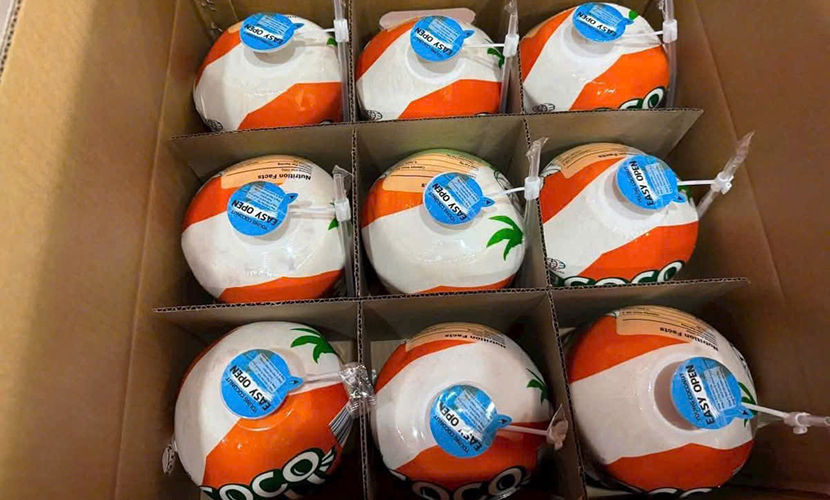
In 2025, Vietnamese coconut exports exceeded USD one billion and ranked among the world’s top five coconut-exporting countries. However, Vietnam’s coconut industry still relies heavily on raw material exports with relatively low added value.
According to preliminary statistics, Vietnam’s exports of coconuts products reached approximately USD 1.15 billion. They placed the country third globally, behind the Philippines and Indonesia.
This figure underscores the significant potential of an industry long associated with many localities. In these areas, coconut trees serve as a source of livelihood and a cultural and ecological symbol.
Despite impressive export figures, the value captured by Vietnamese export enterprises and farmers remains modest. The core reason lies in the industry’s continued focus on exporting raw coconuts and semi-processed products. In addition, the absence of a strong international brand further constrains its development.
Vietnam’s coconut industry
Mr. Rocky Ngọc Thạch is the CEO of Smart Link Logistics. According to him, Vietnam’s coconut industry still follow a “selling what we have” mindset rather than “selling what the market needs.” Meanwhile, regional competitors have moved ahead by standardizing products and investing in packaging and brand storytelling. They have also targeted higher value-added segments to strengthen their market position.
In demanding markets, consumers can easily find coconut products from Indonesia, the Philippines, and Thailand. These products feature modern designs, convenient packaging, and clear brand positioning. In contrast, Vietnamese coconuts are largely available as raw materials. Moreover, after importing, foreign processors will repackage and sell them under their own brands.
As a result, although Vietnamese coconuts are popular for their quality, intermediaries capture much of the added value. This leaves domestic coconut enterprises and farmers with limited gains.
According to experts, only about 30% of coconut products are deeply processed along the value chain. Key processed items include coconut water, coconut milk, coconut oil, desiccated coconut, coconut candy, and coconut cakes. Other products include activated carbon from coconut shells, as well as handicrafts and fiber-based materials.
Some advanced technologies—such as UHT sterilization for coconut water, aseptic packaging, and cold centrifuge extraction for pure coconut oil—have been applied. However, most equipment must be imported, resulting in high investment costs and limiting scalability.
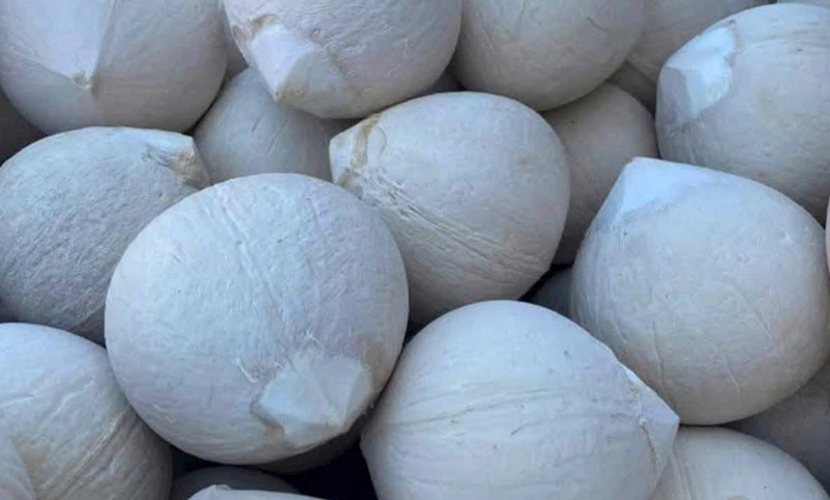
Vietnamese coconut exports
Experts emphasized that Vietnam’s coconut industry must clearly identify flagship products, target markets, and appropriate production scales. Also, Vietnamese coconut enterprises need support in accessing technology and designing processing facilities that meet international standards. These standards are necessary for demanding markets such as the United States, the EU, and Japan.
They warned that without timely shifts in mindset and systematic branding investment, Vietnam’s coconut industry could encounter similar risks. Vietnam has high-quality aromatic coconut varieties and ranks among leading global producers of coconuts. However, continued raw exports without a clear brand protection and development strategy could erode competitiveness.
Experts stress that brand building will enhances export value. Also, it strengthens the competitive position of Vietnamese coconut among tropical fruits. However, branding investment remains fragmented. Some enterprises meet only 60–70% of branding criteria but lack the capacity to scale up.
Meanwhile, many others remain at basic levels—focused on logos and simple packaging without consistent brand narratives. This inconsistency limits their ability to command premium prices or build long-term trust.
Following administrative mergers, Vietnam now has 18 coconut-growing provinces. The growing area reaches more than 200,000 hectares and annual output exceeds 2.26 million tons. The sector includes 145 processing plants and around 600 enterprises. To date, 32 enterprises have developed certified raw material areas through specialized farming models or farmer linkages. Among these, 68 hectares meet international organic standards.
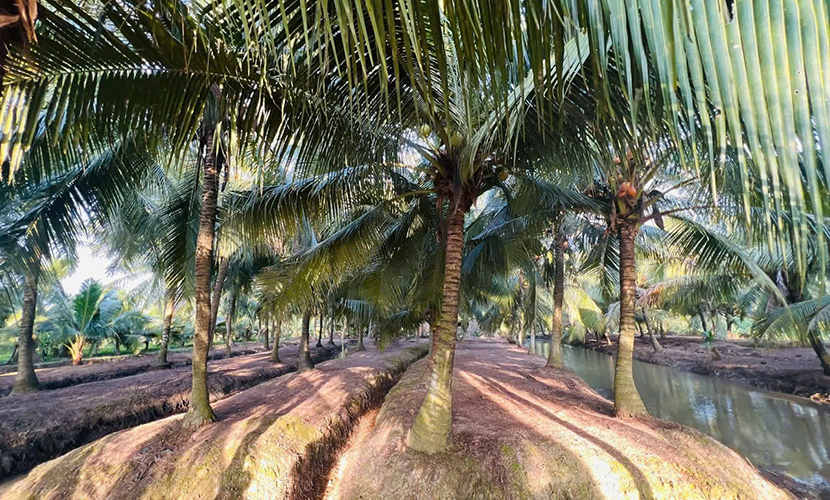
Vietnam’s coconut trees
The industry is gradually shifting from inorganic fertilizers to organic and biological alternatives, improving fruit quality and stabilizing production. However, sharp fluctuations in raw coconut prices over the past two years highlight the need for greater market transparency.
At the Ministerial Conference of the International Coconut Community in October 2025, Vietnam proposed establishing a regional raw coconut price information exchange platform in Asia to better protect producers’ interests.
Mr. Cao Bá Đăng Khoa is the Vice Chairman and Secretary General of the Vietnam Coconut Association. According to him, the association is implementing a supply chain program built on close cooperation among enterprises, cooperatives, farmers, and banks. Enterprises invest in internationally certified organic coconuts. Also, farmers and cooperatives organize production. Moreover, banks provide financial support—forming a foundation for sustainable development.
Pilot projects in Đồng Tháp, Vĩnh Long, and Cần Thơ have expanded internationally certified organic coconut areas to more than 50 hectares, benefiting thousands of households. Simultaneously, collaboration with research institutes, universities, international financial organizations, and trade promotion agencies aims to strengthen production capacity, quality management, and disease control. It also seeks to gradually establish a national coconut brand in global markets.
Experts agree that once the value chain is fully integrated and branding is systematically developed, Vietnamese coconuts will not only increase export turnover. More importantly, they will elevate their value, global standing, and long-term competitiveness in international markets.