
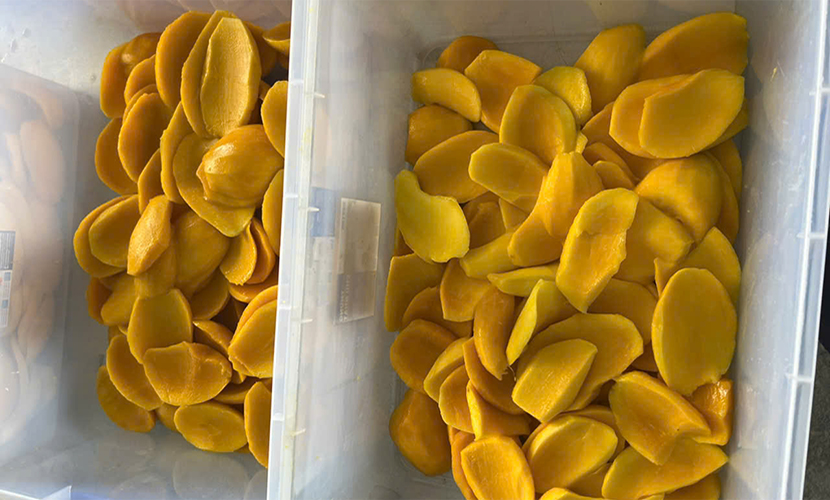
Dong Thap is the province with the largest mango cultivation area in the Mekong Delta. The province produces an average of over 115,000 tons of mangoes per year. In addition, Dong Thap mangoes are available to more than 10 countries worldwide.
According to the province, Vietnamese mango is one of the five key agricultural sectors for the province’s agricultural restructuring project. The other key sectors include rice, pangasius fish, ornamental flowers, and lotus.
In recent years, the mango industry in Dong Thap has increasingly applied technology in production. They included off-season cultivation, artificial pollination on 70% of the growing area, and fruit bagging on nearly 90% of the area. These methods allow Dong Thap mangoes to bear fruit year-round.
Dong Thap mangoes
Currently, the province has more than 14,000 hectares of plantations of mangoes. There are three main varieties: Cat Chu, Tuong Green Skin, and Cat Hoa Loc. Dong Thap mangoes are available in all 12 districts and cities of the province.
However, the largest growing districts are Cao Lanh (4,100 ha), Thanh Binh (1,700 ha), and Lap Vo (1,300 ha). The average annual yield exceeds 115,000 tons, and Vietnamese mango products are present to more than 10 countries worldwide.
In early November, we visited the My Xuong Mango Cooperative in Cao Lanh District. Local farmers were beginning to harvest off-season mangoes for the market. Most growers here use fruit bagging techniques. Many have also begun adopting production models that meet Vietgap and Globalgap standards.
Mr. Vo Viet Hung is the Director of My Xuong Mango Cooperative. He said that in the past, farmers mainly relied on experience, traditional practices, or support from pesticides, chemical fertilizers, and growth stimulants.
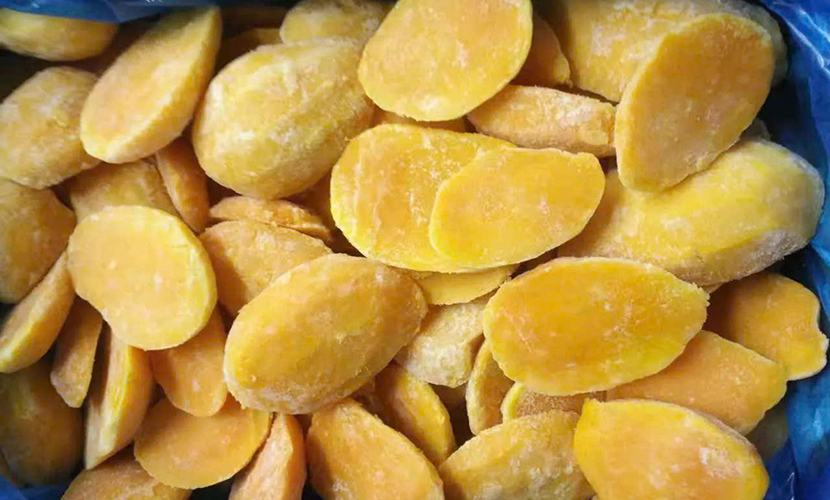
Frozen mango from Vietnam
Nowadays, mango cultivation must follow safe production processes, applying scientific and technological advances such as Vietgap and Globalgap standards. Traceable planting codes are also used to meet the strict requirements of export markets and ensure stable output.
Mr. Vo Huu Hien is a cooperative member, owning a 1.5-hectare mango orchard. He shared that since adopting Globalgap standards, his family has reduced the use of chemical fertilizers and pesticides by about 80%. Previously, he had to spray pesticides 8–10 times per crop, with yields of only 15–16 tons per hectare.
Now, he sprays just once or twice per crop, yet achieves yields of up to 20 tons per hectare. Another benefit of using fruit bagging is that it protects the mangoes from pests. This results in more attractive fruit that sells for higher prices.
Mangoes grown under technical and safety standards are priced 10,000–15,000 VND per kilogram higher and are in strong demand. In contrast, substandard mangoes can be difficult to sell, especially during peak harvest seasons.
According to local farmers’ calculations, Vietnam’s mango cultivation can generate profits 5–6 times higher than rice farming. On average, each mango tree produces about 100–200 kilograms of fruit per season, and after deducting all expenses, growers can earn a profit of 250–300 million VND per hectare per crop.
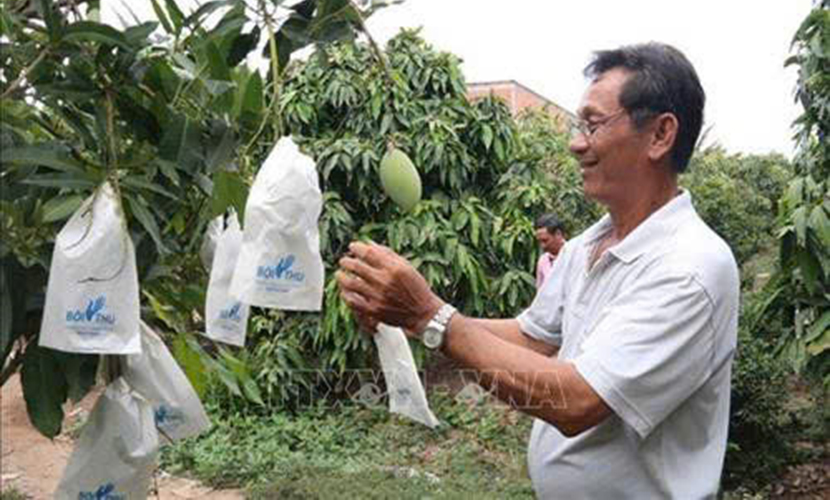
Dong Thap mango farm
Assigning planting area codes is a crucial step toward enabling traceability of Vietnamese agricultural products. It is closely tied to the implementation of high-quality production processes that meet the strict requirements of current agricultural import markets.
Mr. Le Quoc Dien is the Deputy Director of the Dong Thap Department of Agriculture and Rural Development. According to him, the province currently has 295 mango-growing areas that have received planting area codes. These areas cover a total of 8,300 hectares, mainly concentrated in Cao Lanh District and Cao Lanh City.
China is the largest export market, with 252 planting area codes granted for more than 7,000 hectares. In addition, Dong Thap mangoes have received planting area codes for export to other developed countries. This contributes to the expansion and development of specialized mango cultivation zones.
Furthermore, five enterprises in the province have registered or mango packing facility codes. In which, one facility is currently in operation, while the other four are pending approval. The adoption of good agricultural practices, food safety-compliant production, and organic-oriented farming is being encouraged.
However, the total certified area remains relatively modest. As of now, Dong Thap Province has 486 hectares certified under Vietgap across 33 facilities. In addition, 2 hectares have been certified organic by Chu Chin Co., Ltd.
Vietnamese source: https://www.mard.gov.vn/Pages/dac-san-xoai-dong-thap-xuat-khau-di-nhieu-nuoc.aspx