
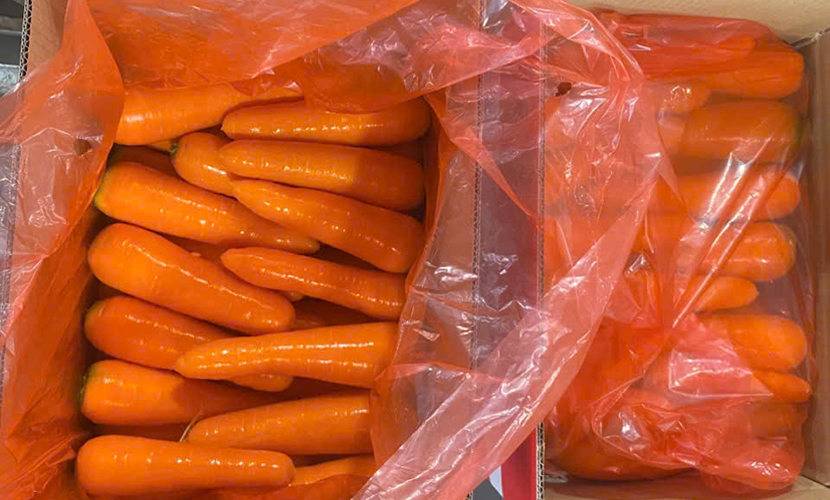
Hai Phong is the capital of Vietnamese carrot for export in the country. In recent years, Hai Phong’s carrot products have generally exported smoothly. However, recently, some carrot-importing countries have continued to tighten controls on fresh carrots imported from Vietnam.
In particular, South Korea has strengthened inspections. If they detect Radopholus similis in Vietnamese carrots, they will not allow imports. Both Japan and South Korea have also intensified controls on pesticide residue levels in carrots, especially active ingredients. These ingredients include Hexaconazole, Tricyclazole, and Paclobutrazol.
In addition, on October 17, 2025, the Department of Crop Production and Plant Protection issued a notice. Accordingly, in the coming period, the importation into Vietnam of plant protection products containing the active ingredient Carbosulfan (a carbamate-group substance) will be banned or restricted.
As a result, the use of such products in Vietnam will be subject to restrictions in order to comply with international conventions. However, this is still one of the active ingredients currently used by some carrot-growing households to control soil-borne pests.
Vietnamese carrot for export
Therefore, in order to continue maintaining productivity, quality, and protecting Vietnamese carrot for export, local authorities in carrot-growing areas, carrot farmers, enterprises, and traders should pay attention to the following:
Monitor information on warnings and regulations issued by importing countries regarding carrots from Vietnam. There are several official sources, such as: the Vietnam SPS (Sanitary and Phytosanitary) Portal, the RASFF (Rapid Alert System for Food and Feed). Additionally, they include the websites of the Department of Crop Production and Plant Protection, the Hai Phong Department of Agriculture and Environment.
During production, Vietnamese carrot facilities should strictly comply with proper cultivation and care practices. As a result, it will ensure carrot products achieve high yield, quality, food safety, and traceability, including:
Treating soil before sowing with biological preparations
When fertilizing carrots, increasing the use of organic fertilizers to partially replace inorganic fertilizers. For inorganic fertilizers, choose specialized fertilizers or compound fertilizers with high potassium content suitable for carrots.

A processing facility of Vietnamese carrot for export
In cases where carrot plants grow excessively (excessive leafy growth), farmers should control growth by pruning leaves. Absolutely do not spray plant protection products containing Hexaconazole or preparations containing Paclobutrazol to inhibit carrot growth. Otherwise, this may increase pesticide residues in carrots at harvest and cause the products to fail to meet export standards.
Use plant protection products to control carrot pests and diseases only when truly necessary. Priority should be given to products with high efficacy, biological pesticides, herbal pesticides, and those with short pre-harvest intervals. Do not increase dosage or concentration, and do not use products containing Tricyclazole, Hexaconazole, etc.
Only harvest Vietnamese carrot for export after the minimum pre-harvest interval of 25–30 days following pesticide application. It is better to take samples to test pesticide residues before harvesting Vietnam’s carrots.
