
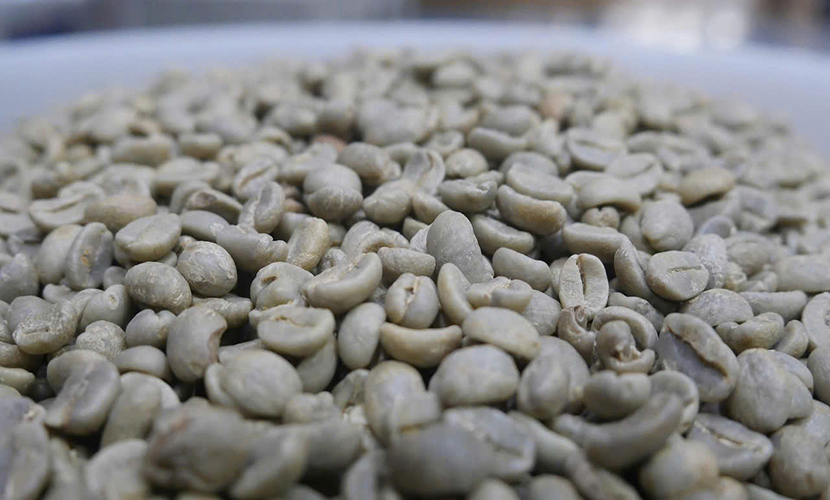
The coffee industry in Lam Dong is undergoing a strong shift from a ‘quantity-driven’ mindset to a ‘value-driven’ one. Through replanting, technical innovation, deep processing, and brand building, Vietnamese coffee beans are gradually enhancing their competitiveness. They are meeting stringent requirements and expanding their presence in the international market.
Mr. Ly Van Khiem is a local farmer in Ta Son Hamlet, Ta Nang Commune, Lam Dong province. In 2000, he joined the wave of settlers moving to new lands, leaving his hometown to start a life. At that time, the area was still wild and agricultural knowledge was almost non-existent. Learning from experienced farmers while experimenting on his own, Mr. Khiem has been closely connecting with coffee cultivation from his first days on the land.
Over the years, Vietnamese coffee beans not only took root in this new land but gradually became the main source of income. They sustained his family and formed a long-term livelihood. After many years of cultivation and witnessing the fluctuations in prices and crop quality, Mr. Khiem boldly replanted and renovated his coffee garden.
Vietnamese coffee beans
He selected high-quality varieties of Vietnamese coffee beans suitable for the local soil and climate. From his practical experience, he emphasizes that coffee can only be truly sustainable when growers invest in proper care and apply correct techniques. Moreover, they must consider quality as the decisive factor for the long-term value of Vietnamese coffee.
After administrative boundary mergers, Lam Dong has become the province with the largest coffee-growing area in the country, covering over 328,000 hectares. The coffee output for the 2025–2026 crop is expected to exceed one million tons. This further affirms its status as Vietnam’s “coffee capital.”
Beyond generating significant income, the coffee industry provides livelihoods for rural communities. It attracts dozens of businesses involved in purchasing, processing, and exporting, and has a strong spillover effect on the local economy. Lam Dong possesses enormous potential to become a leading hub for coffee production, processing, and export in Vietnam.
In recent years, Lam Dong’s coffee production has gradually been shifting towards a modern approach. The province currently has 22,735 hectares of coffee cultivated using high-tech methods. Lam Dong is developing five high-tech coffee production zones with a total area of 1,743.5 hectares. So far, five zones have been officially recognized. They are primarily in the coffee-growing areas of Di Linh, Bao Lam, Thuan An, and Duc An.
Key technologies such as water-saving irrigation systems, smart fertilization through irrigation, and integrated pest management (IPHM) are helping reduce input costs, optimize resources, and improve coffee bean quality.

Vietnamese coffee powder
Alongside production, Lam Dong is actively expanding the area of coffee certified under sustainable standards such as Vietgap or organic certifications. Currently, the certified area covers 117,454 hectares, accounting for 36.4% of the total coffee area. The corresponding output is 433,715 tons of Vietnamese coffee beans.
The province has established 65 production-consumption chains, attracting 29,420 farming households across 55,468 hectares. These chains help organize production systematically, stabilize market output, and ensure a sustainable supply for businesses.
In 2024, the province’s direct export of green coffee beans reached 158,253 tons, valued at 478.8 million USD. Markets such as Switzerland, Italy, Japan, and Germany have high demands for quality and sustainability standards. This poses increasingly strict requirements for domestic production.
Despite these achievements, Lam Dong’s coffee sector faces multiple challenges. Climate change has caused droughts, unseasonal rains, and complex pest outbreaks. Meanwhile, rising costs of materials, fertilizers, and labor have reduced the actual profits for coffee farmers.
Notably, over 98% of coffee exports remain in raw bean form, with low added value. Practices such as harvesting unripe cherries and weak linkages between farmers and businesses still exist. These issues lower quality and hinder the development of specialty coffee.
Additionally, the European Union Deforestation Regulation (EUDR) imposes mandatory transparency regarding cultivation areas and traceability. This requires the coffee sector to make significant changes to maintain export markets.

Vietnamese coffee farm
Facing the demands of integration, Lam Dong’s agricultural sector has adopted a long-term development mindset. It is shifting from traditional agricultural production to an agricultural economy focused on quality, branding, and international compliance.
The province is concentrating on replanting and renovating aging coffee gardens and promoting the application of high-tech and digital technologies. Also, it is building effective production chains and developing deep processing.
The goal is to increase the proportion of processed coffee to 10–15% by 2030. At the same time, Lam Dong aims to effectively leverage the “Lam Dong Coffee” geographical indication, linking coffee production with agro-tourism and local culture.
Lam Dong is gradually transitioning toward high-quality, specialty, and sustainable coffee development. This allows the highland coffee beans to expand further into the international market.
Vietnamese source: https://baomoi.com/de-hat-ca-phe-vuon-ra-thi-truong-quoc-te-c54126468.epi