
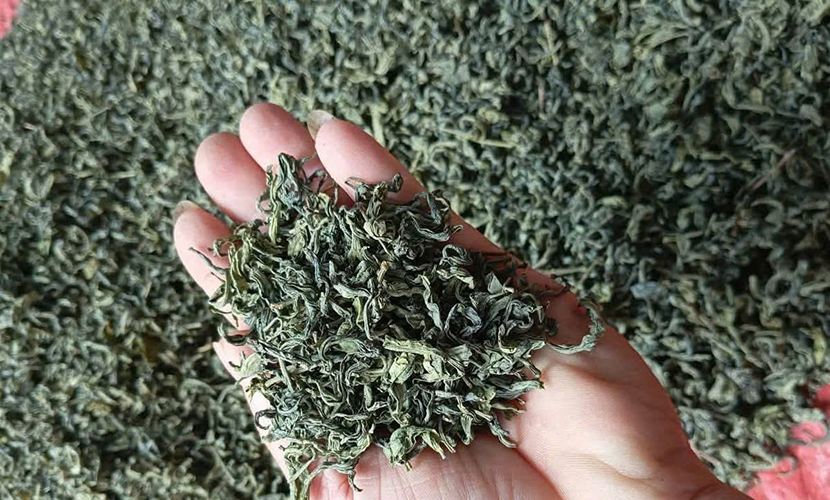
In January 2026, Vietnam tea exports rose sharply in both volume and value. This positive signal highlights the urgent need to place quality at the core of efforts to elevate Vietnamese tea in the global market. At the same time, it emphasizes the importance of building a strong brand to enhance its international presence.
According to data from the Vietnam Customs Department, in January 2026 Vietnam exported 12,390 tons of tea. Accordingly, the export value reached nearly USD 21 million. This represented an increase of 28% in volume and 27% in value compared to the same period in 2025.
Amid ongoing volatility in global agricultural trade, this represents a notable growth rate. Also, it indicates that market demand for Vietnamese tea exports remains positive and resilient.
Vietnam tea exports
However, the average price of Vietnam tea exports stood at only USD 1,686 per ton. This was down 2.29% in comparison to December 2025 and slightly down 0.45% year-on-year. This development reflects a familiar reality. Growth still relies mainly on expanding volume, while value addition has yet to make a proportional breakthrough.
The structure of export markets is also shifting noticeably. Tea exports to Russia, India, and Poland increased strongly. Notably, the Philippines recorded triple-digit growth, surging 544.7% in volume and 312.2% in value compared to January 2025.
Conversely, two major markets—China and Taiwan (China)—showed mixed trends. Exports to China improved, while shipments to Taiwan declined. The three largest markets in January were Pakistan, Taiwan (China), and China. Together, they accounted for 25.8% of total tea export turnover.
Exports to China reached 1.14 thousand tons worth USD 1.52 million, accounting for 9.2% of total volume. Meanwhile, Taiwan (China) imported 1.13 thousand tons worth USD 2.2 million, representing 9.16%. Notably, Pakistan, which once accounted for 35.2% of export share in January 2025, fell sharply to 7.5% in January 2026. Export volume to this market declined by over 70% year-on-year to 930 tons.
These figures show that market structure is increasingly dependent on quality, traceability, and compliance with technical standards. As importing countries tighten requirements on food safety, chemical residues, environmental responsibility, product storytelling, and certification systems, these standards are becoming increasingly strict. Consequently, they are turning into essential “passports” for market access. Therefore, this is precisely the time for the tea industry to shift decisively from a mindset of “selling raw materials” to “selling value.”
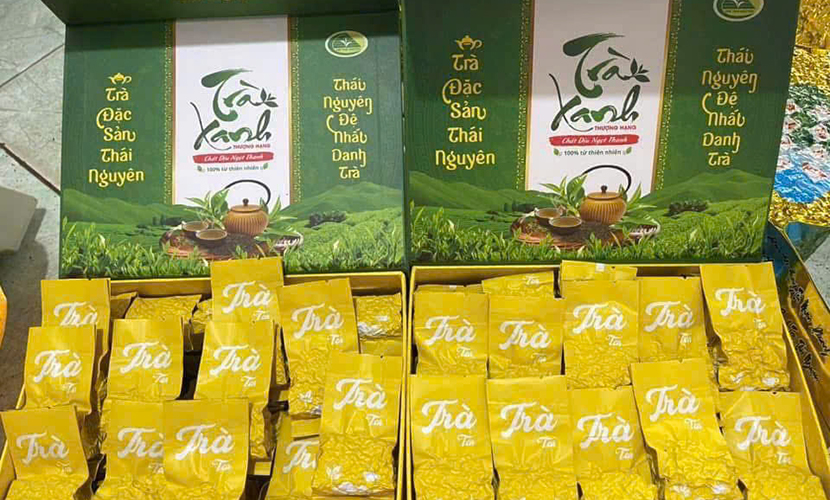
Thai Nguyen green tea
Amid this broader landscape, production models tied to regional brand building are demonstrating a more sustainable direction of Vietnam tea exports. In Yen Binh Commune (Thai Nguyen Province), Ban Moc Agricultural Cooperative has chosen to develop Shan Tuyet tea under organic practices. At the same time, it is standardizing processes while promoting indigenous cultural stories.
Its two flagship products—Shan Tuyet green tea and Shan Tuyet black tea—are positioned in quality-focused, natural-value segments. The raw materials are harvested from ancient tea trees growing naturally in forests at elevations above 800 meters above sea level.
Mr. Ma Van Thong is the Director of Ban Moc Agricultural Cooperative. He explained that at this altitude, the cool year-round climate creates favorable conditions for tea growth. Also, the large day–night temperature differences further support the plant’s development.
In addition, thick mist and nutrient-rich soil allow tea buds to develop slowly and accumulate distinctive flavors. As a result, they form the characteristic natural white “snow” layer. He noted that chasing output at the expense of patience would make it difficult to preserve this original flavor.
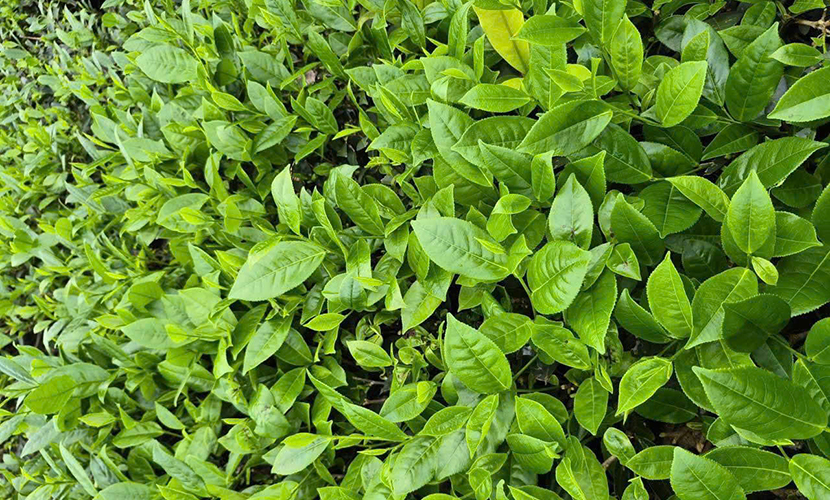
Vietnamese fresh tea
While many producers prioritize yield, the cooperative has opted for organic cultivation. It minimizes chemical use, applies manual care, and allows trees to grow according to natural cycles. Stable quality and long-term credibility form the foundation for brand building. The cooperative has obtained PGS organic certification. This certification is an important factor in building consumer trust.
Current consumption trends also support this approach. Buyers increasingly care about origin, production processes, and health value rather than merely packaging design. Therefore, the cooperative’s customers are mainly those who prioritize clean, organic products with clear traceability.
Tea lines are graded according to processing complexity. Shan Tuyet black tea involves more elaborate and time-consuming processing, so it is priced higher than traditional green tea. Pricing based on quality and labor value—rather than competing on low prices—helps position products in a higher segment.
Mr. Ha Duc Thang is the Director of V-Shantea Cooperative in Phu Yen, Son La. From his perspective, many tea-growing areas still export bulk tea at very low prices. In some cases, these prices fail to reflect the true value of raw materials and farmers’ efforts.
According to Mr. Thang, continuing along the path of exporting raw tea will not improve farmers’ incomes or create sustainable value for Vietnamese tea enterprises. The only way forward is to innovate production methods and invest in knowledge, technology, and branding.
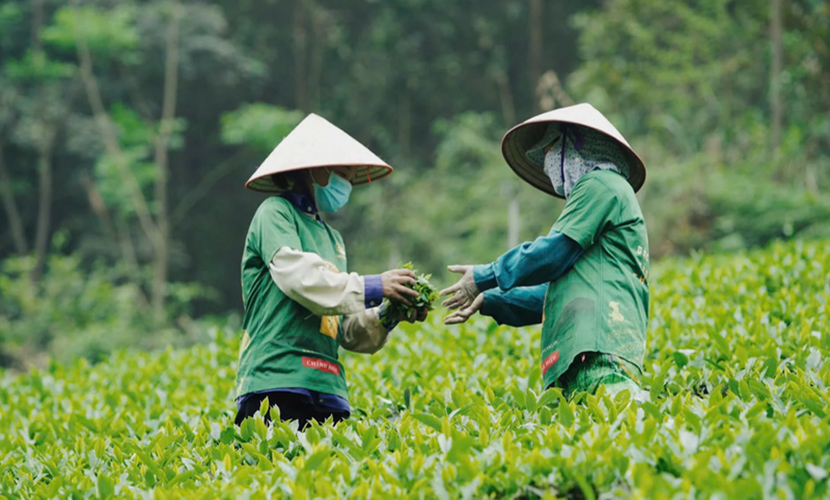
Vietnamese tea farms
“We are building the V-Shantea brand, where ‘San’ stands for Shan Tuyet, ‘Tea’ means tea, and ‘V’ represents Vietnam. Through this, we aim to change international perceptions of Vietnamese tea. It should not be seen merely as low-priced black tea, but as high-value, high-quality tea with a distinct identity,” he said.
Tea exports rising nearly 30% in January 2026 is encouraging. However, it is not sufficient to secure long-term positioning. In an increasingly competitive environment, only products that meet high standards, carry clear narratives, and are supported by well-developed brands can achieve higher value.
Building the Vietnamese tea brand goes beyond packaging design or media promotion. It requires a synchronized process, from raw material regions and production standards to certification systems and cultural storytelling linked to the product. When consumers understand and trust that value, they are willing to pay a premium price.
Vietnamese source: https://congthuong.vn/xuat-khau-che-tang-gan-30-co-hoi-tai-dinh-vi-thuong-hieu-che-viet-443925.html