
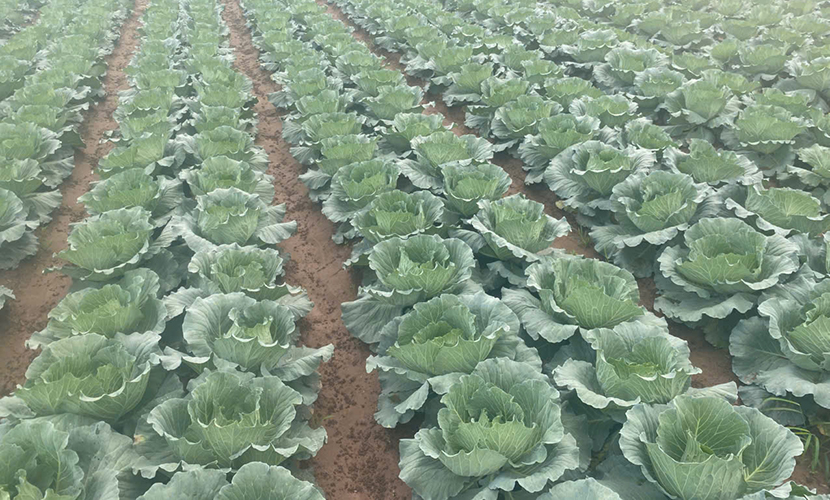
Lao Cai province has unique climate and soil conditions, with relatively low average temperatures. Therefore, recent years, residents in several highland districts of the province have begun cultivating Vietnamese cabbages. This approach has enabled farmers to achieve high economic returns.
Si Ma Cai is the highland border district of Lao Cai province. Ethnic communities have maintained traditional production models such as maize and rice cultivation and livestock farming. However, they have recently learned to make the most of their land and diversify their crop structures.
Farm of Vietnamese cabbages
Initially, off-season vegetables were available in Mản Thẩn commune, primarily Vietnamese cabbages, on a limited scale. However, seeing that cabbage grew well and fetched good prices, local people gradually expanded the cultivation area.
“Off-season vegetables are not a new crop, but only recently have ethnic communities in the highlands begun cultivating them on a large scale. This has enabled many minority households to earn a regular income and improve their living standards,” Mr. Ngô Quyền, a local farmer said.
Mr. Pao is also a local farmer from Giàng Chá Chải village, Nàn Sín commune, Si Ma Cai district. He is one of the households that boldly switched from growing maize to cultivating off-season cabbage on a large scale. After harvesting spring maize, Mr. Pao planted Vietnamese cabbages on a one-hectare plot.
In the last season, his family harvested around 25–30 tons of Vietnamese cabbage. With an average farm-gate price of 6,000 VND/kg, he earned a profit of 70 million VND. Combined with income from maize, he earned nearly 100 million VND per hectare.
“Each year, we can grow two vegetable crops and one maize crop, bringing in over 100 million VND per hectare. This is a relatively high income in comparison to traditional crops such as maize, upland rice, or soybeans,” shared Mr. Pao.
Currently, off-season vegetables from Si Ma Cai are usually transported to lowland markets. Off-season cabbages can sell for 20,000 VND/kg, three to four times higher than in-season cabbage. As a result, the movement of off-season vegetable cultivation has gradually spread to other communes in Si Ma Cai district.
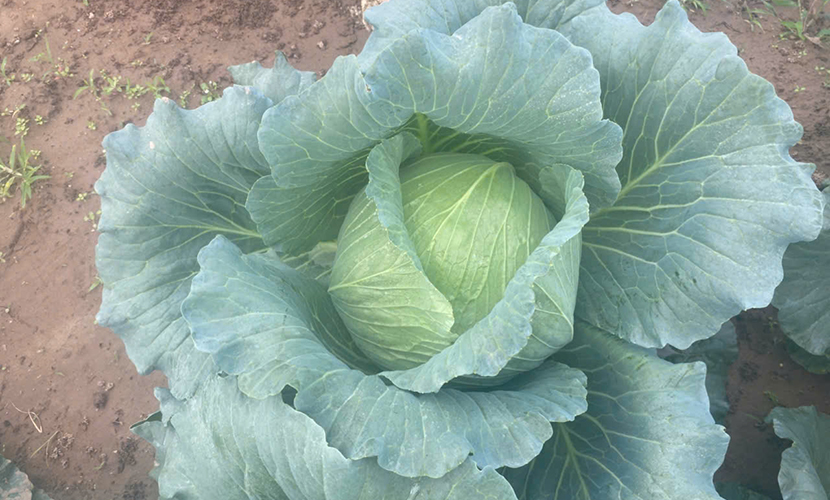
Vietnamese cabbages
Mr. Trương Văn Tiến is Head of the Department of Agriculture and Rural Development of Si Ma Cai district. He stated that off-season and early-season vegetables are bringing high economic value to local farmers.
In 2020, Si Ma Cai district planned to cultivate 50 hectares of Vietnamese off-season vegetables. However, the local agriculture sector and farmers aimed to expand the area to around 100 hectares. They also actively linked production with businesses and cooperatives to ensure product procurement.
Similar to Si Ma Cai, Mường Khương district also has favorable climatic conditions for cultivating cool-season vegetables. However, in the past, local people mainly grew them for family consumption, selling only the surplus at markets.
Mr. Lê Thanh Hoa is the Head of the Department of Agriculture and Rural Development of Mường Khương district. He said that noticing the high demand and prices for cool-season vegetables in lowland areas or during summer, the district’s agricultural sector has, since 2020, actively promoted the production of temperate vegetables.
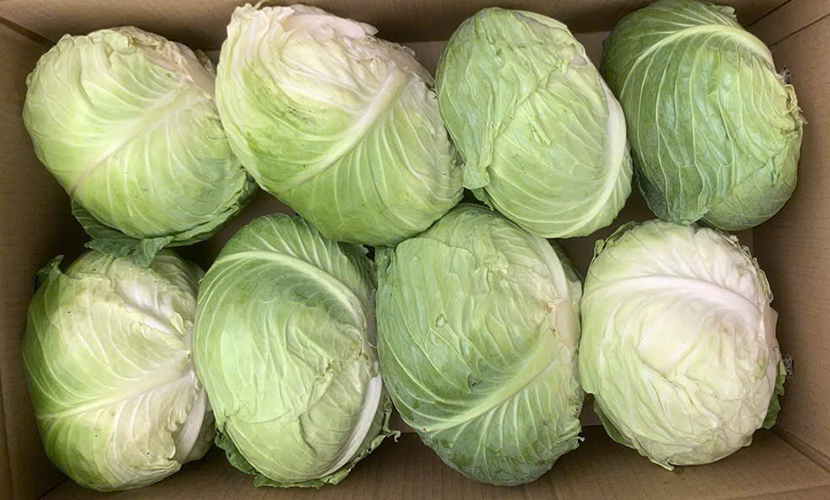
Vietnamese cabbages for export
This year, residents in highland communes have started cultivating Vietnamese cabbages and tomatoes for commercial purposes. By July and August, when other localities can only grow warm-season crops, cabbage grown in Mường Khương is already ready for harvest.
Notably, off-season and early winter vegetables in Mường Khương are produced under partnerships between farmers and businesses. Since the beginning of the season, export vegetable enterprises have purchased about one-third of the area. Peak prices reached 12,000–15,000 VND/kg for cabbage, falling to 4,500 VND/kg during the main season, allowing farmers to earn a reasonable profit.
Mr. Ngô Quyền is the Deputy Director of the Department of Crop Production and Plant Protection of Lào Cai province. He stated that thanks to the cool climate, suitable rainfall, and humidity in the highlands, even when cultivated in summer, cool-season vegetables thrive. Therefore, off-season vegetable production has become a key strength in highland districts.
Vietnamese source: https://nongthonmoi.hatinh.gov.vn/Nha-nong-can-biet/lao-cai-vung-bien-cuong-trong-bap-cai-cay-nao-cung-to-dung-cuon-chac-nich-ban-duoc-gia-105230.html