
Vietnamese cashew industry has entered in the year of 2026 with positive growth momentum. Specifically, it aims to deepen processing, diversify markets, and strengthen its sustainable billion-dollar position.
In January 2026, Vietnam exported 50.6 thousand tons of cashew nuts, worth USD 34.7 million. Compared to the previous month, both export volume and value fell by over 25%. Seasonal factors and the Lunar New Year holiday slowdown are the two main drivers of this fall. However, compared to January 2025, exports increased sharply by 35% in volume and 36.1% in value.
The average price of Vietnamese cashew exports reached USD 6,841 per ton. It edged up slightly compared to both December 2025 and the same period last year. The United States and China continued to be the two largest markets, accounting for nearly 37.5% of total export volume. Notably, exports to key markets recorded double-digit growth year-on-year.
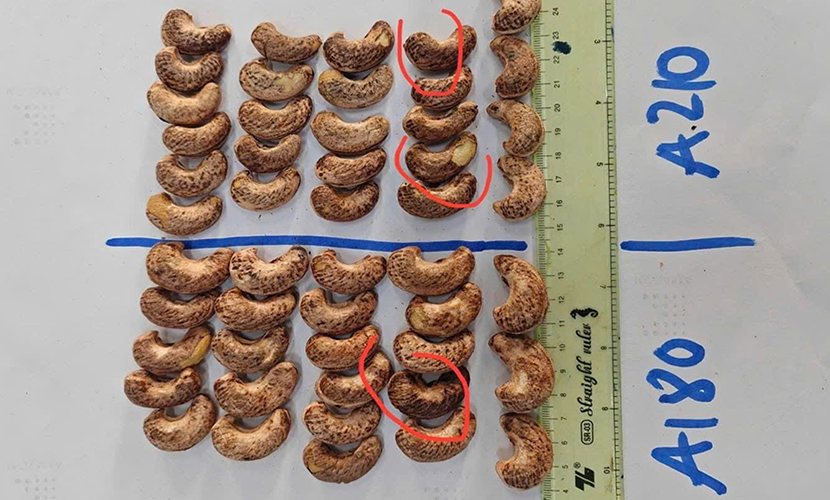
Vietnamese cashew industry
In 2025, Vietnamese cashew industry achieved a remarkable milestone. Particularly, exports reached 766,585 tons, valued at USD 5.22 billion. They went up 5.7% in volume compared to 2024 and set a new record in export turnover.
After fruits and vegetables and coffee, cashew nuts became Vietnam’s third-largest agricultural export, amid a sharp decline in rice export value. The year also marked cashews’ official entry into the “USD 5 billion agricultural export club.”
A notable shift occurred as China, for the first time, became the largest market for Vietnamese cashews. Accordingly, the export turnover reached USD 1.115 billion. The United States ranked second with USD 975 million, followed by the Netherlands with USD 495 million.
According to the Vietnam Cashew Association (VINACAS), exports to China surged due to economic recovery and rising demand for health-oriented foods. The increase also reflects Vietnamese enterprises’ improved ability to meet stricter requirements on quality and traceability.
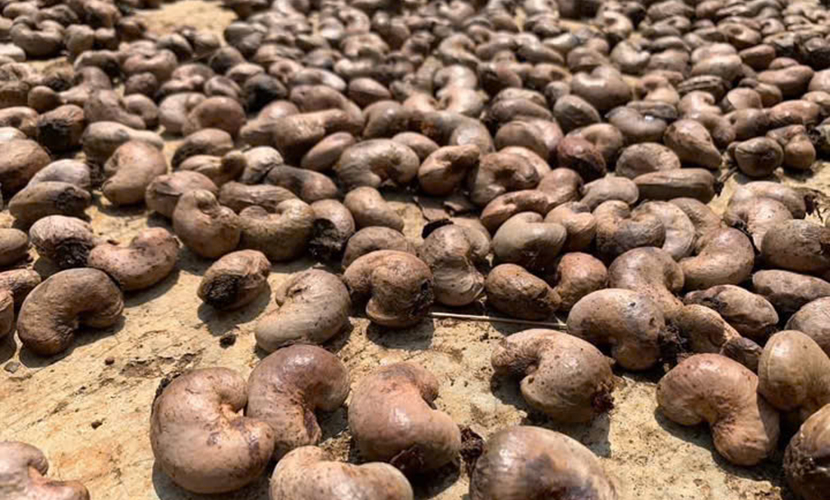
Vietnamese cashew materials
Meanwhile, the United States—Vietnam’s largest cashew market for more than a decade—continues to play a pivotal role. Although reciprocal tariffs previously created certain pressures, positive signals have emerged in 2026. Raw cashew kernels are now included in the group exempted from reciprocal tariffs. As a result, they are subject to a 0% import duty into the United States. This is considered a major boost for revenue recovery in this market.
Notably, consumption trends in the United States are shifting toward processed products. While imports of raw cashew kernels have at times stagnated, processed cashew products have grown. Vietnam, India, Thailand, and Canada are key suppliers in this segment. This highlights an important insight: the future of Vietnamese cashew industry lies not only in output volume but also in deep processing capacity and product diversification.
Among major nuts, cashews have prices about 5% lower than walnuts, almonds, or pistachios. This price competitiveness, amid tightened consumer spending, could help boost demand in the United States and other markets.
Beyond export figures lies the long-standing challenge of raw material supply. Currently, more than 50% of Vietnam’s imported raw cashews come from Africa. At the same time, major producing countries such as Ivory Coast are adjusting policies to limit raw cashew exports. This move aims to promote the development of their domestic processing industries.
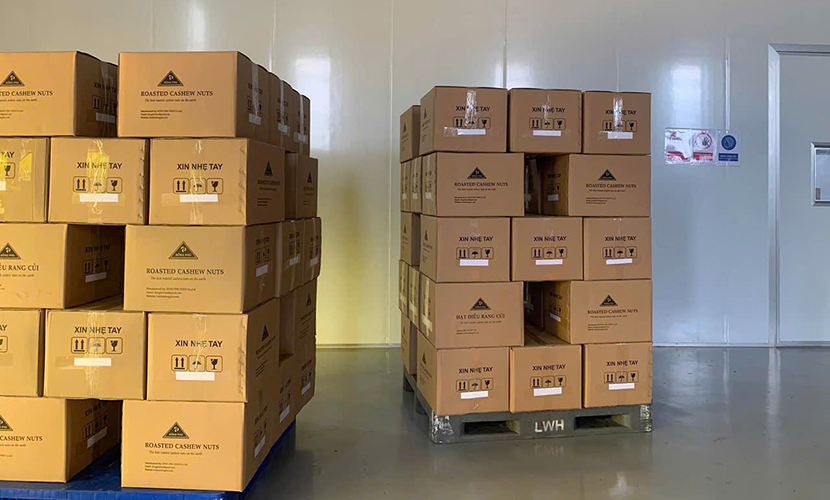
Vietnamese cashew exports
The challenge is therefore not only the risk of raw material shortages but also direct competition. Processed products from Africa exported to the U.S. and Europe enjoy advantages in geographical proximity and lower logistics costs.
However, according to the Vietnam Cashew Association (VINACAS), global raw cashew supply for the 2025–2026 crop year is forecast to exceed 5.5 million tons. This represents an increase of about 3% compared to the previous season. Supply is not lacking. Rather, the issue lies in enterprises’ strategies and adaptability.
One strategy adopted by several Vietnamese companies is investing in factories directly in Africa to secure raw materials. Mr. Vũ Thái Sơn is the Chairman of the Board of Directors of Long Sơn Joint Stock Company. He noted that by opening a factory in Ivory Coast, the company can purchase raw cashews at around USD 900 per ton. This price level is significantly lower than the USD 1,400 per ton cost of importing directly to Vietnam. This cost advantage enhances the competitiveness of exported cashew kernels.
Conversely, many enterprises are developing domestic raw material zones and signing off-take agreements with cashew-growing cooperatives to ensure a stable supply. At the same time, these arrangements help share benefits more equitably with farmers. Mr. Phạm Ngọc Thành is the Deputy General Director of Hà Mỵ Joint Stock Company. He said the company has proactively built local raw material zones through such agreements.
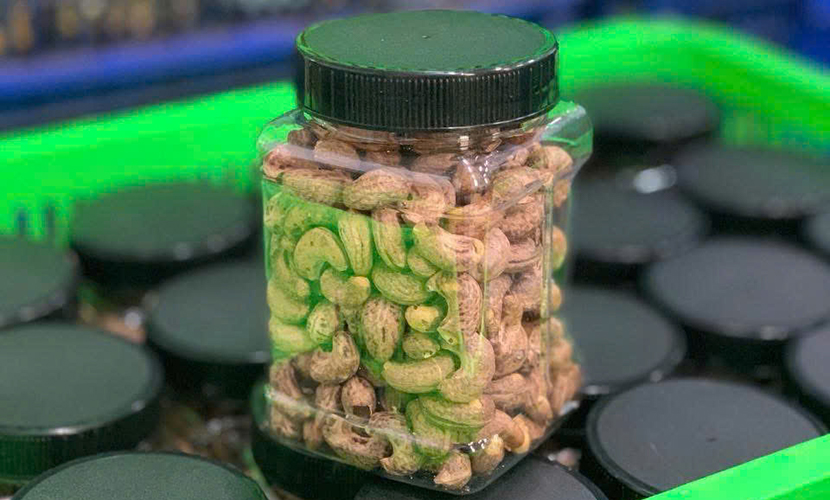
Vietnamese processed cashew
This approach not only stabilizes supply but also demonstrates corporate responsibility in supporting sustainable local development. At the same time, the company is investing in technology and targeting deep processing rather than focusing solely on traditional roasted salted cashews.
According to Mr. Thành, limiting production to roasted salted cashews—even with minor variations—creates little differentiation among manufacturers. In contrast, cashews can serve as raw materials for high-value product lines such as cashew milk and cashew butter. They are also used in plant-based nutrition products for vegetarians and dieters, as well as in various functional food combinations.
Previously, many batches of Vietnamese cashew kernels were available to the United States for processing into plant-based milk and other premium products. This demonstrates real potential; what remains lacking is commensurate domestic investment in deep processing.
By mastering technology and building a diverse product ecosystem, the cashew industry can reduce dependence on a few product lines and mitigate the risk of the “bumper crop – price slump” cycle. More importantly, production thinking must shift from “selling what we have” to “selling what the market needs.”
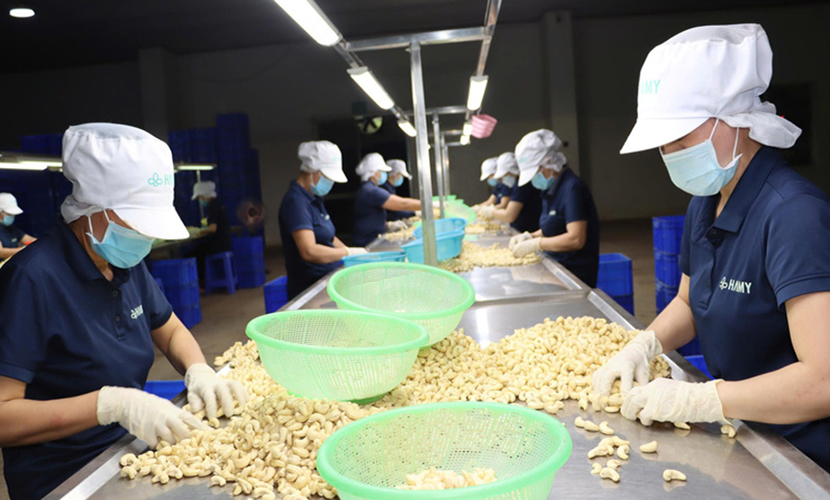
Vietnamese cashew factory
This requires clearly identifying target customer segments and corresponding product standards. If targeting the premium segment, products must meet stringent requirements on quality, food safety, packaging, traceability, and brand storytelling. Once standards are clearly defined, the target market becomes clearer as well.
The outlook for 2026 remains favorable as global demand for cashews increases, particularly in China, Japan, South Korea, Russia, Nordic countries, and ASEAN markets. Younger consumers are driving the trend toward plant-based products, opening new space for cashew milk and cashew butter.
VINACAS has identified domestic raw material development and deep processing as long-term strategic priorities. The goal is not only to maintain Vietnam’s leading global position in cashew kernel exports but also to enhance efficiency, profitability, and sustainability.
As the new year unfolds, the story of Vietnam’s cashew industry is not just about billion-dollar figures, but about transformation. With proactive innovation, strengthened raw material regions, and greater value addition, Vietnamese cashews are positioned to sustain their global leadership while entering a new phase defined by quality, resilience, and creativity.
Vietnamese source: https://congthuong.vn/nganh-dieu-2026-mo-rong-thi-truong-nang-tam-che-bien-sau-443471.html