

In 2025, the United States remained the largest importer of Vietnamese tilapia fillets. Export turnover to this market reached USD 40 million, up nearly 500% compared to 2024.
This remarkable growth reflects strong demand from the U.S. market. It also comes amid supply difficulties faced by competing producers due to tariffs and rising production costs.
Notably, Brazil emerged as the fastest-growing market among Vietnam’s top importers of tilapia fillets. Export turnover to Brazil reached USD 11 million in 2025, soaring by 7,552% year-on-year. This surge highlights the significant potential of the South American market for Vietnam’s frozen tilapia fillets. It is particularly evident in segments serving domestic consumption and food processing.
However, Vietnamese tilapia exports to Russia and Mexico in 2025 declined by 29% and 38%, respectively. This reflects the cautious stance of importers in these markets. They are acting amid economic volatility, high logistics costs, and increasing competition from domestic and regional suppliers.
Vietnamese tilapia fillets
In Asia, Taiwan (China) and Japan maintained relatively stable demand for Vietnamese tilapia fillets. Exports to Taiwan (China) reached USD 1.5 million, up 123%. Meanwhile, exports to Japan totaled USD 312,000, a modest increase of 2% compared to 2024. In Europe, Italy recorded growth of 54%, with export turnover exceeding USD 601,000, indicating steady demand in this market.
Exports to Saudi Arabia and Puerto Rico recorded new values or rose sharply compared to the previous year. This reflects Vietnam’s expanding market reach in the Middle East and other niche destinations. Meanwhile, although exports to Qatar declined slightly by 11%, the country remained among the top 10 largest importers.
Building on the strong growth momentum of 2025, Vietnamese tilapia fillets are gradually establishing themselves as one of Vietnam’s most promising seafood export products. They increasingly position alongside pangasius as a key driver of seafood export growth.
The global shift toward convenient, ready-to-cook products that are competitively priced and aligned with healthy eating trends has created substantial room for tilapia to expand. This development provides significant opportunities for tilapia to strengthen its presence in international markets. This trend opens up significant growth opportunities for the product in international markets.
As global supply chains stabilize further, tilapia could become an additional spearhead in Vietnam’s seafood export diversification strategy. This will be achievable if emerging opportunities are effectively leveraged.
However, growth prospects in 2026 will depend not only on market conditions. They will also hinge on the intrinsic capacity of enterprises and the entire production chain. Diversifying export markets to reduce reliance on a few traditional destinations and investing in deeper processing and quality enhancement are essential prerequisites.
In addition, it is equally critical to tighten control over farming areas, feed, and antibiotic use. At the same time, full compliance with food safety, environmental, and sustainability standards must be ensured.
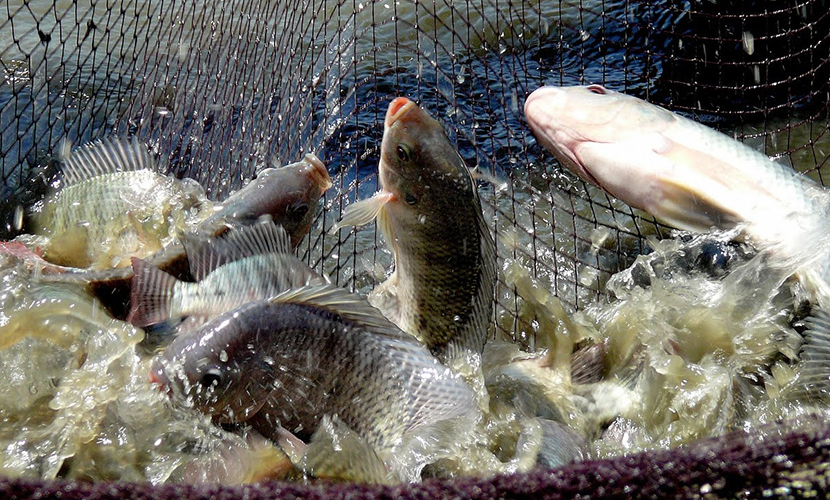
Vietnamese tilapia
As importing markets increasingly emphasize traceability, sustainability certification, and social responsibility, Vietnamese tilapia fillets must shift from competing primarily on price to competing on quality and value addition. This transition is essential to sustain long-term growth momentum.
In the EU market—considered to have significant potential but also considerable challenges—competition is likely to intensify, particularly from Brazil. As it faces trade barriers and mounting pressure in the U.S. market, Brazil’s tilapia industry is accelerating its expansion into the EU.
With advantages in large-scale farming and relatively integrated production chains, Brazilian tilapia maintains consistent product quality and strong compliance with the EU’s stringent technical, food safety, and traceability standards. As a result, it is emerging as a direct competitor to Vietnam’s products.
In this context, Vietnamese tilapia enterprises face the dual challenge of maintaining market share while strengthening overall competitiveness. This requires systematic investment in processing technology and cost optimization. It also calls for stronger linkages between farming areas, processing plants, and exporters to ensure consistent quality control, as well as enhanced brand building and supply chain transparency.
Proactively meeting international sustainability standards and flexibly adapting to evolving regulations on environmental protection, emissions, and social responsibility will serve as a “passport” for Vietnamese tilapia companies. This will enable the product not only to remain competitive in the EU but also to expand into other high-standard markets.
Therefore, year of 2026 would be a pivotal year. If market opportunities are effectively seized and competitive pressures are successfully navigated, Vietnamese tilapia can redefine its position on the global seafood export map. It may become an important complementary pillar alongside pangasius in the industry’s long-term development strategy.