
Phuoc Hai is a commune of Ninh Phuoc district, in the southern central province of Ninh Thuan. The commune is one of the areas with the largest Vietnamese fresh asparagus cultivation in Ninh Thuan province. By leveraging the local potential and proactively applying advanced cultivation techniques, the cultivation areas have been steadily increasing.
One of the successful example is the Chau Re Cooperative in Thanh Tin hamlet. Mrs. Chau Thi Xeo, from Cham ethnicity, founded the cooperative in 2018 with 37 members. She started with an initial capital of 111 million VND and cultivated more than 15 hectares of green asparagus.
To date, the cooperative has grown to 82 members, with a total operating fund of 219 million VND. In addition, it manages a total asparagus cultivation area of 20 hectares under a large-scale field model.
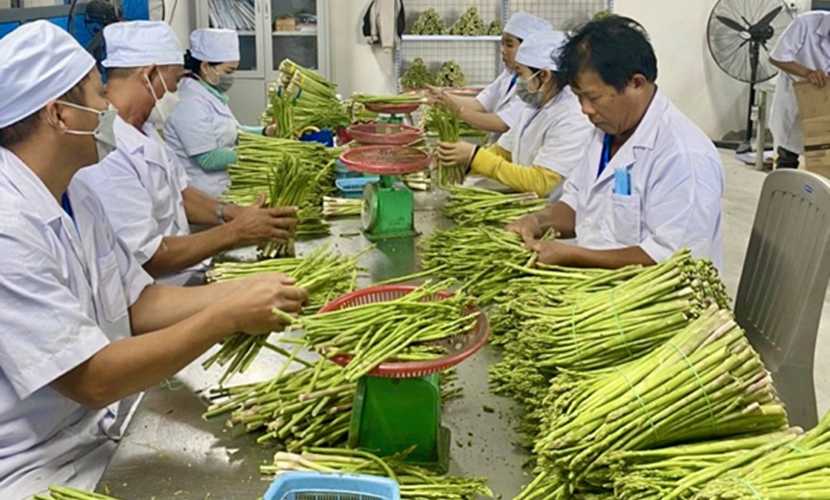
Vietnamese fresh asparagus
Currently, the cooperative purchases the entire daily asparagus harvest from its members in Thanh Tin hamlet and surrounding areas. Specifically, the cooperative offers to buy Vietnamese fresh asparagus a stable price of 50,000 VND per kilogram.
The cooperative sells a total of 300–700 kilograms of asparagus per day. As a result, it provides a stable income for local residents and maintains regular employment for 10 workers.
Green asparagus is a specialty crop of Ninh Thuan province, developing along a value chain meeting OCOP standards from three-star to potential five-star. Consequently, this opens up new prospects for members to improve their household economy.
The cooperative supports its members by providing seedlings, agricultural inputs, and guidance on asparagus cultivation following Vietgap procedures. In addition, it monitors and supervises production and purchases all Vietnam’s fresh asparagus.
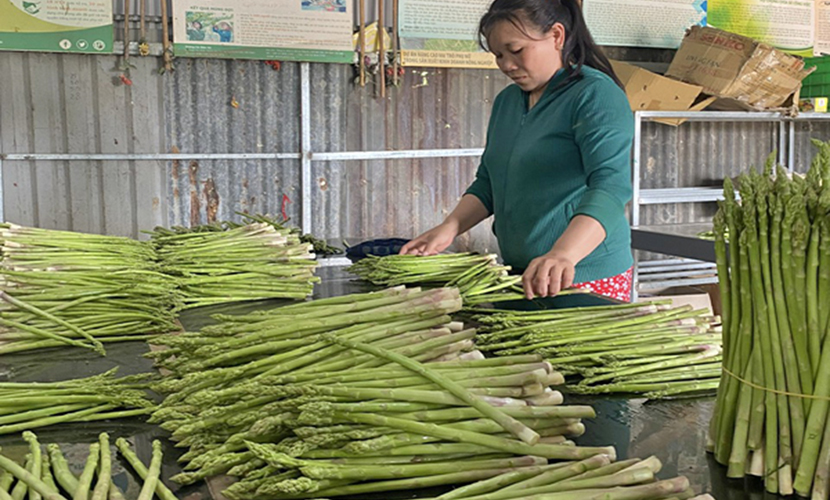
Vietnamese green asparagus
Ms. Tu Thi Ngoc Tuyet is a member of the Chau Re Cooperative. She shared that previously, her family’s two sao (one sao in Central Vietnam = 500 m²) of upland land was used to grow various crops. However, due to sandy soil and limited irrigation, yields were low and income was unstable. Then, the family boldly invested in drilling a well and installing a water-saving irrigation system. In addition, they converted the entire upland area to green asparagus cultivation.
Tuyet said, “Asparagus is quite easy to grow, requiring only regular fertilization. In addition, daily tasks include watering, weeding, and checking for pests. Harvesting takes place in the morning, continuously for three months, followed by a one-month rest period to allow the plants to recover”.
“Currently, the green asparagus garden provides a stable yield, averaging over 20 kg per day, and at times reaching 35 kg per day. The cooperative purchases it at 50,000 VND per kilogram, generating daily revenue of over 1 million VND. This year, our family is expanding the green asparagus area by an additional 3 sao,” she added.
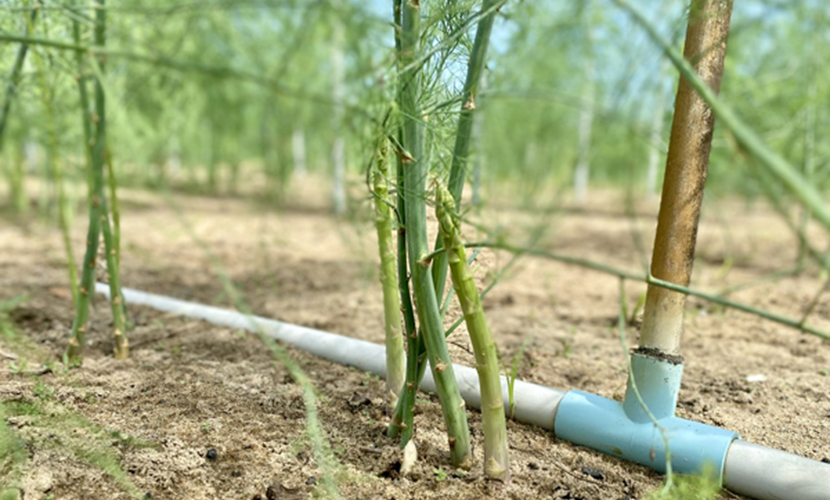
Vietnamese asparagus farm
Vietnamese fresh asparagus is mainly exported to Taiwan, China, Japan, and South Korea. Most households growing green asparagus sell their produce to local cooperatives in Ninh Thuan province at stable prices. These cooperatives access export markets through Vietnam’s export companies. In addition, the domestic market also offers considerable opportunities.
Along with the reputation of being the “king of vegetables” and a safe crop with many health benefits, green asparagus has gained popularity. As a result, it has become a trusted choice for restaurants, eateries, and home cooks.
From the beginning of 2024 until now, Chau Re Cooperative has produced an estimated 40 tons of green asparagus, valued at over 2 billion VND. To enhance economic efficiency, the cooperative has focused on building its brand and widely promoting its Vietnam’s green asparagus in the market.
The cooperative has helped local farmers gradually change their mindset and practices. In addition, it has fostered greater solidarity and mutual support among the Cham households here. It has enabled them to effectively apply advanced cultivation techniques and achieve prosperity on the dry, sun-exposed lands of Phuoc Hai.
Vietnamese source: https://kinhtenongthon.vn/Hieu-qua-tu-mo-hinh-trong-rau-vua-post61523.html
If you are interested in Vietnamese asparagus exports, please contact us:
Company: Agrideco Vietnam Co., Ltd.
Address: No 02, Alley 325 Kim Nguu, Vinh Tuy Ward, Hanoi, Vietnam
Tel/Kakao Talk/Whatsapp: +84 989 649 804
Website: https://agridecovietnam.com
Email: agridecovietnam@gmail.com