
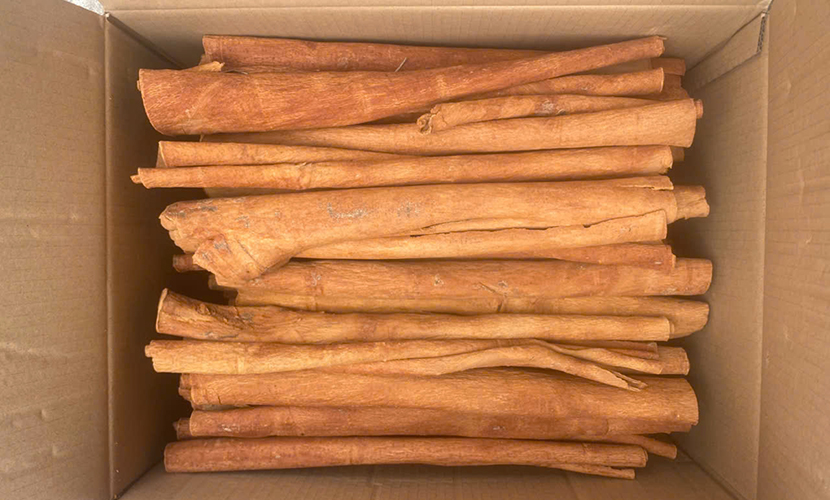
As of the end of November 2025, the export volume of Vietnam’s cassia products reached 108,929 tons. Accordingly, the export value was worth at $272.6 million. Compared to the same period last year, export volume increased by 20.7%, while export value rose by 9.4%.
These positive results reflect the strong development of the Vietnamese cassia industry. This sector is the “green gold” of many mountainous regions. Beyond its high economic value, cassia trees also play a significant role in forest restoration, erosion control, and microclimate improvement.
A major advantage of Vietnam’s cassia lies in its ability to be full utilization. Specifically, leaves and branches are raw materials for essential oil distillation. Also, cassia bark serves as an ingredient for spices and pharmaceuticals. In addition, the wood is an important material for manufacturing household items and construction products.
Vietnam’s cassia products
With a harvest cycle of 6–7 years, Vietnam’s cassia products provide stable and high economic returns for farmers. Thanks to diversified market demand, the income of cinnamon-growing households in many regions has improved significantly. This improvement is also supported by companies purchasing Vietnamese cassia directly from growers.
Vietnam’s cassia products reach 41,000 tons per year, roughly half that of China and Indonesia. However, the country now leads the world in cinnamon export value. In 2022, Vietnam accounted for 18.2% of global cinnamon production. Its share of the global export market was 34.4%, with export revenue exceeding $292 million. In addition to domestic production, Vietnam also imports a significant volume of cinnamon from Indonesia.
Conversely, Vietnam imported 454 tons of cinnamon in November, with a value of nearly $1 million. This represented an increase of 45% in volume and 19% in value compared to the previous month. Indonesia was the largest supplier of cassia for Vietnam, accounting for 80.6%, equivalent to 366 tons.
In the first 11 months of the year, Vietnam imported a total of 4,028 tons of cinnamon. The total import value of cinnamon reached $9.5 million. Compared to the same period last year, import volume decreased by 2.3%, and value decreased by 4.4%.
Vietnam’s cinnamon imports came mainly from Indonesia, reaching 2,903 tons and accounting for 72.1% of total imports. This was an increase of 46.8% compared to the same period in 2024.

Cinnamon sticks from Vietnam
Vietnam mainly imports cinnamon for deep processing to meet diverse demand in the food and beverage industries. They include coffee, tea, and confectionery, as well as in pharmaceuticals and cosmetics.
The imported cinnamon is also raw material to produce high-value products such as cinnamon powder for export markets. This is especially necessary as domestic production is not yet sufficient to supply major markets that require high-quality (organic) standards.
Despite holding a strong position in the global market, Vietnam’s cassia products have not been fully realized. The reasons include fragmented production and a lack of high-quality cinnamon products. Additionally, the presence of heavy metals and pesticide residues weakens the industry’s competitiveness.
Vietnamese source: https://trungtamwto.vn/hiep-dinh-khac/31373-que-viet-nam-xuat-khau-top-dau-the-gioi-nhung-phu-thuoc-vao-indonesia
If you are interested in Vietnamese cassia exports, please contact us:
Company: Agrideco Vietnam Co., Ltd.
Address: No 02, Alley 325 Kim Nguu, Vinh Tuy Ward, Hanoi, Vietnam
Tel/Kakao Talk/Whatsapp: +84 989 649 804
Website: https://agridecovietnam.com
Email: agridecovietnam@gmail.com