
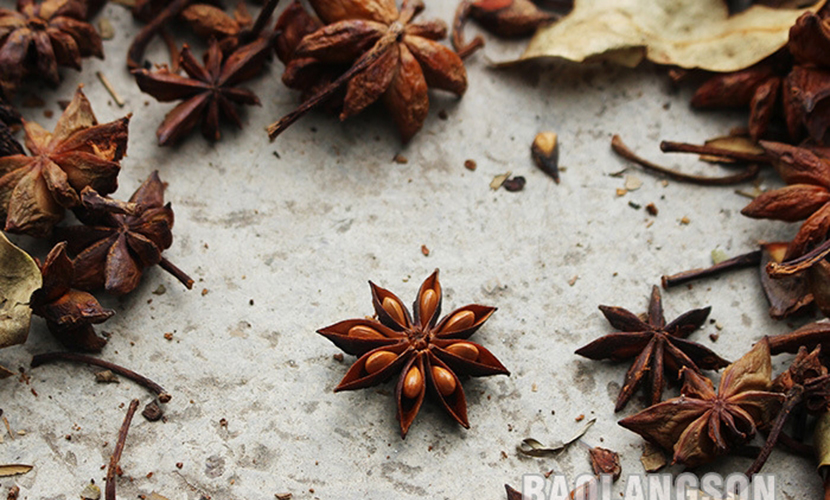
Previously, most of natural natural Vietnamese star anise in Lạng Sơn province was exported primarily to China. Today, however, the spice has reached consumers in many countries around the world. This achievement is the result of a long journey. It is also the result by the collective efforts of government authorities, industry stakeholders, local farmers, and businesses.
Lạng Sơn is home to more than 41,000 hectares of natural Vietnamese star anise. Of this total, around 28,000 hectares are currently in production. The province produces an average of 12,000-15,000 tons of dried star anise each year. Lạng Sơn star anise is proud for its high essential oil content, exceeding 11%. Trans-anethole, the compound responsible for its distinctive aroma, accounts for more than 90% of the essential oil. The oil is also free of toxic substances.
Vietnamese star anise and its derivatives have a wide range of applications in the pharmaceutical, food, cosmetic, animal feed, and crop protection industries. In Europe, star anise is commonly used to flavor confectionery, baked goods, and alcoholic beverages, as well as to help retain fragrance in perfumes. Most notably, star anise serves as a key raw material in the production of the antiviral influenza drug Tamiflu.
Natural Vietnamese star anise
Lạng Sơn Province recognized the risks faced by star anise growers due to their heavy reliance on the Chinese market. Therefore, the province included natural Vietnamese star anise in the province’s intellectual property development program. This initiative aims to strengthen the product’s brand and expand its market opportunities. It also assigned the Department of Science and Technology (DOST) to lead its implementation.
In 2007, the geographical indication (GI) for Lạng Sơn Star Anise was officially protected, becoming a nationally recognized intellectual property asset. The provincial government also authorized the DOST to register the geographical indication in major markets.
To fulfill this task, the DOST proposed that the Ministry of Science and Technology include the Lạng Sơn Star Anise geographical indication in the European Union registration support program under the EU-MUTRAP Project. However, entering the European market required Vietnam’s star anise to comply with strict quality control measures and technical trade regulations.
It also had to meet the European Union’s geographical indication protection requirements. Accordingly, natural Vietnamese star anise exported to demanding markets should have a verified origin and retain its natural color. Also. it should follow with good agricultural practices.
To meet these export requirements, the DOST gradually refined the management and operation of the Lạng Sơn Star Anise geographical indication. It aligned the system with the European Union’s GI management framework. The department also strengthened product traceability and quality control before allowing products to carry the geographical indication. This ensured that both Lạng Sơn star anise and its essential oil consistently met national and international standards.
Alongside these management efforts, the DOST organized training programs to help farmers in the protected geographical indication area improve cultivation techniques and rejuvenate aging star anise forests. The programs also promoted clean and safe production models and compliance with quality management regulations. At the end of 2015, the application for natural Vietnamese star anise geographical indication was submitted to the European Union’s GI registration authority.
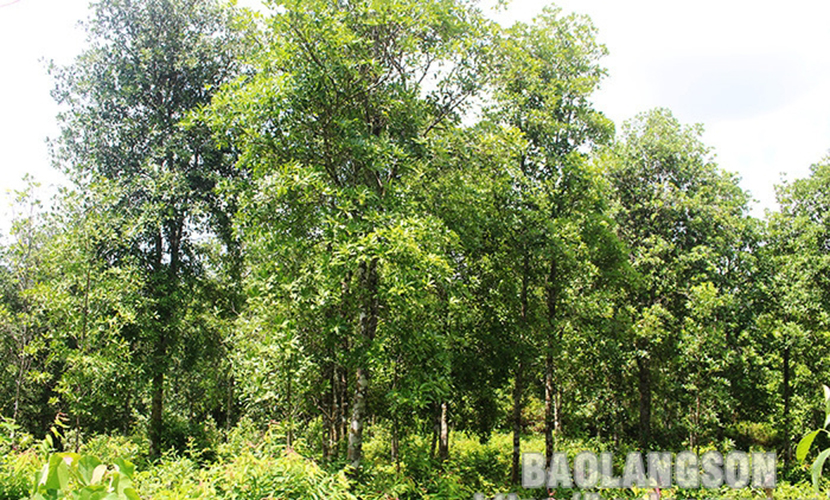
Vietnamese star anise forest
In August 2020, the EU–Vietnam Free Trade Agreement (EVFTA) entered into force. Under the agreement, Lạng Sơn Star Anise became one of 39 Vietnamese geographical indications officially protected in the European Union. This recognition provided an important legal foundation for bringing Lạng Sơn star anise to global markets.
Legal protection alone was not enough to support Lạng Sơn star anise’s international expansion. Cultivation, harvesting, post-harvest handling, productivity, and product quality also played critical roles. In recent years, the province has implemented sustainable forestry development strategies.
For natural Vietnamese star anise, the province aims to maintain approximately 35,000 hectares of productive plantations by 2030. It also plans to improve the management and productivity of 24,000 hectares. Forest management practices are also being upgraded to organic production standards to increase product quality and value.
The department is currently advising the provincial government on a resolution that would establish special policies to encourage sustainable forestry development during the 2023-2030 period. The proposed policies include support for accelerating the application of advanced technologies to improve, expand, and increase the productivity of Vietnamese star anise exports.
In addition, the Department of Agriculture and Rural Development has worked with relevant agencies to establish high-quality planting material through advanced propagation techniques such as grafting and tissue culture. It has also encouraged nurseries to upgrade their production systems through investment support programs aimed at producing superior seedlings. At the same time, researchers have developed improved cultivation practices focused on increasing productivity and quality. Meanwhile, extension officers provide farmers with hands-on technical guidance.
International cooperation has also been strengthened to improve cultivation and processing techniques. Numerous scientific research projects have also been carried out to rehabilitate aging, low-yield star anise forests. They have also developed intensive cultivation methods that deliver higher productivity and better quality.
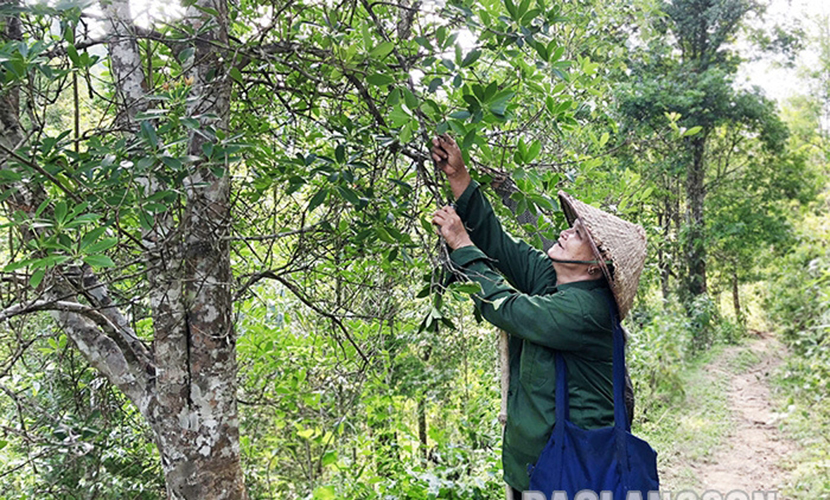
Harvesting Vietnamese star anise
Since the beginning of 2023, the department has conducted province-wide surveys to assess the condition of star anise plantations. This has provided the basis for policies that support forest development and improve productivity and quality to meet export standards.
Complementing these initiatives, organic star anise cultivation models have recently been introduced in the districts of Chi Lăng, Bình Gia, and Văn Quan, covering a total area of 705 hectares. Farmers participating in these programs have adopted modern cultivation practices. These include proper land preparation, improved seed selection, organic fertilization, efficient irrigation, pruning, and the use of environmentally friendly pest control products.
As a result, tree health has improved, pest and disease incidence has declined, and yields have increased by 15-20% compared with previous production methods. Organic star anise products have also been evaluated by relevant authorities as having superior quality and clear traceability. They also fully comply with food safety requirements. This has significantly increased their market value.
Mr. Linh Văn Quyền is a grower from Tây B Village in Yên Phúc Commune, Văn Quan District. He said that his family currently manages five hectares of star anise trees ranging from three to thirty years old. His family has regularly cleared undergrowth, pruned branches, strengthened disease prevention measures, and improved soil nutrition.
As a result, his orchard experiences fewer pest problems. Productivity and quality have improved, and purchasing prices have become higher and more stable. His family now earns more than VND 100 million annually from natural Vietnamese star anise cultivation.
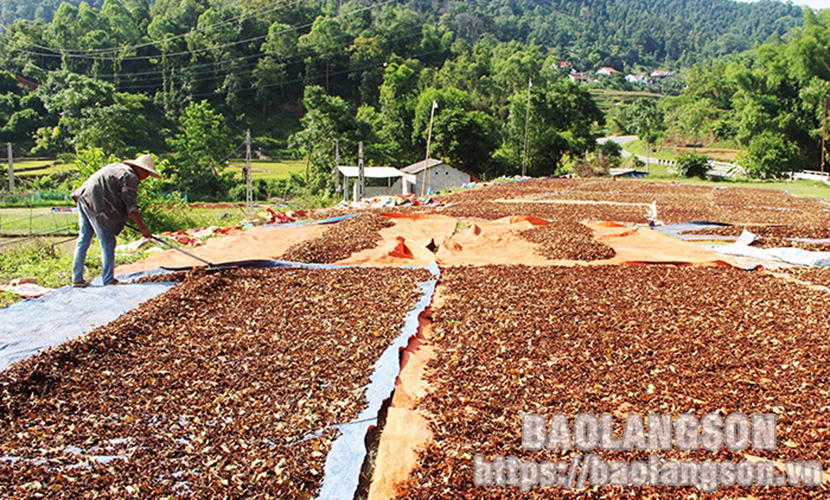
Drying Vietnamese star anise
Since 2020, Lạng Sơn Province has established two star anise value chain partnerships covering more than 1,000 hectares in Chi Lăng and Tràng Định districts. Together, these Vietnamese partnered companies purchase more than 3,000 tons of fresh star anise each year for processing and export. In addition to exporting directly to overseas buyers, they actively promote their products through international e-commerce platforms such as Alibaba and Amazon.
The province has also developed three OCOP (One Commune One Product) products made from star anise. Through trade promotion activities, several businesses and investors have shown interest in processing and marketing star anise products, including investments in processing facilities.
These value chain partnerships have helped increase product value and stabilize market outlets. They have also encouraged long-term investment by growers and strengthened the Lạng Sơn star anise brand. In addition, they have improved competitiveness and supported the development of sustainable markets for high-quality star anise products.
According to a representative of the partnered company, the company purchases more than 1,000 tons of fresh star anise from local farmers each year for processing and export. The products have their presence at markets including India, Dubai, and the United Kingdom, with about 80% exported to India.
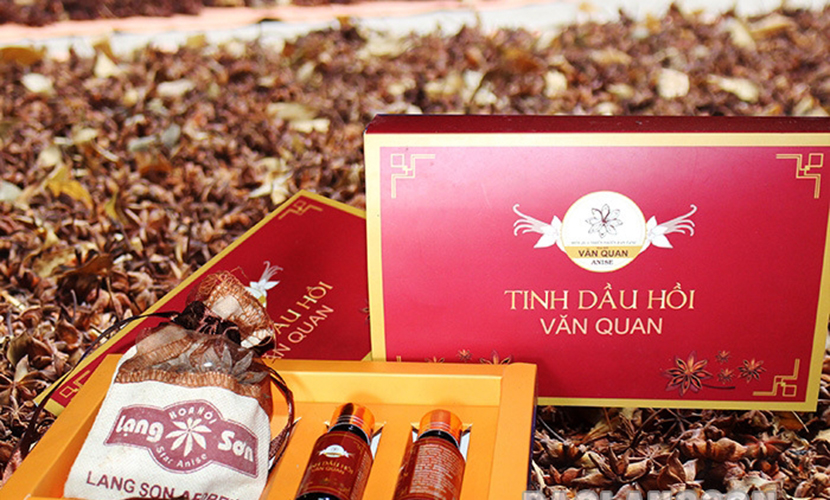
Vietnamese star anise essential oil
To diversify its export portfolio, the company has expanded overseas promotion of natural Vietnamese star anise through supermarkets in several countries. They include star anise essential oil, organic spices, health care products, dishwashing liquid, and cinnamon-star anise soap. To secure a reliable supply of premium raw materials, the company provides production guidance to farmers on cultivation and harvesting practices. It has also signed contract farming agreements covering 700 hectares of star anise plantations.
Through a combination of legal protection, productivity improvements, and quality enhancement measures, Lạng Sơn star anise now meets the rigorous standards of demanding international markets. These standards cover every stage from cultivation and harvesting to processing and storage. As a result, the province is no longer dependent on its traditional Chinese market. Instead, Lạng Sơn star anise has successfully expanded to destinations around the world, creating more stable market opportunities and increasing product value.
Since 2020, fresh star anise prices have risen significantly to VND 30,000-50,000 per kilogram, while dried star anise sells for VND 100,000-150,000 per kilogram. The industry now generates an estimated annual value of VND 1.7 trillion. Today, Lạng Sơn star anise is present at numerous markets. They include India, Malaysia, Indonesia, the United Kingdom, the United States, France, Japan, and Germany.
Vietnamese source: https://baolangson.vn/hoa-hoi-lang-son-va-hanh-trinh-vuon-ra-the-gioi-1578461.html
For more information about natural Vietnamese star anise, please contact us:
Company: Agrideco Vietnam Co., Ltd.
Address: No 02, Alley 325 Kim Nguu, Vinh Tuy Ward, Hanoi, Vietnam
Tel/Kakao Talk/Whatsapp: +84 989 649 804
Website: https://agridecovietnam.com
Email: agridecovietnam@gmail.com