
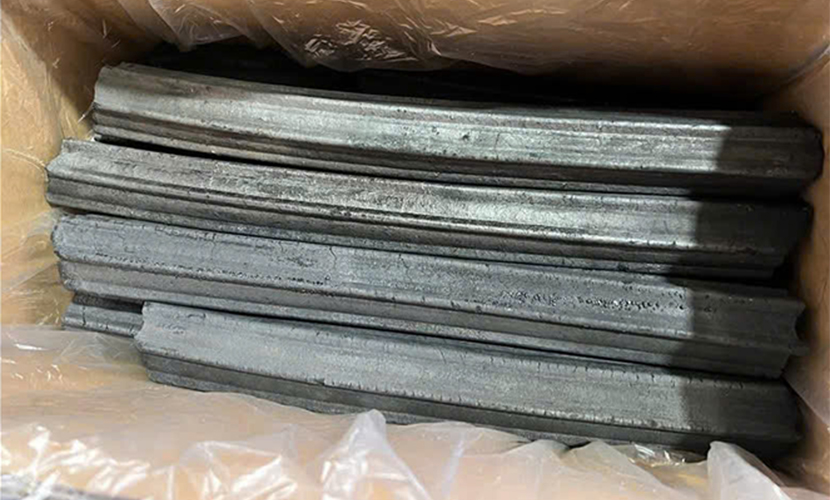
While most forest product processing enterprises focus on producing veneer, sawn timber, or handicrafts, some facilities in Bac Ninh have chosen a different path. They specialize in producing Vietnam’s smokeless charcoal. From branches and small-diameter wood that once had little value, they create Vietnamese charcoal exports. This shift helps improve the efficiency of plantation forest resource utilization and creates jobs for local workers.
Previously, after each harvest season of plantation forests or long-term fruit trees, growers mainly sold wood as raw material to processing facilities. They often left branches and small-diameter wood or used only as household fuel. Meanwhile, in international markets—particularly in Asian countries such as Japan and South Korea—demand for smokeless charcoal has been steadily increasing. This demand comes mainly from restaurants, barbecue services, and certain light industries.
Recognizing this opportunity, several enterprises in the province have boldly invested in oxygen-limited, or anaerobic, kiln systems to produce charcoal for export. Unlike traditional charcoal, export-grade charcoal must meet stringent standards. These include even burning, high calorific value, low ash content, being odorless and smokeless, and being free from chemicals during processing. From a familiar household product, charcoal should upgrade into an export commodity. This transformation has achieved through a tightly controlled production process.
Vietnamese charcoal exports: Grade A
One of the pioneering enterprises in producing Vietnamese charcoal exports is Agrideco Vietnam Co., Ltd., based in Hanoi. The company was founded by Mr. Luy, born in 1985. After working in South Korea for a period, Mr. Luy returned home. He began studying smokeless charcoal production technology, a field still relatively new in Vietnam. However, this technology is well suitable to local plantation forests and fruit-growing areas.
In 2016, he leased land to establish a company specializing in producing and processing charcoal for export to the South Korean market. After accumulating sufficient capital and experience, he invested in purchasing land in Luc Son Commune. This location is close to raw material areas and suitable for building a centralized production workshop.
Raw materials are mainly from by-products of plantation forests and perennial fruit trees. These include longan, lychee, jackfruit, pomelo, and eucalyptus. According to Mr. Luy, the most important factors in producing export charcoal are product quality and cost control. The production process includes selecting raw materials, pyrolysis under oxygen-deficient conditions, natural cooling, grading, and packaging.
Unlike traditional charcoal, export-standard charcoal must have long-lasting combustion and low ash content. They must also be free of impurities, smokeless, and contain no preservatives. The charcoal is shaped into pieces measuring 6–8 cm in length and 3–5 cm in diameter. It is packaged in plastic bags and cardboard cartons and delivered to consumers after 15–20 days of sea transport.
Thanks to strict control from raw material selection to pre-processing and packaging, international buyers highly rate the company’s charcoal products. On average, the enterprise exports 110–130 tons per month, generating an annual revenue of VND 40 billion.

Vietnamese charcoal exports: Grade B
Beyond benefits for enterprises, charcoal export production aligns well with circular economy development. It also contributes to job creation in rural areas. Due to the nature of the work, stages such as raw material procurement, pre-processing, kiln operation, grading, and packaging all require a stable workforce. As a result, many households in plantation forest areas earn additional income. They do so by supplying raw materials or working at production facilities.
At the factory, dozens of workers are sorting, packaging, and inspecting Vietnamese charcoal exports before shipment. Ms. Nguyen Thi Phan is a worker of Bai Ca Hamlet, Luc Son Commune. She has worked with the company for many years. She shared that the job does not require much travel and suits her health. Being close to home allows her to take care of household duties while earning extra income to support her family.
There are currently nearly 40 workers working at the company are all local laborers. When work is steady, each worker earns about VND 7–8 million per month. Regarding the production process, raw materials come from fruit-growing areas and plantation forests within the province and neighboring regions. They are then processed through specialized charcoal kiln systems for about seven days.
However, the initial output is still crude charcoal. It must be further trimmed and sorted to select pieces that meet export standards. In 2025, the company’s pre-tax revenue exceeded VND 35 billion. It also contributed more than VND 1.3 billion to the state budget. In addition, the enterprise actively participates in social welfare activities launched by provincial and local authorities.
According to the Forest Protection Sub-department, the province currently has 727 forest product processing facilities. Among them, 37 units directly export wood products abroad, of which only four export charcoal. Under the management of functional agencies and local authorities, the operations of processing facilities have become increasingly standardized. These efforts have contributed to forest product export value reaching approximately USD 115 million in 2025.

Vietnamese charcoal exports: Grade C
Compared to veneer or handicrafts, the scale of the charcoal export industry in Bac Ninh is still modest. However, this segment faces less direct competition with traditional wood-processing industries. At the same time, it effectively utilizes plantation forest by-products.
Vietnamese charcoal nterprises believe that for the charcoal export sector to develop sustainably, continued investment in technology is necessary. In particular, kiln systems should improve to save fuel and reduce emissions. In addition, businesses must focus on brand building and market expansion. They should also reduce dependence on traditional importing countries. At the same time, strengthening value-chain linkages is essential. This will help create stable raw material zones and supply high-quality products to customers.
From a familiar product used in rural kitchens, charcoal is gradually becoming an export commodity that generates real economic value. By choosing a different path from the majority, charcoal-producing enterprises in Bac Ninh are making a clear statement. Within the forestry sector, not only veneer or handicrafts create value. Even by-products once considered waste can become valuable goods if properly utilized.
Vietnamese source: https://baomoi.com/bac-ninh-bien-phe-pham-rung-trong-thanh-hang-xuat-khau-c54349249.epi