
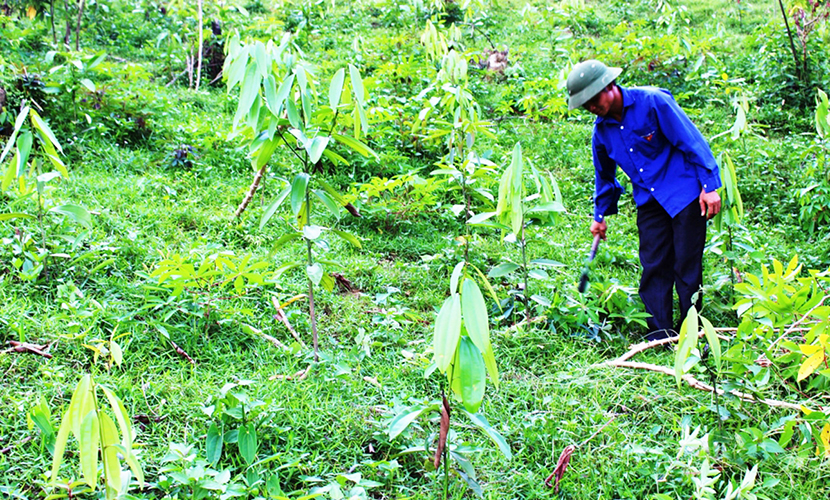
In recent years, Vietnamese cinnamon trees have not only served as a crop for poverty alleviation. Moreover, they have become a symbol of the aspirations for change in the highland border regions. This is the desire to rise through their own efforts, through the sweat and intelligence of Cao Bang’s farmers.
Along the hillsides of Minh Khai commune, local farmers are diligently tending each row of Vietnamese cinnamon trees. Specifically, they are mounding soil, weeding, and checking for pests. On lands that were once left fallow, cinnamon trees have now taken root. In doing so, they bring hope for a prosperous and sustainable future for dozens of poor households in the area.
Vietnamese cinnamon trees
Since 2023, the Investment and Support Program for production pevelopment and value chain linkage for Vietnamese cinnamon trees has officially launched in Minh Khai commune and Tan Giang ward. This program is led by the Cao Bang province, with Tan Bach Agricultural Cooperative as the implementing unit.
The program has a total budget of nearly two billion VND, of which the State provides over 1.47 billion VND. It supplies 136,864 cinnamon seedlings and 62 tons of organic fertilizer to 99 poor households. In addition, it also provides training on planting techniques, care, and plant protection.
After one year of implementation, the 28 hectares of Vietnamese cinnamon trees have entered a vigorous growth stage. As a result, local residents have gained great confidence in the program’s effectiveness.
“Previously, the hills were overrun with weeds, and corn yields were low. Now, with the support program and the cooperative guaranteeing the product, we can invest our effort with peace of mind. Hopefully, in a few years, the cinnamon harvest will help stabilize our family’s economy,” shared a farmer.
This transformation to Vietnamese cinnamon trees did not happen by chance. The value chain linkage model is systematically designed, covering all stages from production organization to marketing. Farmers handle cultivation, and the cooperative offers technical support as well as purchase commitments. Meanwhile, the provincial Cooperative Alliance provides funding, seedlings, and supervision.
This scientific approach to wealth creation, combined with the “three-party” linkage, not only reassures cinnamon growers. It also ensures transparency and efficiency in the allocation of state resources, promoting sustainable poverty alleviation.
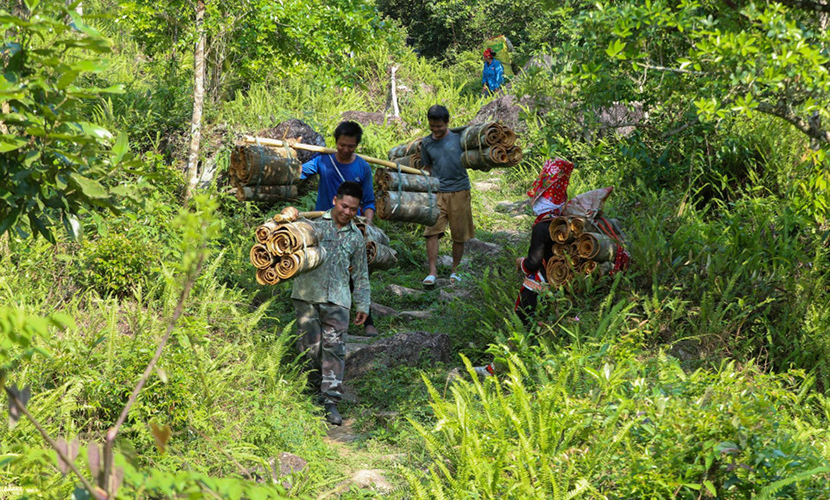
Harvesting Vietnamese cinnamon trees
In the past, cinnamon growers only knew to sell fresh cinnamon barks to traders at unstable prices. Today, Tan Bach Agricultural Cooperative acts as a “patron” for members and linked farmers.
The cooperative not only guarantees product purchase but also aims for deep processing to increase the value of cinnamon. This includes distilling essential oils, grinding cinnamon powder, and drying high-quality cinnamon barks.
Each kilogram of dried cinnamon can sell for 2–3 times the price of raw cinnamon. Branches and leaves can be used for producing cinnamon essential oil, ensuring no part goes to waste. With the cooperative handling processing, growers can produce with confidence without worrying about price drops.
The initial success in Minh Khai demonstrates Cao Bang’s correct approach to developing agricultural products along the value chain. Instead of providing short-term support, the provincial Cooperative Alliance has chosen a long-term 15-year investment plan (2023–2038). Therefore, it has given residents time to stabilize production and created sustainable cinnamon raw material areas.
Cooperatives are not only product buyers but also serve as bridges for farmers to access new scientific techniques. They help farmers learn pruning, care, and proper harvesting methods to improve yield. Many poor households, through cooperative linkage, have gained additional income from supplementary work. This includes collecting, drying, peeling bark, and distilling essential oils.
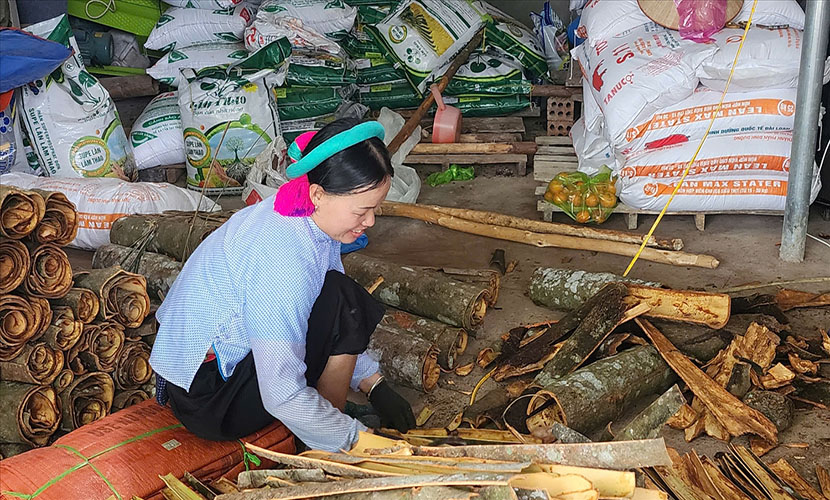
Cutting Vietnamese cinnamon barks
Cao Bằng, known for its mountainous terrain, cool climate, and fertile, moist soil, provides ideal conditions for cinnamon growth. Alongside star anise, cinnamon has become a high-value medicinal and culinary crop, sought after by domestic and international markets alike.
Cao Bang province has identified the commercial development of cinnamon and star anise as a key solution for poverty reduction. The provincial government have carried out numerous support programs.
Particularly, they included providing seedlings and fertilizers, technical training, and encouraging production-consumption linkages. In addition, the province has been training cooperative management capacity, promoting trade, and building OCOP product brands.
Thanks to this support, residents are no longer alone in the market. Cooperatives have become a “bridge” between farmers, businesses, and the market. Guaranteed product purchase stabilizes market access, while deep processing increases product value and creates additional local jobs.
In many other regions, Cao Bang’s model serves as a role model and example for many other organizations to follow. For example, a spice Vietnamese enterprise has demonstrated success by developing over 1,000 hectares of organic cinnamon.
This enterprise has built an essential oil processing plant for exporting to Europe and Japan. This serves as a “living lesson” for cooperatives in Cao Bang on establishing raw material zones linked with processing, marketing, and sustainable branding.
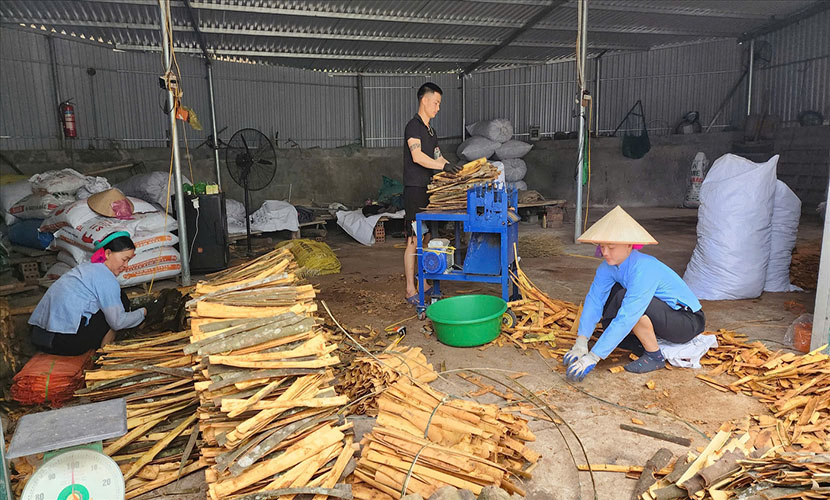
Vietnamese cinnamon factory
In reality, cinnamon and star anise not only help local people increase income and achieve sustainable poverty reduction but also bring clear social and environmental benefits. When residents plant cinnamon, forests are reforested, soil retains water, and erosion is reduced.
For ethnic minority communities, growing cinnamon is a livelihood. In addition, it is also a “root” that connects them to the forest and the land.
In recent years, many households in mountainous areas have earned hundreds of millions of VND annually from selling cinnamon and cinnamon essential oil. Many young people who previously worked as laborers have returned home and joined cooperatives. Also, they opened small processing workshops and created additional jobs for local workers.
According to the Cao Bang Cooperative Alliance, developing cinnamon aims at increasing local incomes. Also, it serves as a strategic step toward establishing an ecological economic zone. The provincial Cooperative Alliance will continue to accompany and support cooperatives. As a result, it helps expandscale, build brands, and connect to domestic and international markets.
Despite these achievements, Cao Bang cinnamon still faces challenges. Specifically, they are uneven seed quality, inconsistent cultivation techniques, and limited processing capacity.
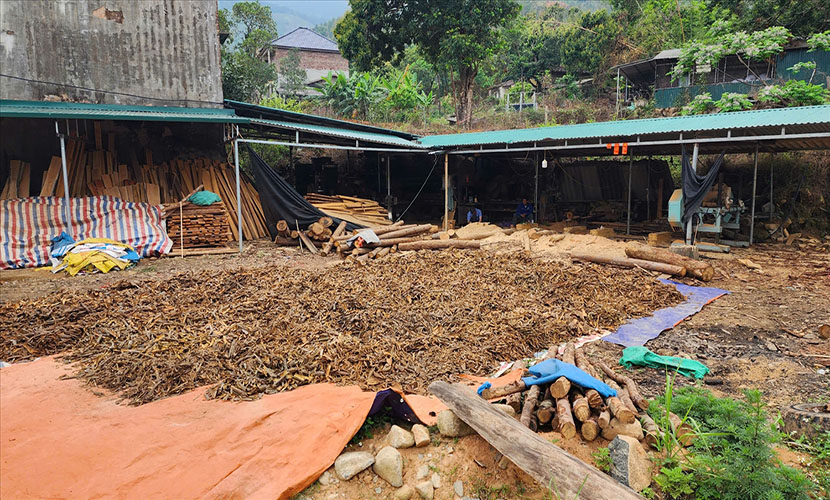
Drying Vietnamese cinnamon
For cinnamon to truly become a “locomotive” for the livelihoods of highland communities, the locality needs to continue investing in seed research and transferring essential oil and cinnamon powder processing technologies. Additionally, it is important to establish geographical indications and organic certification for the product.
Developing the “Cao Bang cinnamon” brand will not only increase export value but also strengthen the product’s position in the domestic market. Accordingly, farmers and cooperatives will have a more solid foundation to invest and expand production. They will also be able to attract businesses to participate in the value chain.
The story from the Minh Khai hills illustrates the renewed vitality of highland agriculture when organized systematically along the value chain. Cinnamon is gradually becoming a key product, providing sustainable livelihoods for hundreds of households.
Beyond poverty reduction, Vietnamese cinnamon trees align with the goals of a green and circular economy. Every part of the plant is utilized, and forests are preserved.
With the joint efforts of the government, Cao Bang cinnamon is sure to spread its fragrance far and wide. It will reach not only across Vietnam but also international markets.
Vietnamese source: https://vnbusiness.vn/mo-hinh/cay-que-cao-bang-vang-xanh-tren-hanh-trinh-thoat-ngheo-ben-vung-1110301.html