
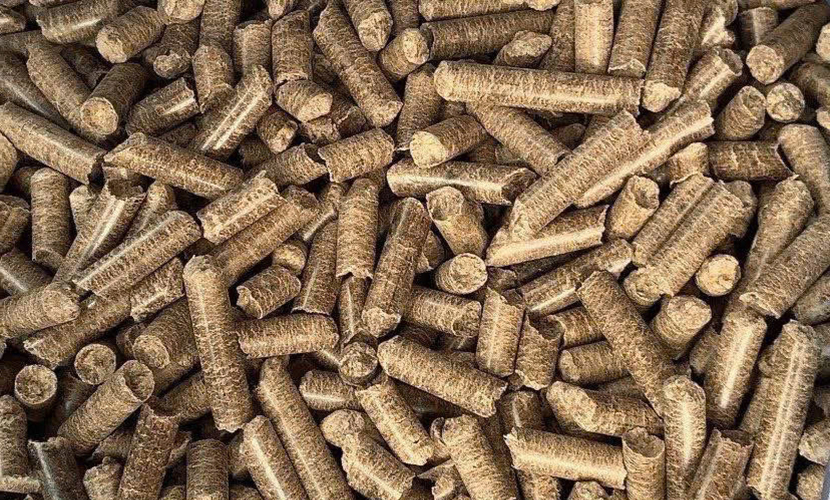
South Korea and Japan are two main markets of Vietnamese wood pellet exports. The value of Vietnam’s wood pellets to the two markets accounts for over 95% of total pellet exports. More specifically, this volume reaches 1.52 million tons with a value of more than $247 million.
Wood pellets exported to South Korea are mainly made from by-products of the wood-processing industry. These include sawdust, shavings, and leftover wood pieces. Enterprises exporting pellets to South Korea are primarily available in the Southeast region, where there are many furniture manufacturers.
Vietnamese wood pellet exports
At the beginning of 2023, the South Korean market experienced strong fluctuations. The prices of Vietnamese wood pellet exports to South Korea fell below $90 per ton (FOB) in April. This was lower than the production cost for many Vietnam’s pellet companies.
Many enterprises, especially small-scale ones, were in the force of suspending operations. Import volume also dropped sharply.
As a result, in the first five months of 2023, Vietnam’s pellet exports to South Korea reached 0.65 million tons, equivalent to $96.1 million. This represents a decrease of 41% in volume and 45% in value compared with the same period in 2022.
According to Ms. Cao Thi Cam from the Vietnam Timber and Forest Products Association, this situation forced some Vietnamese pellet producers to halt production. In particular, those lacking sufficient financial capacity were the most affected.
To reduce risks for pellet manufacturers and exporters, the Pellet Sub-Association has implemented several practical activities. These include connecting with Korean companies to provide more information about production conditions.
Combined with the recovering demand for pellets in South Korea, export prices have begun to gradually increase. As of early July, prices reached about $110 per ton. Export prices of Vietnamese wood pellet exports to South Korea continue to show an upward trend.
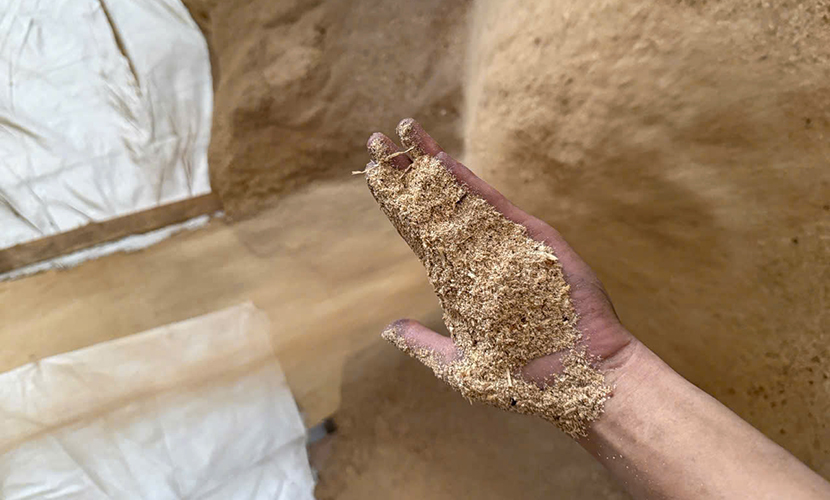
Wood sawdust – raw materials for wood pellet production
However, Korean buyers have significantly changed their purchasing methods of Vietnamese wood pellet. Instead of buying large quantities through bulk tender packages, they now divide tenders into smaller lots. They also make monthly purchases to reduce price pressure.
Meanwhile, the Japanese market remains highly stable in both volume and pricing. In the first five months of 2023, Vietnam exported 0.87 million tons of Vietnamese pellets to Japan. The value of these exports reached $151 million.
Export volume decreased by 5.7%, while export value increased by 19.7% compared with the same period in 2022. Orders are mostly long-term contracts.
According to several exporters, pellet prices for the South Korean market in June 2023 were only around $110 per ton. In contrast, export prices to Japan ranged from $145 to 165 per ton.
Wood pellets exported to Japan must be made from domestically grown plantation timber. They also must meet sustainable forest management certification (FSC) requirements. Such raw materials are available in regions with large plantation forest areas, particularly from the Central region to the North.
Mr. To Xuan Phuc of Forest Trends noted that Japan’s pellet demand will expand in the future. This presents a major opportunity for Vietnamese wood pellet enterprises. It is especially beneficial for those with stable input materials, sustainability certifications, large-scale factories, and professional management.
Since Q2 2022, export demand for wood furniture has declined. Consequently, the wood by-products used in pellet production have also decreased. This would lead to raw material shortages for pellets exported to South Korea.
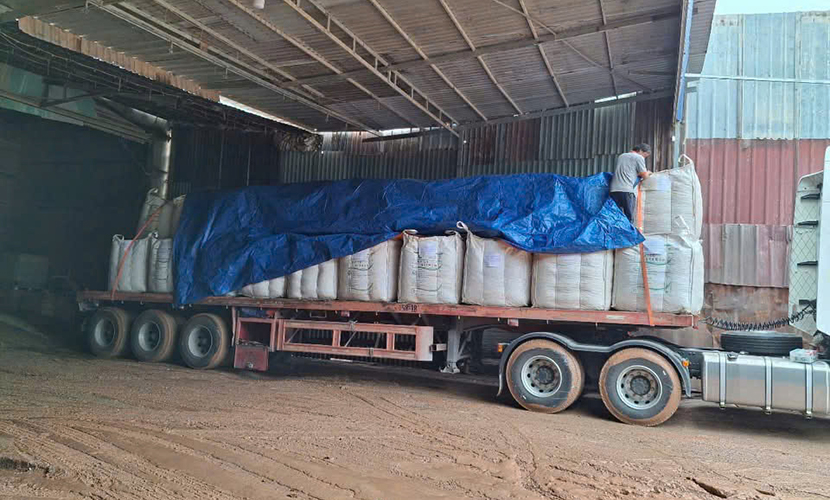
A wood pellet factory in Vietnam
According to Forest Trends and the timber associations, the global energy crisis caused by the Russia–Ukraine conflict dramatically increased pellet demand and prices worldwide. This triggered a wave of investment in pellet production, not only in Vietnam but also in other countries.
This wave has intensified competition among wood pellet producers in Vietnam. It has also increased rivalry between Vietnamese producers and companies in Malaysia, Thailand, and Indonesia. In recent years, pellet consumption has risen primarily in European countries, Japan, and South Korea.
However, Vietnam’s pellet industry has opportunities to expand into the domestic market, as domestic consumption shows signs of rapid growth. This growth is driven by government efforts to reduce greenhouse gas emissions and promote clean energy, including the use of pellets as a substitute for coal in energy production.
Forest Trends and the timber associations also forecast that in the remaining months of 2023, Vietnam’s pellet production and exports will remain relatively stable. For the South Korean market, export volume and prices are likely to rise in line with current trends, though not dramatically.
For the Japanese market, export volume and prices will remain stable. Competition for raw materials used to produce pellets for South Korea will continue to increase, as export markets for other wood products have yet to recover.
Vietnam has now become the world’s second-largest pellet producer, behind only the United States. From 2013 to 2022, Vietnam’s pellet export volume and value increased by 28 times and 34 times, respectively.
According to the General Department of Customs, in the first five months of 2023, Vietnam exported 1.57 million tons of pellets worth approximately $256.5 million. Exports are currently on an upward trend.
Vietnamese source: https://trungtamwto.vn/hiep-dinh-khac/23991-hai-thi-truong-xuat-khau-chu-luc-cua-vien-nen-go-viet-nam