
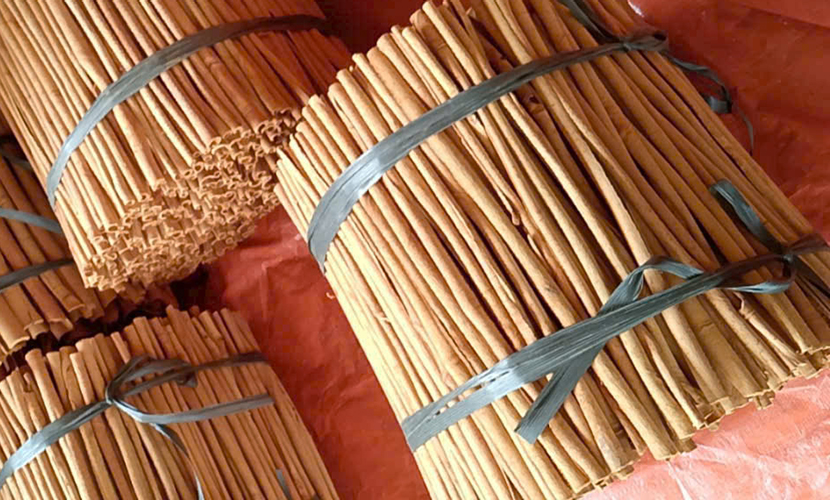
Vietnam cinnamon products continued to maintain strong growth momentum in October 2025. They recorded sharp increases in both export volume and value.
According to statistics from the Vietnam Pepper and Spice Association (VPSA), in October alone, Vietnam exported 8,985 tons of cinnamon. Accordingly, the export value of Vietnamese cinnamon reached USD 21.2 million. This represented an increase of 20.9% in volume and 18.5% in value compared to the previous month.
Cumulatively over the first 10 months of 2025, Vietnamese cinnamon companies exported a total of 99,463 tons, generating USD 249.5 million in export revenue. Compared to the same period in 2024, export volume rose by 25.1% while export value increased by 13.2%.
Vietnam cinnamon products
These figures indicate sustained international demand and competitiveness for Vietnam cinnamon products. Among export destinations, India remained the key market, importing nearly 37,787 tons of cinnamon. This accounted for 38% of Vietnam’s total cinnamon exports during this period.
These positive results reflect the strong development of Vietnam’s cinnamon, a crop often regarded as “green gold” in many mountainous regions. Beyond its high economic value, cinnamon also plays an important role in forest coverage, erosion control, and microclimate improvement.
By 2023, Vietnam’s total cinnamon cultivation area reached approximately 180,000 hectares. Production mainly takes place in Yen Bai, Lao Cai, Quang Nam, Thai Nguyen, and several provinces in the North Central region.
A key advantage of cinnamon lies in its comprehensive utilization. Leaves and branches are materials for essential oil distillation. Cinnamon bark serves as a spice and medicinal ingredient. Meanwhile, wood is applied in the production of household goods and construction materials.

Vietnamese split cinnamon
With a harvesting cycle of 6–7 years, cinnamon provides high and stable economic returns for growers. Thanks to diverse market outlets and on-site procurement by enterprises, incomes of cinnamon-growing households in many localities have improved significantly.
Vietnam cinnamon products are increasingly present across multiple industries. These include pharmaceuticals, food processing, handicrafts, and the flavor and fragrance sector.
Many provinces, including Yen Bai, Bac Kan, and Thai Nguyen, are developing organic cinnamon cultivation models. These models link production with forest protection and biodiversity conservation. Such approaches not only enhance export value but also promote the sustainable development of the cinnamon industry in line with global market trends.
Vietnamese source: https://doanhnhansaigon.vn/que-viet-nam-hut-manh-thi-truong-an-do-kim-ngach-tien-sat-moc-250-trieu-usd-329474.html