

Vietnamese bananas are currently a key fruit crop and also among Vietnam’s most important export fruits. The market for Vietnam’s banana is expanding rapidly, with strong consumption demand. At the same time, the country has significant potential in terms of cultivation area and production volume.
Mr. Nguyễn Quốc Mạnh is the Deputy Director of the Department of Crop Production and Plant Protection. He stated that Vietnamese banana is one of the country’s 14 key fruit crops. In 2024, banana export turnover reached $380 million, ranking fourth among Vietnam’s major export fruits. In 2025, the nationwide banana cultivation area exceeded 163,000 hectares, with a production volume of around 2.75 million tons.
The global banana market presents wide opportunities for Vietnam’s banana companies. According to a report by Mordor Intelligence, a global market research and consulting firm, the global banana market valued at $139.51 billion in 2024 and will be able to reach $175.51 billion by 2029. With strong global demand and Vietnam’s development potential for banana cultivation, banana exports show promising prospects. They could potentially reach the $1 billion mark.
Vietnamese bananas
According to the Master Plan for the Development of Key Fruit Crops up to 2025, with orientation toward 2030, issued by the Ministry of Agriculture and Rural Development (now the Ministry of Agriculture and Environment), Vietnamese bananas are one of the priority products. This designation highlights the strategic importance of bananas in Vietnam’s agricultural development. Bananas are a high-value crop and belong to the group of fruit crops with the largest cultivation area in Vietnam.
However, the current export value of Vietnamese banana still does not match the scale of production and potential. This is especially true when compared to regional countries that have established stable export value chains for bananas. These countries maintain high-quality standards and strict disease control.
In recent years, several Vietnamese fruit enterprises have made structured investments in the banana sector. They have established concentrated raw material zones, applied standardized technical processes, and focused strongly on export markets.
According to the Master Plan for the Development of Key Fruit Crops up to 2030, the banana cultivation area will be able to reach 165,000–175,000 hectares, with a production volume of 2.6–3 million tons. Thus, Vietnam’s banana sector has basically achieved the targets set for the period up to 2030.
The future development orientation for the banana sector is to build sustainable production systems. These systems aim to increasingly meet the stringent requirements of both new and expanding export markets.
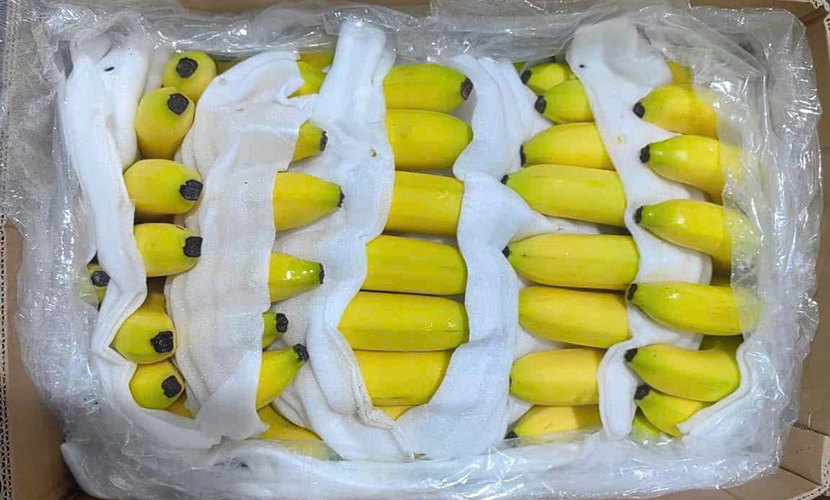
Vietnam’s banana for export
In addition to its large export potential, Vietnam’s banana sector is facing serious risks from Fusarium wilt (Panama disease). This disease is one of the greatest challenges to the sustainable development of the industry.
The disease was first recorded in Panama and later spread to neighboring countries in the north, such as Costa Rica and Guatemala, as well as southern countries like Colombia and Ecuador. It caused a severe crisis in the banana industry. In Vietnam, Panama disease at times nearly destroyed entire regions of cultivated bananas, forcing farmers to switch to other crops.
To address the core challenge of Panama disease, the most effective solution currently is the development of disease-resistant varieties. Under the National Variety Program through 2025 with a vision toward 2030, priority is given to breeding high-yield, high-quality banana varieties that are resistant to Panama disease.
This effort has been actively promoted and has begun to yield positive results. Several new banana varieties, tested under strict conditions, have demonstrated high resistance, such as UNI 126 from Unifarm and Furi 5 from the Vegetable and Fruit Research Institute. These varieties are key to reopening production in areas previously devastated by the disease, allowing farmers to confidently resume cultivation.
The emergence of well-invested enterprises and the establishment of concentrated raw material zones are gradually transforming the sector. The application of standardized technical processes is also playing a key role in this transformation. By effectively addressing the challenges of disease-resistant varieties and processing, Vietnamese bananas will become a new force on the global agricultural map.
Vietnamese source: https://doanhnghieptiepthi.vn/chuoi-viet-nam-dang-dung-truoc-co-hoi-lon-de-nang-tam-gia-tri-xuat-khau-161251215073555708.htm