
In the first six months of 2024, the export turnover of Vietnamese ceramics products has recovered. However, challenges remain for the industry, including a shortage of raw materials, rising material costs, and fierce competition.
After ten years of implementing the Ceramic and Glass Development Plan, Vietnam’s ceramics industry has made significant progress. Specifically, in the construction ceramics sector, the total designed capacity for tiles currently reaches 850 million m². For sanitary ware, the capacity is 26 million products.
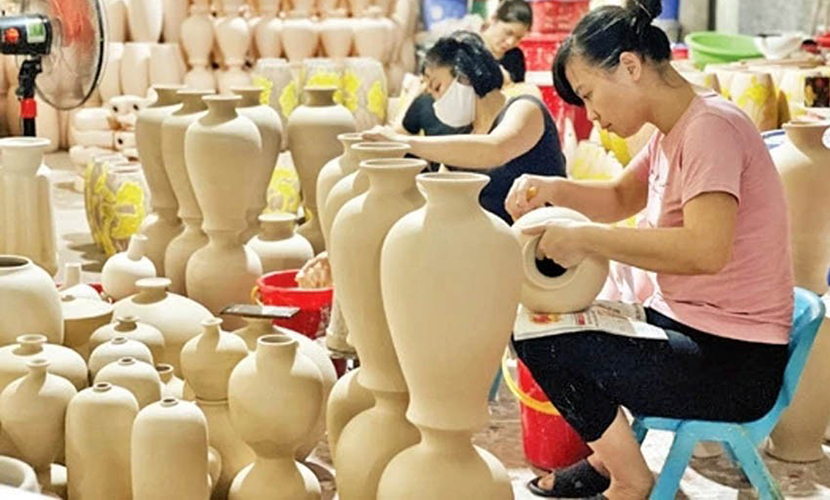
The production of handicraft ceramics in Vietnam encompasses up to 5,400 craft villages nationwide. Among these, nearly 2,000 are traditional villages with 115 recognized traditional trades.
Vietnamese ceramics products
Vietnamese ceramics products not only meet domestic demand but are also exported to major markets. These include the United States, Japan, Taiwan, the EU, Thailand, and more.
From 2019 to 2023, Vietnam’s ceramic exports grew at an average rate of 3.5% per year. Export turnover reached its peak in 2022 at $711 million, but fell by 13% in 2023.
Despite this, exports to many markets showed growth between 2019 and 2023. The United States increased by 7.4% per year and Japan increased by 6.7% per year. While Taiwan increased by 13.6% per year, Thailand increased by 3.6% per year, and the Philippines by 10.5% per year.
The structure of exported ceramic products also diversified during 2019–2023. In which, sanitary ware increased by 0.9% per year. Floor and wall tiles and laboratory ceramics increased by 12.5% and 9%, respectively. Refractory bricks and other refractory construction ceramics by 7.3% per year. Porcelain tableware, kitchenware, and household ceramics by 14.9% per year.
In the first six months of 2024, the export value of Vietnamese ceramics products recovered. It rose 9.5% compared to the same period in 2023. However, Vietnam’s ceramics businesses face multiple challenges, particularly in the production and export of construction ceramics. These include raw material shortages and rising material costs, while final product prices remain unchanged.
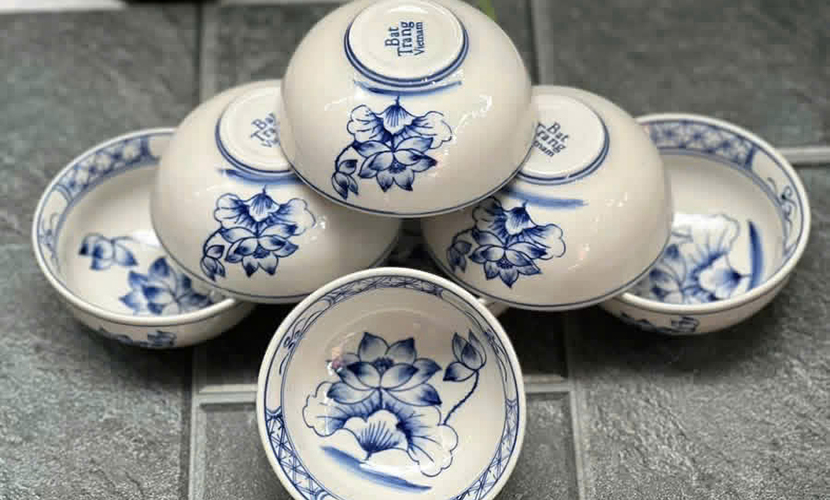
Vietnamese ceramics bowls
There are also issues with the planning and exploitation of raw material mines, as well as poor mining techniques. Extracting from different geological layers results in inconsistent material quality. The lack of professional raw material sources creates difficulties for Vietnamese ceramics manufacturers.
Also, the domestic real estate market remains sluggish, limiting the consumption of construction ceramics. Moreover, the export market faces fierce competition both domestically and internationally, with increasingly strict standards and requirements from importing countries.
In the long term, Vietnamese ceramics products are expected to have many opportunities for growth. This is thanks to continuous technological development, domestic and international market demand, as well as innovation in design and products.
In particular, the demand for ceramic products, especially high-end and artistic ceramics, is increasing globally. Major markets such as the United States, Europe, and Japan all have a high demand for quality ceramic products.
Moreover, the rising consumption of ceramic products for interior decoration and gifts is driving demand in international markets. Notably, Vietnam has signed numerous free trade agreements with international partners.
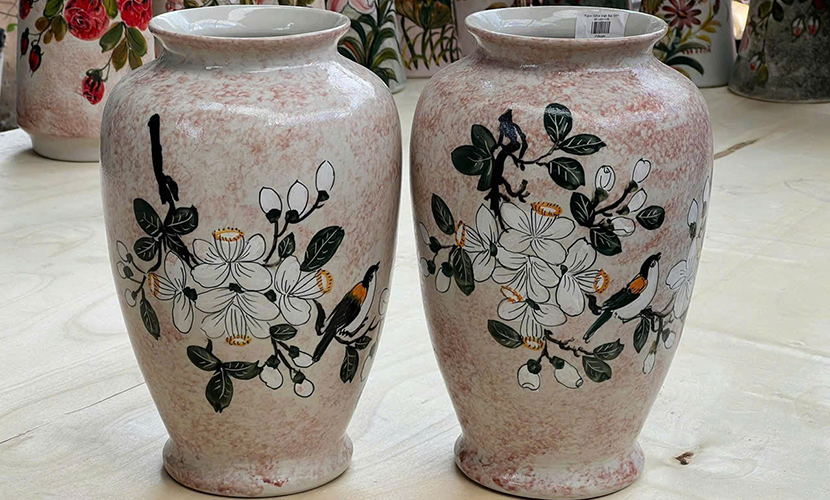
Vietnamese ceramics vases
Notably, they included Vietnam–European Union Free Trade Agreement (EVFTA), the Comprehensive and Progressive Agreement for Trans-Pacific Partnership (CPTPP), and the Vietnam–United Kingdom Free Trade Agreement (UKVFTA). All these free trade agreements help reduce export tariffs and expand market opportunities for Vietnamese ceramics exports.
In addition, the Vietnamese government regularly provides export support policies, including tax incentives, financial assistance, and training. Specifically, government-organized trade promotion programs help Vietnamese ceramic companies access international markets and participate in international exhibitions. They also support these businesses in building relationships with global partners.
To enhance ceramic product exports, experts suggest that Vietnamese businesses should prioritize improving product quality and upgrading production technology. Furthermore, they need to ensure durability and comply with international safety and environmental standards.
They should diversify their designs and products to better respond to market needs. By doing so, they can offer a wider range of styles and models that cater to the preferences of different markets.
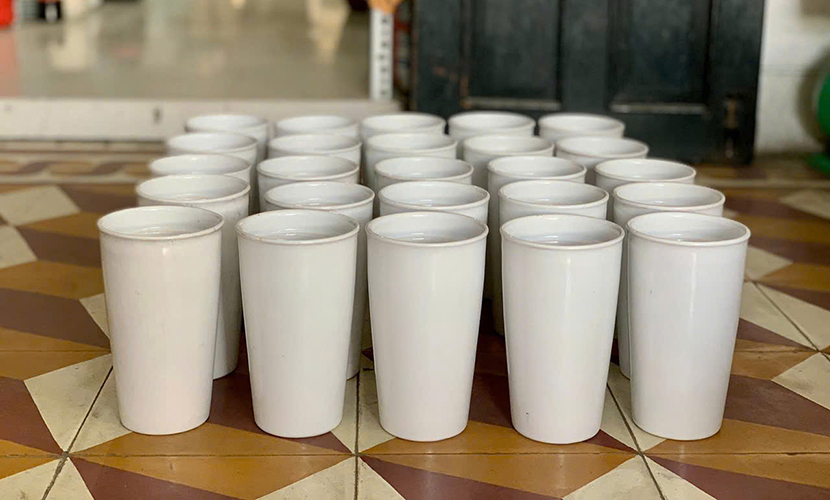
Vietnamese ceramics cups
Furthermore, it is essential to strengthen promotion and brand building for Vietnamese ceramics products. Specifically, businesses should enhance marketing activities, participate in international trade fairs and exhibitions, and work toward establishing a national brand.
Ms. Ha Thi Vinh is the Director of a Vietnamese ceramics company, working in the fine arts ceramics industry. According to her, it takes a long time to train skillful workers. Therefore, promoting human resource development in the ceramics sector is essential through comprehensive training and skill enhancement programs. In addition, fostering creativity and innovation among workers should be a key priority.
In particular, exploring and expanding export markets is crucial. This involves conducting market research and entering new, high-potential markets with strong demand for ceramic products.
Strengthening international cooperation is also of great importance. In particular, businesses should establish partnerships with international enterprises and organizations and actively participate in free trade agreements to benefit from tariff incentives.
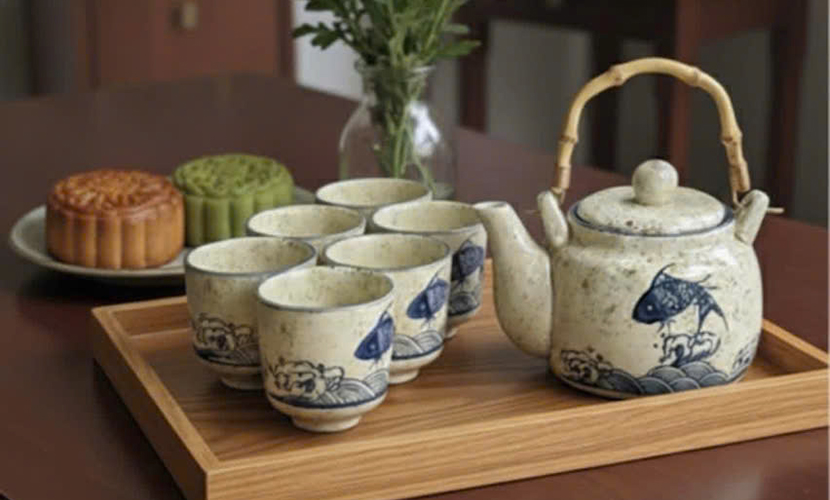
Vietnamese ceramics tea set
The ceramics industry needs to place greater emphasis on cultural elements and national identity. Incorporating these factors into products can help create distinctive value and enhance competitiveness in the international market.
Additionally, it is essential to promote the application of information technology and e-commerce in the ceramics industry. By utilizing online sales channels and digital technologies, Vietnamese businesses can reach international markets and customers more efficiently.
In addition to the role of businesses, Ms. Vinh emphasizes that government ministries and agencies should implement strategies to support enterprises in securing raw materials. Businesses also need assistance with trade promotion activities.
Regular participation in domestic and international trade fairs provides enterprises with valuable opportunities to explore new markets. Moreover, it enables them to gain insights into market trends and align their production strategies with these developments.
Vietnamese source: https://vneconomy.vn/nganh-gom-su-can-tao-su-khac-biet-de-nang-cao-suc-canh-tranh.htm