
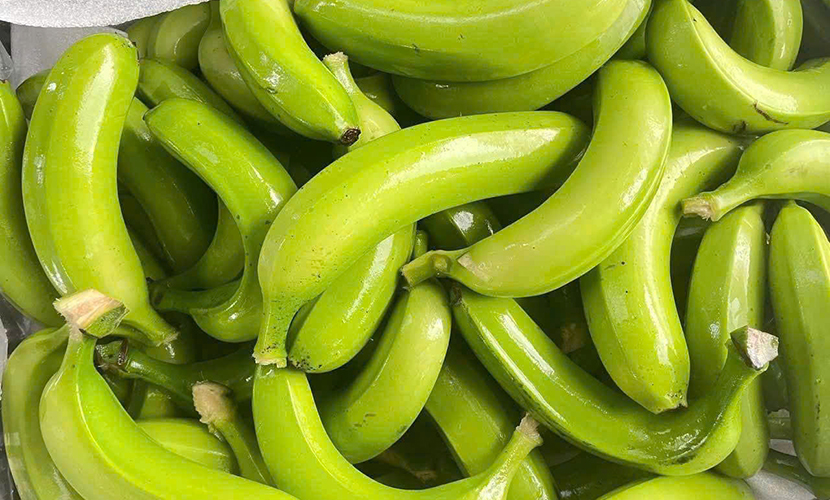
Vietnam’s bananas are increasingly visible in major markets. They are winning over consumers thanks to their quality and competitive prices.
On August 9, Nikkei Asia published an article titled “Vietnam captures banana market share in Japan.” It noted that Japanese customers are increasingly seeing Vietnamese bananas on store shelves.
According to the Vietnam News Agency (VNA) correspondent in Tokyo, trade statistics show that in 2024, Japan imported 33,000 tons of bananas from Vietnam. Accordingly, this figure is nearly 14 times higher than in 2019. During this time, Vietnam’s market share increased from 0.2% to 3.2%.
In July 2025 alone, the volume of Vietnamese banana exports to the Tokyo area more than doubled compared to the same period last year. Although it still accounts for a small proportion, this is a breakthrough in comparison to Philippine bananas. These bananas have long dominated the market.
Mr. Dang Phuc Nguyen is the Secretary General of the Vietnam Fruit and Vegetable Association (VINAFRUIT). He said there are three main reasons for this breakthrough. These reasons explain why Vietnamese bananas have become more competitive in many Asian markets, including Japan.
First, their quality and price are competitive in comparison to bananas in the region. This includes those from the Philippines. Second, Vietnam has an advantage in logistics for transportation. Third, Vietnamese banana varieties have resistance to Panama wilt disease. This is a dangerous disease threatening many banana-growing regions around the world.
Vietnam’s bananas
According to Mr. Dang Phuc Nguyen, not only the Japanese market but also Vietnam’s banana exports to China have grown strongly. Vietnam’s bananas have surpassed Philippine bananas. As a result, they now hold the largest share in China’s banana imports.
“Since the beginning of the year, Vietnamese bananas have accounted for nearly 50% of China’s import market share thanks to improvements in quality and appearance. They also benefit from logistics advantages. Meanwhile, Philippine banana production has declined due to storms, diseases, and transportation difficulties,” Mr. Nguyen said.
He also noted that in 2024, Vietnam’s bananas generated 378 million USD in export revenue from the Chinese market. The industry hopes this product will soon join the group of billion-dollar fruit exports.
In China, bananas are one of the most popular fruits. They are commonly used as a dessert by Chinese consumers. They are also ingredients for many processed foods such as cakes and jams. In Japan, the advantage of Vietnamese bananas is that the current import tariff of 5.4%.
This tariff will gradually decrease to 0% by 2028 under the CPTPP agreement. Therefore, it promises to expand opportunities for Vietnamese agricultural products in this demanding market.
The global market potential for Vietnamese bananas is very large. However, Mr. Dang Phuc Nguyen emphasized that the most important issue remains quality. For example, in the Japanese market, exported bananas must meet very high standards for product quality and food safety. In addition, Vietnamese fruit exporters must ensure stable supply volumes.
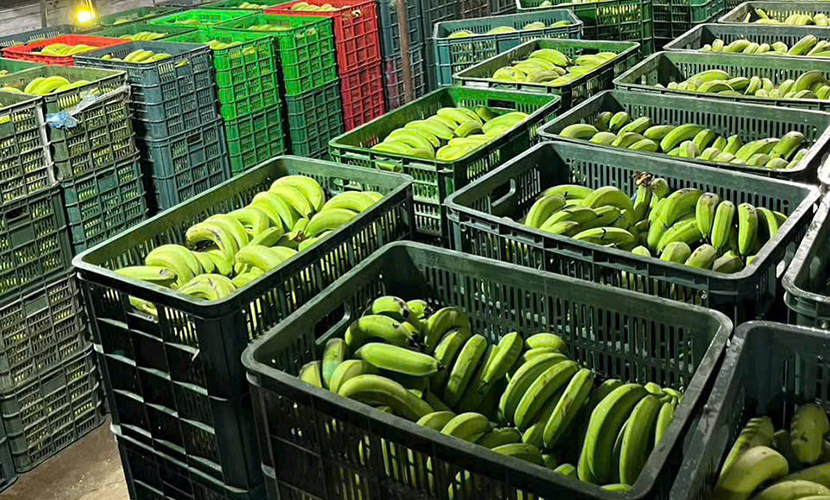
Banana materials from Vietnam
In China, there is also domestic banana production. Therefore, to remain competitive, Vietnam should avoid exporting during China’s domestic harvest season. This season usually runs from July to October.
Mr. Vo Quan Huy is the Director of Huy Long An Co., Ltd. He said that for banana exports, the production process is critical. Vietnamese banana companies must strictly control pesticide residue levels.
This requirement applies not only to markets such as Japan and South Korea but also to China. If residue levels approach the maximum allowable limit, buyers will immediately respond. Therefore, Vietnamese enterprises should take this issue very seriously.
In an increasingly competitive fruit market with strict quality requirements, developing high-tech agriculture will be important. Maintaining a consistent quality standard—from seedlings to the final market—will also be essential. These efforts will help businesses in particular and the banana industry in general maintain and expand their markets.
Mr. Pham Quoc Liem is the Chairman of the Board and CEO of Unifarm. He said that many domestic banana producers flexibly switch between standards such as Vietgap, Globalgap, or specific requirements of importing markets. However, Unifarm takes the opposite approach. The company standardizes the entire process and quality—from seedlings, cultivation, and post-harvest handling to traceability.
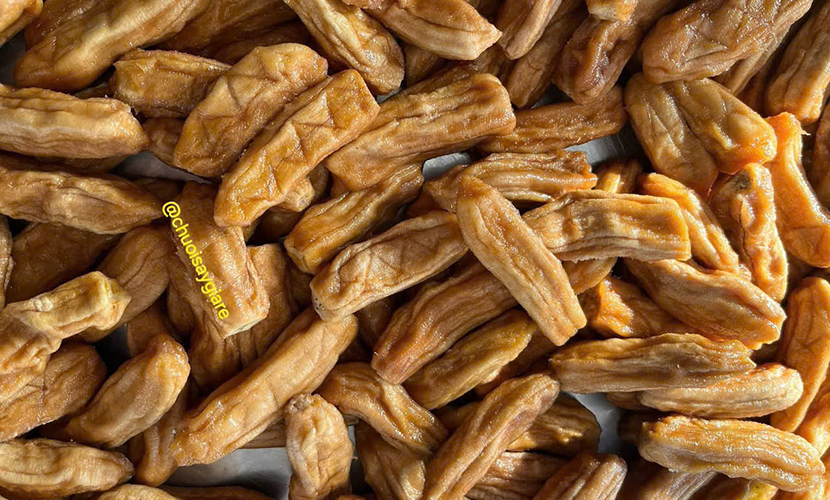
Dried banana from Vietnam
In 2024, bananas brought Vietnam 378 million USD in export revenue. This is equivalent to about 2,400 USD per hectare. Mr. Pham Quoc Liem hopes the Vietnamese banana industry could eventually reach export value of 4 billion USD in the future.
This figure would be nearly ten times the current level. This is not an easy goal. However, it is entirely achievable if the entire industry moves toward large-scale production, high-tech application, and consistent quality standards.
“In the current context, public health and environmental issues must also be considered. If we can achieve this, Vietnam’s bananas will gain additional competitive advantages. This will be especially important in demanding markets such as the EU and Japan,” Mr. Liem said.
Currently, most Vietnamese bananas are available as fresh fruits. They are mainly sent to China, South Korea, Japan, and several Middle Eastern countries. Meanwhile, higher-value products such as dried bananas, pressed banana products, banana wine, banana cakes, or green banana flour are still available only on a small and fragmented scale.
In addition, the economic potential from banana plant by-products is also very large. Therefore, alongside fresh fruit exports, Mr. Vo Quan Huy believes more attention should be given to processed banana products. Greater effort should also be made to exploit value from banana by-products. This is an important direction to increase added value for the industry.