

In the early months of the year, when the weather is still cold, Vietnam’s lychee trees in Thanh Ha enter key stages of growth. These stages include winter shoot management, flower bud differentiation, flowering, and fruit setting. This is also a critical period when farmers must focus intensely on orchard care and pest control. Notably, these factors play a decisive role in the yield and quality of the lychee crop later on.
Ms. Nguyen Thi Cuong is a farmer from Lai Xa 2 hamlet, Thanh Ha Commune. She is working in her lychee orchard shaking the trees to reduce morning dew and spraying pesticides. As a result, these measures help control inchworms and leaf-rolling caterpillars. Her family owns more than one mau of Vietnam’s lychee trees. Therefore, over the past month, family members have taken turns removing winter shoots. These turns have helped prevent pest damage during the flowering stage.
Vietnam’s lychee
Ms. Cuong shared: “To have a bumper lychee harvest, we have to take meticulous care from the moment the trees start producing shoots. Each growth flush directly affects yield and fruit quality of Vietnam’s lychee. Therefore, from now until harvest, we care for the lychee trees as carefully as we would a young child.”
Having closely connected to lychee orchards for many years, Ms. Pham Thi Liem from An Lao hamlet has concerned about maintaining a beautiful orchard during the harvest season. This helps attract visitors from near and far. Therefore, she tends the orchard carefully, keeping the ground beneath the trees clean and tidy. They neatly prune the Vietnam’s lychee trees like ornamental plants and keep them at a manageable height.
She carries out the process of managing winter shoots methodically and at the right time. This helps the trees achieve better flower bud differentiation and creates favorable conditions for later flowering and fruit setting. Ms. Liem said: “Our family grows lychees not only in hopes of a good harvest but also with the goal of developing sustainable eco-tourism. A heavy-laden and beautiful orchard is the result of hard work throughout the entire season.”
As lychee trees enter the stage of forming young fruit, pests such as leaf-rolling caterpillars, fruit-stem borers, and mealybugs begin to appear. These pests pose a direct threat to yield. With the principle of “prevention is better than cure,” farmers in Thanh Ha Commune have proactively implemented early pest and disease control measures in their lychee orchards.
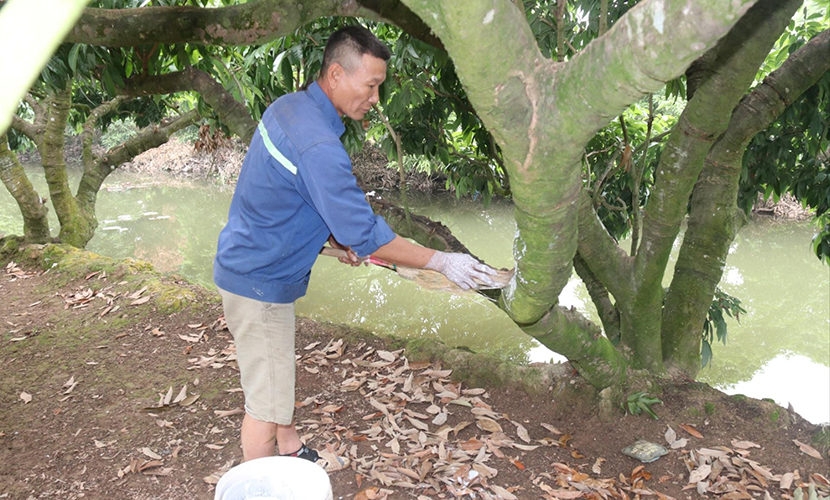
Vietnam’s lychee trees
According to statistics from the Thanh Ha Commune Economic Office, the commune has more than 938 hectares of Vietnam’s lychee, mainly in-season lychee. Of this area, 250 hectares meet VietGAP and GlobalGAP standards. The local authority has focused on directing specialized departments to actively guide farmers in planting and caring for lychee trees.
This guidance follows proper technical procedures. The commune has organized numerous in-depth training sessions on lychee cultivation and pest management. Lychee areas that meet Vietgap and Globalgap standards maintain production logs for each cultivation stage.
Notably, training sessions occur directly in orchards. This helps farmers clearly understand each step in early pest detection, safe control methods, and proper technical care. Most lychee growers in Thanh Ha Commune have applied Vietgap standards to their production. In which, many have shifted to using well-composted organic fertilizers combined with biological products. These practices help Vietnam’s lychee trees grow more vigorously and enhance their natural resistance to pests and diseases.
Ms. Nguyen Thi Thuy is the Vice Chairwoman of the People’s Committee of Thanh Ha Commune. She said that thanks to proactive pest and disease prevention and strict compliance with safe production processes, Thanh Ha’s specialty lychee consistently boasts superior quality. This quality is further ensured by the effective application of knowledge gained from training sessions.
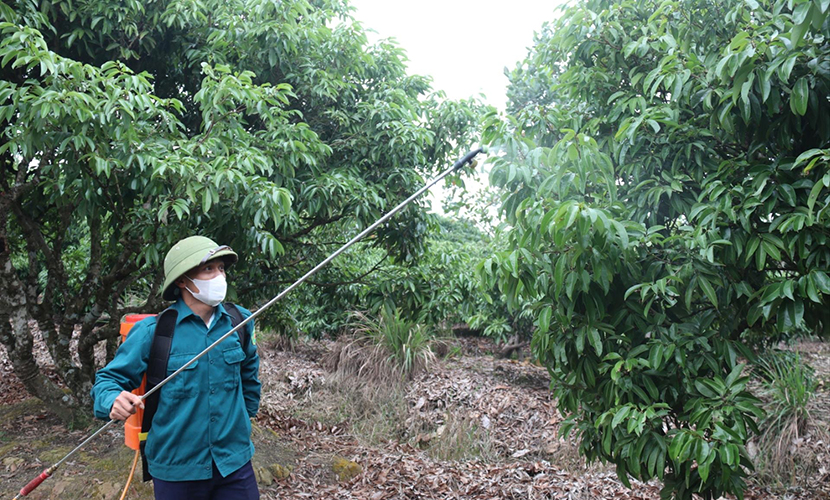
Vietnam’s lychee garden
Thanh Ha is also the locality with the largest area of in-season lychee cultivation in Hai Phong. The commune is home to the memorial site of Hoang Van Com and the original lychee tree. This tree has officially recognized by the Vietnam Records Organization as “the oldest lychee tree.”
Currently, Thanh Ha Commune maintains 17 growing areas with a total of 60 planting area codes eligible for lychee export. These include 12 codes for the U.S. market, 17 for China, 13 for Australia, 10 for Japan, and 8 for Thailand.
The People’s Committee of Thanh Ha Commune and specialized departments have stepped up communication efforts to encourage residents to closely monitor weather developments. This is to ensure timely measures to care for and protect the entire lychee-growing area.
For orchards producing winter shoots, farmers should proactively apply technical measures to manage these shoots. These measures aim to stimulate flower bud differentiation and flowering. Under no circumstances should irrigation or fertilization—especially nitrogen-based fertilizers—be applied to lychee trees that have not yet entered the flowering stage.
Vietnamese source: https://baohaiphong.vn/nong-dan-thanh-ha-tat-bat-cham-soc-vai-533099.html
If you are interested in Vietnamese lychee exports, please contact us:
Company: Agrideco Vietnam Co., Ltd.
Address: No 02, Alley 325 Kim Nguu, Vinh Tuy Ward, Hanoi, Vietnam
Tel/Kakao Talk/Whatsapp: +84 989 649 804
Website: https://agridecovietnam.com
Email: agridecovietnam@gmail.com