
The restructuring of crop production toward commercial agriculture is a suitable and sustainable approach. In addition, the application of Vietnam’s organic chili farming methods and value chain linkages further strengthens its effectiveness. It delivers high economic returns for local agriculture.
In Hoa An Commune, Cao Bang, an organic chili cultivation model linkage is proving effective in promoting agricultural economic development. Land that was previously used to grow low-value crops has been converted to Vietnam’s organic chili production. The model has helped increase production value per unit of cultivated land and raise farmers’ incomes. As a result, it has improved local livelihoods and promoted sustainable rural economic development.
Ms. Chu Phuong Thanh, is the Vice Chairwoman of the People’s Committee of Hoa An Commune. She said the Vietnam’s chili model in Na Teng Hamlet firstly executed by 17 households in 2017. However, during the initial stage, production remained small-scale and fragmented. As a result, a concentrated production area had not yet been established. Therefore, it has limited the ability to fully exploit the crop’s potential.
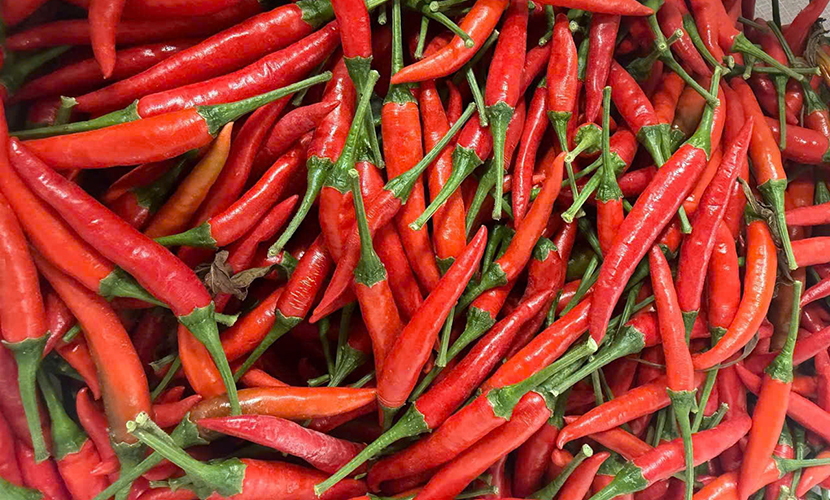
Vietnam’s organic chili
The Vietnamese partnered chili company recognized that the local soil, climate, water resources, and agricultural land were highly suitable for chili cultivation. Given the crop’s strong potential for organic and commercial production, the company launched an organic chili production linkage program with local farmers in 2019. This initiative marked an important turning point of Vietnam’s organic chili. It laid the foundation for a more systematic and sustainable development of chili farming.
Through the partnership program, farmers receive support in the form of seeds, organic fertilizers, and technical guidance. In addition, production processes are closely monitored to ensure product quality. Most importantly, the company guarantees the purchase of the entire harvest, providing farmers with a stable market outlet. As a result, growers have gained greater confidence to invest in production. They have also gradually expanded their cultivation areas and improved economic efficiency.
Thanks to the stable linkage, the area dedicated to organic chili cultivation in the commune has continued to expand. To date, Hoa An Commune has developed nearly 10 hectares of Vietnam’s organic chili. The model involves almost 100 farming households and produces two crops per year. Most of the cultivation area is available in Na Teng Hamlet. There, hybrid bird’s eye chili is the main variety growing here.
After approximately 90 days of cultivation, the plants begin producing harvestable fruits. They can then continue yielding for four to five months. Average productivity reaches 20 tons per hectare, with total output approaching 200 tons per crop. The partnership company guarantees to purchase at the prices of VND 21,000 per kilogram. Therefore, production value exceeds VND 400 million per hectare per crop. As a result, chili cultivation has become an important source of income for local farmers. So far, farmers in the growing area have harvested nearly 30 tons of chili peppers.
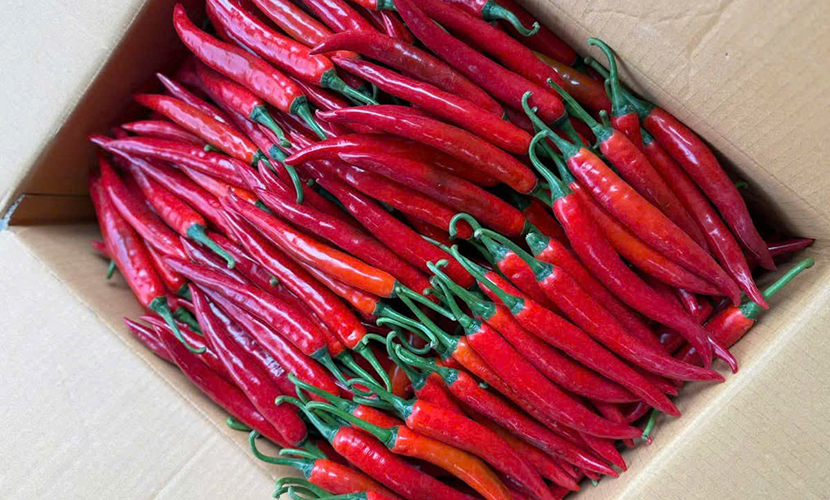
Big chili from Vietnam
The outstanding economic results demonstrate the effectiveness of the locality’s strategy to develop organic chili production. Furthermore, they highlight the benefits of associating production with a sustainable value-chain linkage model. Ms. Thanh stated: “Compared with traditional crops, Vietnam’s organic chili cultivation generates higher economic returns. By switching to organic chili production, farmers have increased income value on the same cultivated area by three times. In Na Teng Hamlet, many households now earn tens of millions to hundreds of millions of Vietnamese dong per crop.”
Ms. Ma Thi Xinh was one of the households that joined the model when the company first launched its organic chili production partnership. She shared that chili cultivation has brought significant improvements to her family’s livelihood.
She said, “On our 1,200-square-meter plot, we used to grow maize, but the income was unstable. Since 2019, with support from the company, our family has converted the entire area to organic chili production. This year, we expect to harvest more than 2 tons of fresh chili peppers. With the purchasing prices of VND 21,000 per kilogram, our family will earn around VND 50 million per crop. After deducting production costs, the profit is nearly VND 30 million. Most importantly, the company guarantees the purchase of all output. Therefore, we can focus on production without worrying about market access.”
Ms. Xinh’s family is not the only beneficiary of the model. Many other households in Na Teng Hamlet have also acknowledged the positive changes brought about by the Vietnam’s organic chili production linkage. Farmers such as Phan Van Thai, who cultivates 400 square meters, Dam Thi Khiem with 600 square meters, and Long Van Cuong with 1,200 square meters all confirmed the strong economic benefits generated by organic chili cultivation.
According to these farmers, receiving systematic technical training has enabled them to follow organic production standards correctly. As a result, the plants grow well, produce uniform and high-quality fruits, and are less susceptible to pests and diseases. This has significantly improved both productivity and production efficiency.
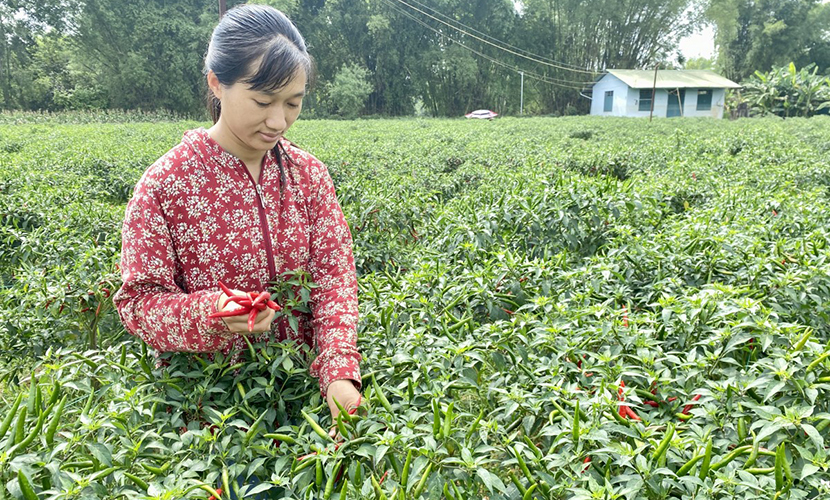
Vietnam’s organic chili farm
Vietnam’s organic chili cultivation has gradually established itself as an important component of the locality’s crop restructuring strategy. Therefore, it is becoming one of the key crops contributing to economic development in Na Teng Hamlet. The stable income generated from chili production has helped many households improve their living standards. It has also created conditions for sustainable poverty reduction and gradually built greater prosperity.
Moreover, the involvement of Vietnamese spice enterprises that guarantees product purchases has given farmers greater confidence in production. Therefore, they have been encouraged to expand cultivation areas, invest more boldly, and improve their farming practices. As a result, household economies have become increasingly stable. This has provided better opportunities for long-term livelihood development.
In addition to delivering strong economic benefits, the organic chili production linkage model has also brought about positive changes in the lives and awareness of local residents.
Mr. Ban Duc Thien is the Head of Na Teng Hamlet. According to him, local people have actively participated in technical training courses since the model was introduced. Then, they have improved their understanding of organic production standards. They have also become more conscious of environmental protection in agricultural practices. Farmers have also become more proactive in cooperating and supporting one another in production activities. As a result, a concentrated cultivation area has gradually taken shape, creating a new appearance for the rural community.
Mr. Thien noted that the success of Vietnamese organic chili has contributed significantly to improving both the material and spiritual well-being of local residents. Na Teng Hamlet currently has 153 households, and there are no longer any poor households in the community.
The positive results achieved in practice have confirmed the suitability of the locality’s strategy to develop organic chili production through value-chain linkages. They have also provided momentum for expanding the model in the future.
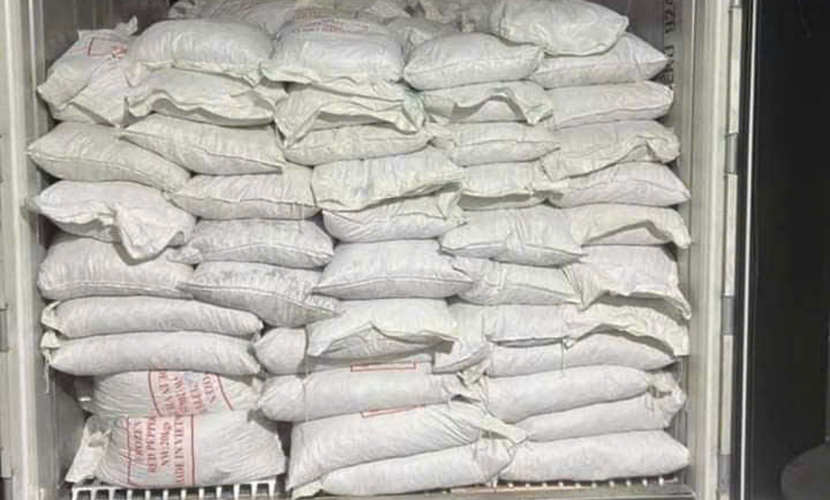
Loading Vietnamese frozen chili
Ms. Chu Phuong Thanh is the Vice Chairwoman of the People’s Committee of Hoa An Commune. She stated that the organic chili production linkage model has generated clear economic and social benefits. Vietnam’s organic chili cultivation is gradually forming a concentrated commercial production zone. It has been identified by the local government as a key crop in the crop restructuring process due to its high economic value and stable market demand.
She explained: “The model not only helps increase farmers’ incomes but also changes their production mindset. In the past, farmers carried out on a small and fragmented scale. Today, farmers are shifting toward commercial production based on organic standards. This transition is supported by local authorities and strengthened through close cooperation with enterprises throughout the entire value chain, from input supply to product marketing. As a result, production value per unit of cultivated land has increased significantly, and stable employment opportunities have been created for rural workers. In addition, crop restructuring has been promoted in a more efficient and sustainable direction.
In the coming years, the commune will continue encouraging residents to participate in production linkages and work with Vietnamese export enterprises to expand cultivation areas. By 2030, Hoa An aims to develop between 80 and 100 hectares of organic chili cultivation in Thai Cuong Hamlet, Na Me Hamlet, and Hamlet 6 of Be Trieu. The goal is to establish a concentrated spice-production zone for the province.”
Vietnam’s organic chili cultivation model has developed through value-chain cooperation between farmers and enterprises in Hoa An Commune. This practical and forward-looking approach aligns with the trend of modern agricultural development. The close collaboration between local authorities and businesses throughout the production chain has given farmers greater confidence to invest in their crops. As a result, they have been able to improve productivity and product quality while increasing their incomes.
This model provides an important foundation for Hoa An Commune to continue developing sustainable commodity-based agriculture and improving local livelihoods. It also promotes agricultural economic growth and supports the construction of a modern and prosperous rural community in the years ahead.
Vietnamese source: https://nongnghiephuuco.vn/trong-ot-huu-co-huong-di-hieu-qua-nang-cao-thu-nhap-cho-nguoi-dan-14837.html
If you are interested in Vietnamese organic chili, please contact us:
Company: Agrideco Vietnam Co., Ltd.
Address: No 02, Alley 325 Kim Nguu, Vinh Tuy Ward, Hanoi, Vietnam
Tel/Kakao Talk/Whatsapp: +84 989 649 804
Website: https://agridecovietnam.com
Email: agridecovietnam@gmail.com