

As importing markets impose increasingly stringent requirements on quality, traceability, and sustainability, many Vietnamese banana exporters are adjusting their long-term development strategies. Instead of focusing on expanding cultivation areas, Vietnamese banana enterprises are prioritizing investments in improving plantation quality. At the same time, they are enhancing production efficiency to strengthen competitiveness and maintain market access.
At a Cavendish banana plantation in Tan Hung Commune, Dong Nai City, a Vietnamese banana company is implementing a range of solutions. These efforts aim to improve the quality of its raw material areas, enhance soil health, and increase production stability. According to Mr. Lu Trong Kien, the Commercial Director, the company currently exports bananas to several markets. These include Japan, South Korea, Singapore, Malaysia, China, Kuwait, and a number of Middle Eastern countries.
Mr. Kien noted that the company’s current challenge extends beyond maintaining output. It must also ensure consistent quality, control diseases, and meet the increasingly stringent requirements of importing markets. “In the past, we focused on expanding cultivation areas and increasing yields. Today, however, if we cannot control plantation quality consistently, it becomes very difficult to maintain export markets,” said Mr. Kien.
A product of Vietnamese banana exporters
The situation at banana farms reflects a broader challenge facing the Vietnamese banana exporters. Importing countries are continuing to tighten standards on quality, traceability, and sustainability. As a result, maintaining stable and disease-free production areas has become a prerequisite for Vietnamese exporters.
According to the Vietnam Fruit and Vegetable Association, Vietnam’s banana exports reached USD 47.24 million in April 2026. This figure was up 0.6% from the previous month and 0.6% higher than the same period in 2025. In the first four months of the year, export turnover totaled USD 151.21 million. Bananas remain among Vietnam’s six leading fruit export products.
Mr. Dang Phuc Nguyen is the Secretary General of the Vietnam Fruit and Vegetable Association. He believes that the Vietnamese banana is entering a new stage of competition. In this stage, technology and production standards will determine the ability to retain markets. “International buyers are no longer concerned solely with price. They are also paying close attention to whether production processes are sustainable and whether growing areas meet green standards,” Mr. Nguyen said.
Facing with disease pressure, rising production costs, and increasingly demanding import requirements, Vietnamese banana exporters are no longer focused on increasing output at any cost. Instead, they are seeking to improve productivity and efficiency on existing cultivation areas.
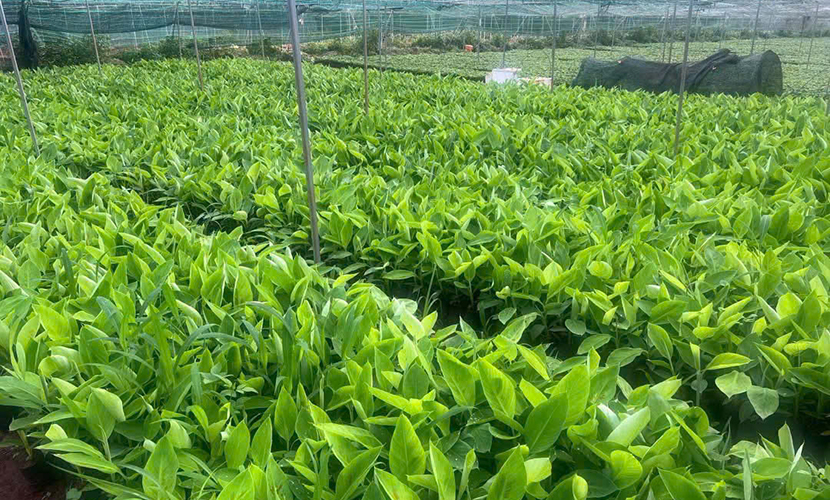
Vietnamese banana farm
According to industry experts, investment priorities are shifting. While expanding cultivation areas was once the primary objective, production priorities have gradually shifted. Greater emphasis is now being placed on soil health management, disease control, input optimization, and product quality improvement through technological applications.
Mr. Nguyen Huu Tri is the Director of another Vietnam’s banana exporter. He said that many growing areas are currently facing soil degradation. This problem is caused by the prolonged overuse of chemical fertilizers and crop protection products. “When soil quality declines and microbial balance is disrupted, plants become much more susceptible to diseases. Sustainable development requires restoring the agricultural ecosystem rather than relying excessively on chemicals,” Mr. Tri explained.
According to Mr. Tri, many Vietnam’s fruit businesses have begun adopting biological farming solutions, precision nutrient management, and measures to improve soil and water quality. These efforts help reduce dependence on chemicals while meeting increasingly strict import standards.
Technology is a must throughout other stages of the value chain. Many companies are investing in automated irrigation systems and soil moisture monitoring sensors. They are also applying growth-stage-specific nutrient management and post-harvest preservation technologies. These innovations help extend transportation time, reduce losses, and maintain product quality during export.

Vietnamese banana exports
Mr. Dang Phuc Nguyen noted that the banana industry is gradually shifting from a production-expansion model toward improving efficiency on existing land. This transition is being driven through technology adoption and better plantation management.
“Major banana-exporting suppliers around the world invest heavily in production technologies. These investments cover breeding, disease management, and post-harvest preservation. This is also the direction Vietnam’s banana enterprises must pursue if they want to strengthen their competitiveness,” he said.
According to Mr. Nguyen, input costs continue to rise and market requirements are becoming more demanding. In this context, technology adoption not only increases productivity but also helps stabilize product quality. Moreover, it reduces production risks and enhances export value.
“In the coming years, a company’s competitive advantage will not depend on how many hectares of land it owns. Instead, it will depend on its ability to manage growing areas, maintain consistent quality, and build a standardized production chain,” Mr. Nguyen emphasized.
Vietnamese source: https://nongnghiepmoitruong.vn/doanh-nghiep-xuat-khau-chuoi-thay-doi-de-giu-thi-truong-d814437.html
If you are interested in Vietnamese banana exports, please contact us:
Company: Agrideco Vietnam Co., Ltd.
Address: No 02, Alley 325 Kim Nguu, Vinh Tuy Ward, Hanoi, Vietnam
Tel/Kakao Talk/Whatsapp: +84 989 649 804
Website: https://agridecovietnam.com
Email: agridecovietnam@gmail.com