

Vietnamese exported pepper has maintained its central role in the EU’s pepper supply chain. However, its declining share of the bloc’s total pepper imports in the first three months of 2026 highlights intensifying competition from other suppliers. It also suggests that pepper demand across the EU has yet to fully recover.
According to the Vietnam Customs Department, Vietnam exported 121,910 tonnes of pepper in the first five months of 2026. The country generated USD 789.74 million in export revenue. Export volume increased by 22% and export value rose by 14.4% compared with the same period in 2025. However, the average export price fell by 6.2% year on year to USD 6,478 per tonne.
The European Union remained the second-largest export market for Vietnamese pepper after the United States. In the first five months of 2026, Vietnam exported 4,380 tonnes of pepper to the EU, worth USD 31.46 million. Compared with the previous month, export volume increased by 11.1% and export value rose by 11.3%. Meanwhile, export volume was up 9.0% year on year.
According to the Ministry of Industry and Trade, the EU imported 7,630 tonnes of pepper in March 2026, valued at EUR 56.98 million (USD 65.47 million). Compared with February 2026, import volume declined by 4.8% and import value fell by 3.2%. Year on year, import volume decreased by 9.2%, while import value declined by only 4.0%. This was because the average import price rose 5.8% to EUR 7,471 per tonne (USD 8,585 per tonne).
Vietnamese exported pepper
Supplies from non-EU countries accounted for approximately 54.3% of the bloc’s total pepper imports, totaling 4,150 tonnes worth EUR 27.85 million (USD 32.0 million). Compared with March 2025, imports from external suppliers fell sharply by 19.3% in volume and 21.1% in value. This suggests weaker direct import demand from producing countries.
By contrast, intra-EU pepper trade increased by 6.5% in volume and 21.2% in value, reaching 3,480 tonnes worth EUR 29.13 million (USD 33.47 million). This trend highlights the growing role of distribution and re-export hubs within the EU.
During the first three months of 2026, the EU imported a total of 22,910 tonnes of pepper worth EUR 168.89 million (USD 194.07 million). This represented a decrease of 10.5% in volume and 6.7% in value compared with the same period of 2025. The average import price increased by 4.2% to EUR 7,372 per tonne (USD 8,471 per tonne). Notably, imports from non-EU suppliers declined by 18.6%, while intra-EU imports rose by 3.1%. This indicates that the bloc’s pepper trade is becoming increasingly concentrated around internal distribution centers.
Vietnam continued to be the EU’s largest pepper supplier among non-member countries. In March 2026, the EU imported 2,540 tonnes of pepper from Vietnam, valued at USD 18.75 million. Vietnamese exported pepper accounted for 61.3% of the EU’s total extra-EU pepper imports and approximately 33.3% of the bloc’s overall pepper imports. However, compared with March 2025, imports from Vietnam declined by 20.2% in volume and 25.1% in value.
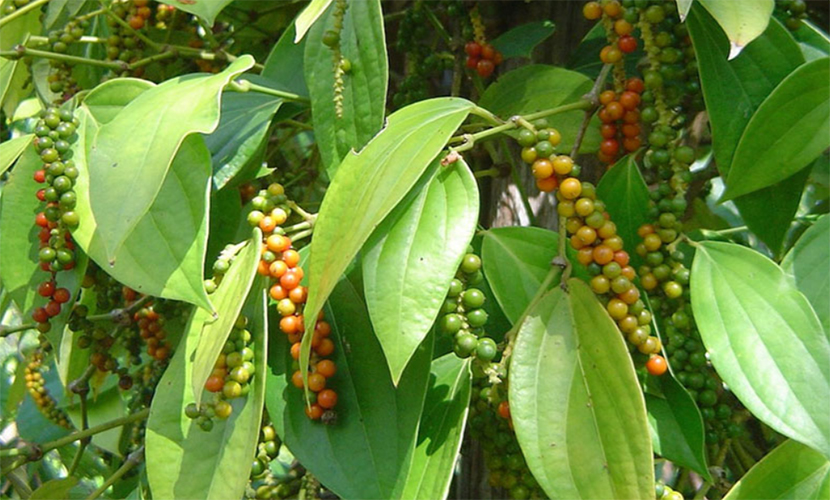
Vietnamese pepper trees
During the first three months of 2026, the average import price of Vietnamese pepper in the EU stood at USD 7,576 per tonne, below the bloc’s overall average of USD 8,471 per tonne. This indicates that Vietnamese exported pepper continues to enjoy a competitive price advantage. It also highlights significant opportunities to increase export value through deeper processing and the development of higher-value product lines.
Overall, the EU imported 7,800 tonnes of Vietnamese exported pepper during the first quarter of 2026, worth USD 59.08 million. This represented declines of 24.3% in volume and 27.9% in value from a year earlier. Despite the decline, Vietnam maintained its position as the EU’s largest external supplier. It accounted for approximately 59.7% of the bloc’s extra-EU pepper imports and around 34.0% of its total pepper imports.
Within the EU’s extra-bloc supply structure, Vietnam remains well ahead of its competitors. During the first three months of 2026, the EU imported roughly three times more pepper from Vietnam than from Brazil, which supplied 2,600 tonnes. It also imported more than ten times as much as from Indonesia (739 tonnes) and over twelve times the volume from India (648 tonnes).
These figures reaffirm Vietnam’s central role in the EU’s pepper supply chain despite the overall decline in the bloc’s imports. However, Vietnam’s share of the EU’s total pepper imports fell from 40.3% in the first quarter of 2025 to 34.0% during the same period of 2026. This underscores intensifying competition from other suppliers while also suggesting that pepper consumption across the EU has yet to fully recover.
If you are interested in Vietnamese pepper exports, please contact us:
Company: Agrideco Vietnam Co., Ltd.
Address: No 02, Alley 325 Kim Nguu, Vinh Tuy Ward, Hanoi, Vietnam
Tel/Kakao Talk/Whatsapp: +84 989 649 804
Website: https://agridecovietnam.com
Email: agridecovietnam@gmail.com