
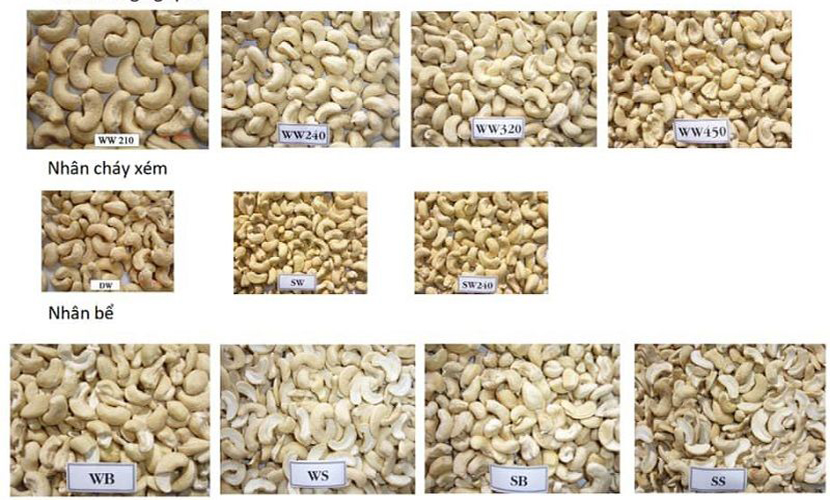
Đồng Nai Province is one of the few localities in Vietnam with a relatively complete cashew industry ecosystem. It encompasses raw material production, processing, cashew-processing machinery, logistics, exports, and supporting industries. The province is proud as Vietnam’s “cashew capital.” It is also one of the world’s leading centers for Vietnam-origin cashew nuts.
In 2025, Đồng Nai Province maintained its position as one of Vietnam’s leading export hubs. Cashew exports reached approximately USD 8.05 billion, while imports totaled around USD 5.9 billion. However, the cashew industry continues to face significant challenges, particularly its heavy reliance on imported raw materials for processing. To achieve sustainable growth, the sector will need to implement a comprehensive set of solutions.
Vietnam exported 217,000 tonnes of cashew kernels worth nearly USD 1.5 billion during the first four months of 2026. This represented an increase of nearly 9% in volume and about 10% in value compared with the same period in 2025. The industry is likely to generate USD 5 billion in export revenue by the end of 2026.
Vietnam-origin cashew nuts
According to the Đồng Nai Department of Industry and Trade, the province exported approximately USD 430 million worth of cashew products in the first quarter of 2026. As a result, Vietnam-origin cashew nuts remained one of its key agricultural export commodities. During the same period, imports of raw cashew nuts for processing reached around USD 731 million. This underscores Đồng Nai’s important role in Vietnam’s cashew processing and export supply chain.
Lê Thị Ánh Tuyết is the Deputy Director of the Đồng Nai Department of Agriculture and Environment. She said the province’s cashew industry still has considerable room for growth. However, competition is intensifying as international integration continues to deepen.
Therefore, ensuring sustainable development will require closer cooperation among government agencies, businesses, cooperatives, and farmers. She also emphasized the need to accelerate the adoption of science and technology, digital transformation, product quality improvement, and brand development. These efforts will help build a modern, green, and sustainable Đồng Nai cashew industry.
Vũ Thái Sơn is the Chairman of the Đồng Nai Cashew Association. He noted that most export declarations made by businesses in Đồng Nai are processed through Ho Chi Minh City Customs. This is because imported raw cashew nuts enter Vietnam via the city’s ports. In reality, he estimated that Đồng Nai accounts for as much as 85% of Vietnam’s cashew processing output and 65–70% of global cashew kernel exports.
Highlighting the industry’s challenges, Sơn said Vietnam currently produces only about 10–15% of the raw materials required for domestic processing. The remainder is imported, including around 2.15 million tonnes from African countries and about 1 million tonnes from Cambodia. Meanwhile, several African nations are introducing incentives to expand their own cashew processing industries, reducing exports of raw nuts to Vietnam.
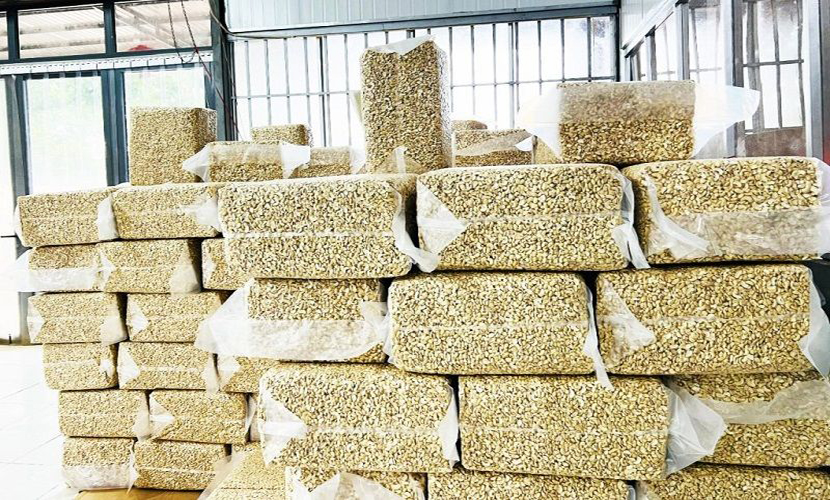
Vietnamese cashew packages
Also, Cambodia is considering policies to limit raw cashew exports in order to promote domestic kernel processing. Since cashew processing technology is relatively easy to replicate, many African governments are adopting measures to strengthen domestic industries and create jobs. These include restricting raw cashew nut exports and providing production subsidies for processed cashew kernels. Their geographic proximity to Europe also gives them a logistical advantage in serving European and U.S. markets.
Sơn added that the Vietnam-origin cashew nuts have faced mounting challenges in recent years. As a result, they have become increasingly difficult for Vietnamese cashew businesses to maintain production and operations. Many companies have exited the industry, while relatively few new enterprises have entered the sector. Vietnam remains heavily dependent on imported cashew nuts. Without expanding domestic raw material production, this dependence will continue to constrain the industry’s long-term development.
One of the most fundamental solutions for the industry is to expand domestic cashew cultivation while improving yields and the quality of planting materials. This will reduce reliance on imported raw cashew nuts.
Lê Thúc Long is the Deputy Head of the Rural Development Sub-department under the Đồng Nai Department of Agriculture and Environment. He said the province currently has around 176,000 hectares of cashew plantations, producing approximately 300,000 tonnes of raw cashew nuts annually. Several localities have established large-scale specialized growing areas where farmers use high-yield varieties and mechanized production methods. However, more than 50,000 hectares of aging, low-productivity cashew trees still require replacement.
Nguyễn Sĩ Sóng is a cashew farmer in Phú Riềng Commune. He said he has spent his entire life growing cashew trees and believes improving productivity remains farmers’ greatest concern. Traditional varieties produce only around 700–800 kilograms of nuts per hectare, while newer varieties can yield between four and five tonnes per hectare. He emphasized that replacing aging trees is essential because a substantial share of the province’s plantations remains old and unproductive. Farmers, he said, need reliable sources of high-yield planting materials to support this transition.
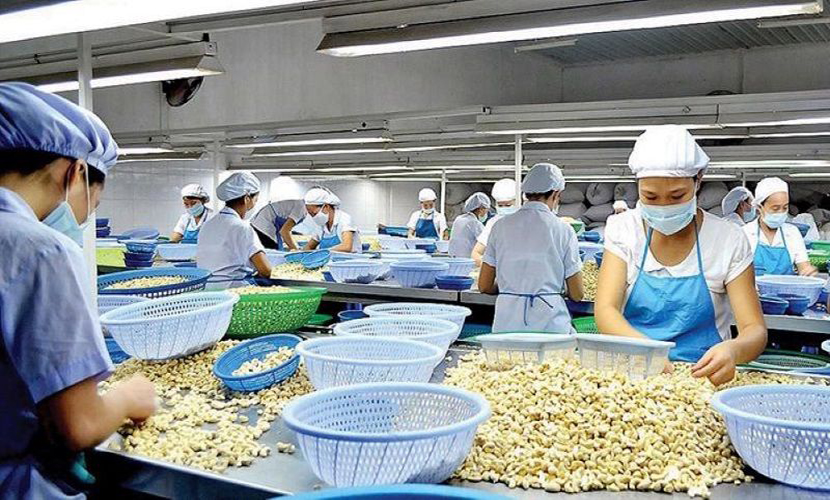
Vietnam’s cashew factory
Đồng Nai has 1,416 processing facilities and export enterprises, many of which have invested in value-added processing. As a result, the province is not only Vietnam’s “cashew capital” but also one of the world’s leading centers for cashew production and processing. Nevertheless, the industry continues to face several challenges. These include a relatively low proportion of deep-processed products, trade promotion activities that have yet to match the sector’s potential, and volatile market prices. These issues require coordinated solutions.
Nguyễn Ngọc Thức is the Head of the Trade Management Division under the Đồng Nai Department of Industry and Trade. He said the province will continue strengthening its position as Vietnam’s leading agricultural processing center, particularly for Vietnam-origin cashew nuts. The department is implementing a range of trade promotion programs linked to digital transformation. These efforts aim to help businesses capitalize on digital consumption trends and expand export markets.
These initiatives support Vietnamese cashew enterprises in participating in virtual trade fairs and connecting with international buyers. They also promote products on cross-border e-commerce platforms such as Shopee, Alibaba, and Amazon, as well as through digital social media channels. Businesses also receive assistance in developing e-commerce websites and digitizing product information.
Also, they are supported in implementing QR code traceability systems and strengthening their brands through digital media. In addition, the department is organizing training programs on cross-border e-commerce and livestream selling. It is also providing guidance on digital branding and the application of artificial intelligence (AI) in export marketing.
Vietnamese source: https://baodongnai.com.vn/tin-moi/202605/phat-trien-nganh-dieu-ben-vung-9700189/
If you are interested in Vietnamese cashew exports, please contact us:
Company: Agrideco Vietnam Co., Ltd.
Address: No 02, Alley 325 Kim Nguu, Vinh Tuy Ward, Hanoi, Vietnam
Tel/Kakao Talk/Whatsapp: +84 989 649 804
Website: https://agridecovietnam.com
Email: agridecovietnam@gmail.com