
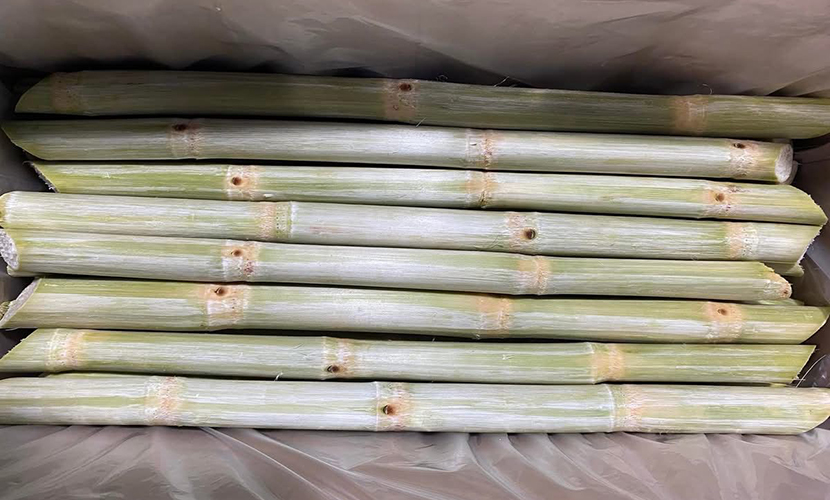
People in Hoa Binh province are striving to preserve the sweetness of Vietnamese sugarcane trees. Specifically, they are carrying out selective breeding and pure-line propagation, planning cultivation areas. Also, they are investing in clean sugarcane farming, and expanding market outlets.
In Hoa Binh, alongside green-skinned oranges and tea, Vietnamese sugarcane is one of the main crops. In particular, the total cultivation area exceeds 9,000 hectares. Of this, purple sugarcane—a specialty variety—accounts for over 5,000 hectares.
Income from Vietnamese sugarcane trees is many times higher than that from rice cultivation. As a result, sugarcane farming not only helps local farmers reduce poverty but also enables many families to achieve prosperity.
Vietnamese sugarcane trees
In recent years, the sugarcane cultivation area in Hoa Binh province has increased rapidly. Specifically, from 2014 to 2016, the area nearly doubled. However, overly rapid and unplanned expansion has made it difficult to control the quality of Vietnamese sugarcane trees.
At the same time, farmers have been propagating sugarcane themselves by using the tops and replanting year after year. This practice has led to varietal degeneration. As a result, the plants have become stunted, grown more slowly, and shown signs of shortened internodes, cracked stalks, and mottled streaking (“cat-scratch” marks). These factors have reduced the quality of commercial sugarcane.
Recently, in the 2015-2016 season, although sugarcane production increased sharply, the quality of commercial sugarcane declined. This decline led to a significant drop in prices of Vietnamese sugarcane products. At one point, the price of sugarcane fell to as low as 500-800 VND per stalk.
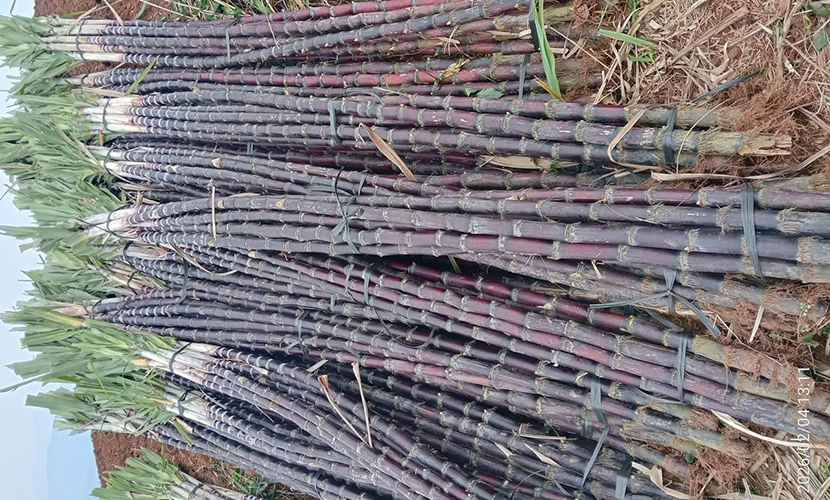
Vietnamese purple sugarcane
To ensure a more stable market for sugarcane and preserve the local specialty variety, the province has carried out a research project. The focus was on conserving and reviving the Hoa Binh purple sugarcane variety.
Initially, the Crop Breeding Center selected areas with high-quality sugarcane from regions such as Tan Lac, Cao Phong, and Lac Son to conduct research on the variety. In 2014 and 2015, the Hoa Binh Department of Science and Technology successfully applied the tissue culture method. This method allowed for the rapid propagation of the selected purple sugarcane varieties from Tan Lac and Cao Phong.
Under this model, the province has provided pure sugarcane seedlings for participating farmers. Then, they have propagated these seedlings using the tissue culture method for trial planting. In addition, they have guided on soil improvement processes and how to apply fertilizers and care for the sugarcane.
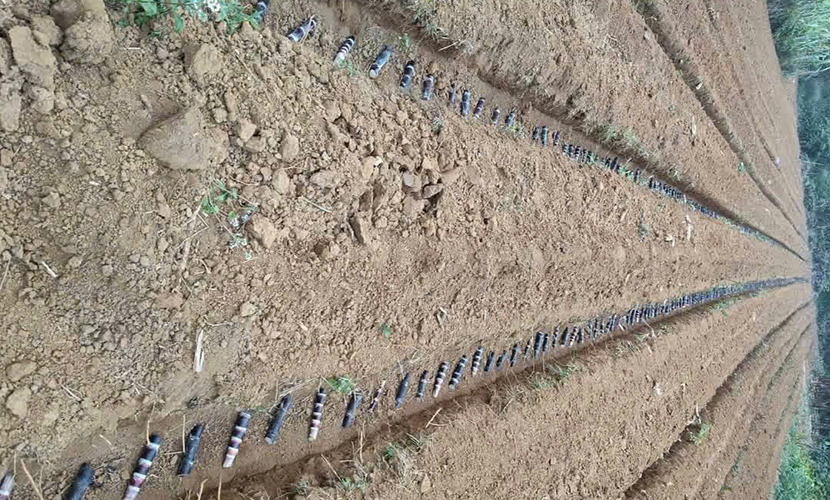
Preparation for Vietnamese sugarcane plantation
To maintain the quality of the sugarcane, officials from the Department of Agriculture guide farmers on how to propagate sugarcane seedlings correctly. They emphasize the importance of avoiding mixing them with inferior sugarcane varieties. Mixing varieties could lead to varietal degeneration, making the plants more susceptible to pests and diseases.
Additionally, farmers are encouraged to practice crop rotation with sugarcane to improve soil health. Specifically, after every three sugarcane crops, they are advised to plant short-term crops like peanuts or soybeans. This allows the soil to rest and regenerate. At the same time, farmers are encouraged to use organic fertilizers to improve the quality of Vietnamese sugarcane trees.
In 2012, the province established the Hoa Binh Purple Sugarcane Association. The association acts as a bridge, seeking markets for Vietnam’s purple sugarcane. The province also plans to collaborate with Hanoi University of Science and Technology to develop a technology for processing canned sugarcane. They hope to open new avenues for the product’s consumption for Vietnamese export companies.
Vietnamese source: https://vnexpress.net/thoi-su/giu-gin-vi-ngot-dac-trung-cho-cay-mia-tim-hoa-binh-3524415.html