
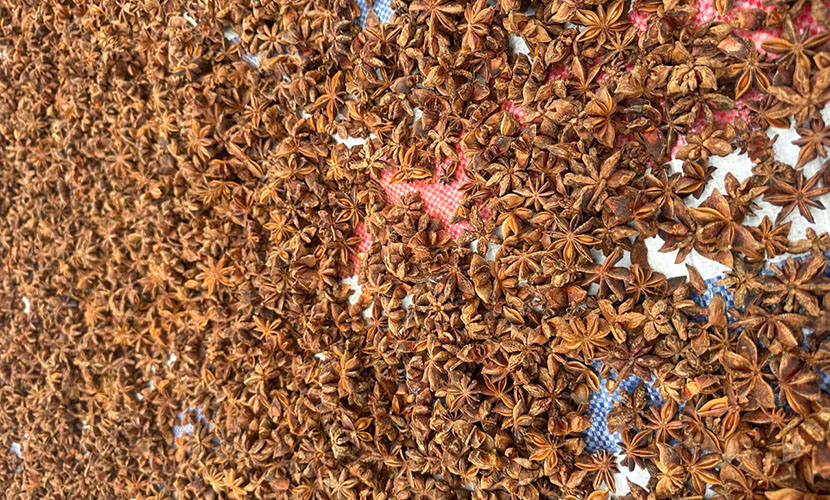
Currently, Lang Son province has 720 hectares of Vietnam organic star anise. It has mainly concentrated in the districts of Chi Lang, Van Quan, Binh Gia, and Bac Son.
The province now has over 43,000 hectares of star anise. It accounts for about 70% of the country’s total star anise area. Of this, there are more than 28,000 hectares that are in stable harvesting condition.
Vietnam organic star anise
Thier yield ranges between 7,500 and 16,000 tons of dried star anise flowers per year. They generate an estimated value of 1,700 billion VND annually. The potential and economic value of the star anise tree is substantial.
However, due to traditional harvesting practices and lack of investment in care, the trees have weakened. Therefore, they have become more susceptible to disease, bearing no fruit, or flowering but producing very few fruits. This situation has significantly affected the income and livelihoods of people in star anise growing areas.
In response to the practical needs of production, Lang Son have implemented various solutions to restore star anise trees and extend their harvesting period. As a result, they help improve productivity and product quality to meet processing and export requirements.
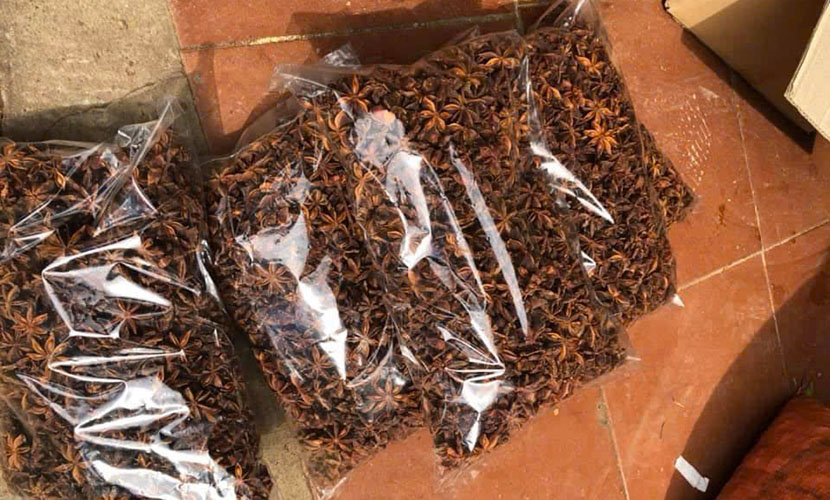
Vietnamese organic star anise for export
Hoang Van Thu is one of two communes in Binh Gia district implementing the Vietnam organic star anise model. This model named “Application of several technical solutions to restore and develop star snise trees”. Under this model, 30 local households participated with a total cultivation area of 40 hectares.
All participating households received training on planting and caring for star anise trees and were supported with organic fertilizers. After three years of applying organic microbial fertilizers and pest control measures, the results were very positive.
The trees grew better, had greener leaves, were less affected by anthracnose disease. Additionally, they produced more fruit compared to neighboring star anise forests not using the same techniques.
Mr. Chien, a farmer, shared: “After my star anise forest was selected as a pilot model, we started applying organic fertilizers, which helped double the fruit yield. The trees grew better, with greener leaves, more fruit, and improved quality.”

Loading organic star anise from Vietnam
Applying organic microbial fertilizers has helped reduce flower and fruit drop, improved fruit appearance and weight. Moreover, it has helped contribute to higher productivity, quality, and economic value of the star anise products.
The model’s yield was 20–30% higher thanks to the timely application of organic fertilizers during fruit development. There were more than 60% of trees bore abundant flowers and fruits. Each tree produced an average of 32.5 kg of flowers, and the estimated flower yield reached 1.3 tons per hectare.
Alongside efforts to improve yield and quality, Lang Son has also been expanding organic star anise areas. Currently, Van Quan district alone has about 400 hectares of star anise cultivated according to organic standards.
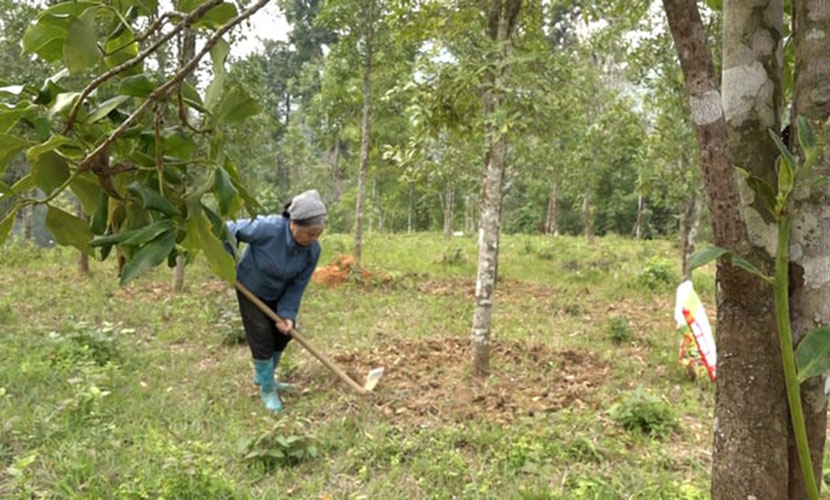
A model of Vietnamese organic star anise
Since 2019, Lang Son has supported the implementation of four organic star anise production models. At the same time, the province organized four technical training courses for participating households.
Thanks to government-supported models, the movement to apply technical solutions to star anise cultivation has gradually spread. Therefore, it has been leading to the formation of organic production areas, improving economic efficiency and meeting the requirements for processing and export.
At present, Lang Son has 720 hectares of star anise cultivated under organic standards. They are mainly spread across Chi Lang, Van Quan, Binh Gia, and Bac Son districts.
Ms. Khanh, a provincial official, stated that people’s awareness of organic agriculture in star anise cultivation has gradually improved.
“Local farmers are paying more attention to caring for and fertilizing star anise trees. They also understand the production and care process according to organic standards. This helps trees grow well, reduces pest and disease rates, and improves the quality of star anise.
At the same time, it lays the groundwork for expanding organic raw material areas to meet the demands of major export markets, thereby increasing the value of Lang Son star anise products,” emphasized Ms. Khanh.
Vietnamese source: https://nongsanviet.nongnghiepmoitruong.vn/xu-lang-mo-rong-dien-tich-hoi-huu-co-d365627.html
If you are interested in Vietnamese star anise exports, please contact us:
Company: Agrideco Vietnam Co., Ltd.
Address: No 02, Alley 325 Kim Nguu, Vinh Tuy Ward, Hanoi, Vietnam
Tel/Kakao Talk/Whatsapp: +84 989 649 804
Website: https://agridecovietnam.com
Email: agridecovietnam@gmail.com