
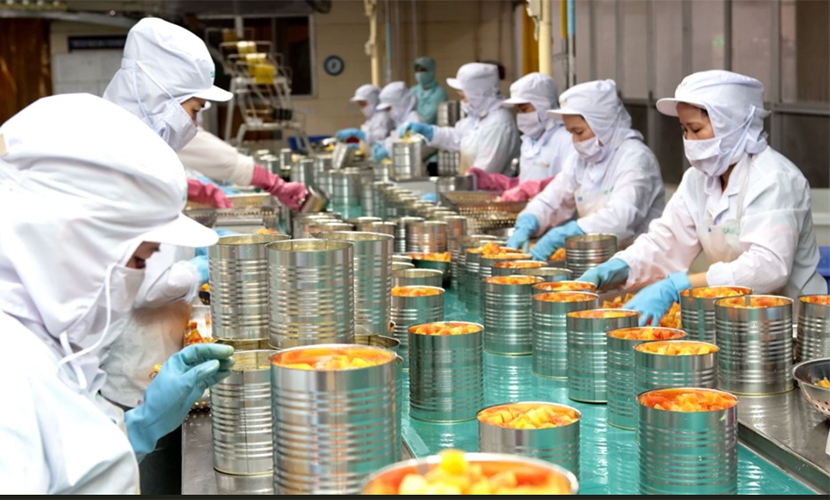
In 2025, the processed fruit and vegetable exports surpassed the USD two billion mark, reaching a record high. This figure reflects a clear shift from fresh produce to deep processing, according to data from the Customs Department.
Specifically, export turnover of processed fruit and vegetable exports reached USD 2.06 billion, up 42.1% compared to 2024. This category accounted for about 24% of total fruit and vegetable export turnover. Notably, it is significantly higher than the just-over-20% share recorded the previous year. As a result, it highlights the increasingly important role of deep processing in the sector’s overall export structure.
A range of high value-added products was the main driver of the growth. Processed coconut products generated USD 362 million, up nearly 57% year-on-year. Pistachios reached approximately USD 361 million, an increase of more than 64%, while almonds recorded nearly 80% growth.
Therefore, almonds reached USD 183 million. In addition, processed products made from passion fruit, mango, jackfruit, and longan maintained double-digit growth. This reflects rising demand for convenient, easy-to-store products with stable quality.
Processed fruit and vegetable exports
This shift became particularly evident toward the end of the year. In December 2025 alone, the turnover of processed fruit and vegetable exports reached USD 362 million, up more than 83% compared to the previous month. It was also 75% higher than the same period in 2024.
The sharp increase indicates that international markets are prioritizing products with lower quarantine risks and greater transport convenience. These products are also more compatible with modern distribution chains. Instead, they are no longer relying heavily on fresh produce.
The surge in processed products is not a short-term phenomenon. Instead, it is linked to long-term changes in consumer behavior. A survey by Amazon in the United States found that most Americans snack every day, with more than half using snacks as meal replacements. Fruits and vegetables are among the most popular choices. Therefore, this creates significant opportunities for healthy snack products made from agricultural produce.
Seizing this trend, many Vietnamese export companies have brought dried fruits and other processed products onto global e-commerce platforms. During the 2021–2024 period, sales of Vietnamese fruit snacks on Amazon rose by more than 550%, while dried fruit sales increased by over 250%.
According to exporters, American consumers are willing to pay premium prices for naturally dried products with no additives and no added sugar. Consequently, this compels businesses to strictly control input materials and invest heavily in processing technology.
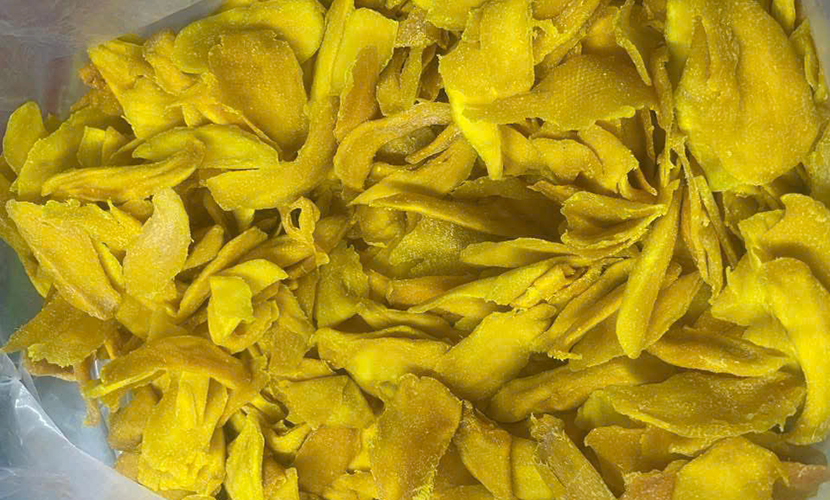
Vietnamese dried mangoes
Meanwhile, fresh fruits and vegetables, and nuts still accounted for a large share, with export turnover reaching USD 6.05 billion. However, their growth rate was only nearly 14%. This figure is significantly lower than that of the processed segment.
This development suggests that Vietnam’s fruit and vegetable exports are entering a new phase. In this phase, deep processing not only expands market access. It also serves as a “safety buffer” against policy changes, logistics disruptions, and increasingly stringent import standards.
The healthy consumption trend is also spreading globally. The Import-Export Department, citing a report by Future Market Insights, noted that the global dried fruit and vegetable market is projected to grow from USD 88.2 billion in 2025 to USD 192.2 billion by 2035. This represents an average annual growth rate of over 8%.
According to the Vietnam Fruit and Vegetable Association, the fact that processed fruit and vegetable exports surpassed the USD 2 billion mark for the first time is significant not only in terms of export value. It is also evidence of effective investment in technology, product diversification, and value chain restructuring. This is considered a crucial foundation for Vietnam’s fruit and vegetable sector to gradually reduce its reliance on raw exports. At the same time, it supports a transition toward more sustainable growth.