
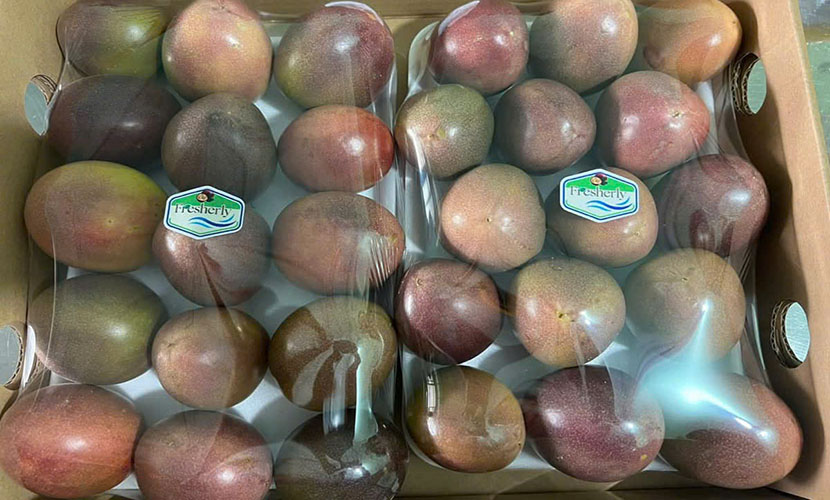
In the past five years, Vietnamese passion fruit exports have tripled in value. Thereby, they have reinforced the standing of the country’s fruit and vegetable industry in the global market.
Vietnam ranks among the world’s top 10 producers and exporters of passion fruit. In addition, 70–80% of its output is available at more than 20 countries and territories.
Vietnamese passion fruit exports
According to the Ministry of Agriculture and Environment, over the past five years, the value of Vietnamese passion fruit exports have tripled. This affirms the position of the country’s fruit and vegetable sector in the global market.
Last year, Vietnamese passion fruit exports reached over $170 million. In the first five months of this year alone, export turnover approached $100 million. It was up 14.5% in comparison to the same period last year. Currently, the growing area of passion fruit reaches 12,000 hectares, producing around 200,000 tons per year. Vietnam’s passion fruit will be able to become a billion-dollar export industry in the near future.
Fresh purple passion fruit is currently highly popular in international markets. At the same time, processed products like juices and syrups are gaining popularity. As a result, they create sustainable development opportunities for this promising sector.
Passion fruit prices have recently surged, driven by strong market demand that has outpaced supply. Additionally, adverse weather conditions and plant diseases have led to a decline in production. Gia Lai province is the capital of Vietnamese passion fruit exports. There are many passion fruit processing factories, which are currently struggling to source raw materials due to limited supply.
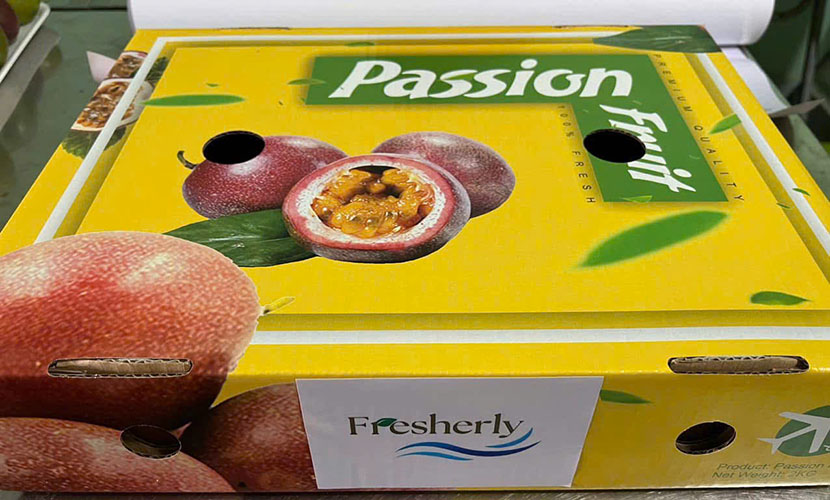
Vietnamese passion fruit box
About two years ago, when prices of durian soared to record highs, passion fruit prices, by contrast, plummeted. As a result, many farmers decided to uproot their passion fruit vines and switch to crops with higher economic value.
Mr. Quan, director of an exporting company, explained: “The prices of coffee, durian, and pepper are very high. Therefore, farmers tend to prioritize long-term industrial crops. As a result, the area under passion fruit cultivation has decreased significantly.”
Meanwhile, another company’s manager shared: “Passion fruit is a short-term crop that grows and yields quickly. Therefore, farmers tend to grow it massively without proper planning. We need appropriate agricultural policies for Vietnamese passion fruit exports. This includes conducting market demand assessments through major enterprises and developing raw material zones based on that data.”
Instead of expanding acreage and increasing output, businesses and cooperatives are now focusing on restructuring production. They are also strengthening partnerships and standardizing processes from cultivation and harvesting to processing.
These efforts aim to meet the increasingly stringent requirements of import markets regarding plant quarantine and traceability. By doing so, they enhance product value and help maintain export market stability.
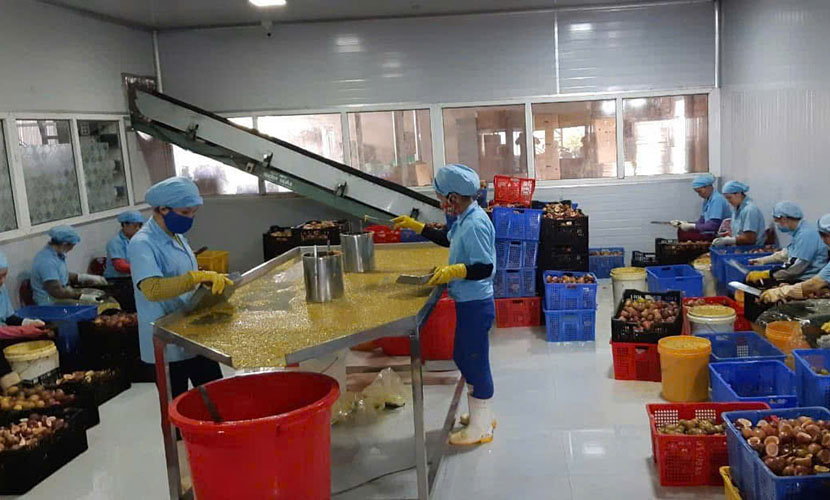
Vietnamese passion fruit factory
To build a sustainable passion fruit industry, much work remains to be done. Key priorities now focus on strategic solutions. They involve clear production zoning, strict variety management, and keeping up with pesticide residue regulations from major markets like the EU, the US, and China.
Mr. Tien, Deputy Minister of Agriculture and Environment, remarked: “Planning and effectively implementing that plan is crucial for establishing stability and giving farmers confidence in production. Cooperatives and enterprises need to work in a coordinated manner to elevate passion fruit cultivation to a higher level in the coming years”.
“The Ministry has already invested in several research projects aimed at improving passion fruit productivity and quality. For example, the Plant Protection Institute has conducted studies and projects to control diseases in Vietnamese passion fruit exports. Other research focuses on developing improved varieties with higher yields and better quality,” he added.
Export turnover of processed passion fruit products will be able to reach $300 million this year. At the same time, fresh fruit exports may surpass $500 million. Vietnam’s passion fruit, pineapple, and banana are expected to become the country’s next billion-dollar fruit exports. The increase is fueled by systematic investment and the expansion of cultivation areas.
Vietnamese source: https://vtv.vn/co-hoi-phat-trien-ben-vung-cho-nganh-hang-chanh-leo-100250827114337994.htm
If you are interested in Vietnamese passion fruit exports, please contact us:
Company: Agrideco Vietnam Co., Ltd.
Address: No 02, Alley 325 Kim Nguu, Vinh Tuy Ward, Hanoi, Vietnam
Tel/Kakao Talk/Whatsapp: +84 989 649 804
Website: https://agridecovietnam.com
Email: agridecovietnam@gmail.com