
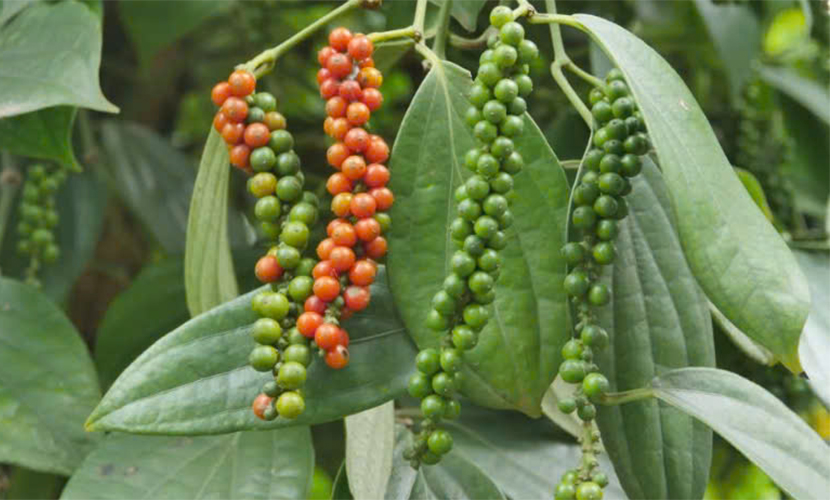
In 2026, pepper prices are forecast to remain high due to tightening global supply. However, Vietnamese pepper exports will face mounting pressure from stricter technical standards, tariffs, and increasingly rigorous import policies.
Ms. Hoàng Thị Liên is the Chairwoman of the Vietnam Pepper and Spice Association. According to her, global pepper production in 2025 was likely to reach around 537,000 tons. Accordingly, it went down 2.9% compared to 2024 and 6.9% compared to 2023. This marks the second consecutive year of decline, reflecting the prolonged effects of the previous low-price cycle, rising input costs, and unfavorable weather in several major producing countries.
Vietnamese pepper exports
Production fell sharply in India, Indonesia, and Sri Lanka, while Brazil, Vietnam, and Malaysia showed signs of recovery. The global supply structure continues to tilt heavily toward Vietnam. Specifically, Vietnamese pepper exports account for 36.3% of total output, significantly ahead of India (15.8%) and Brazil (15.1%).
Amid constrained supply and relatively stable demand, global pepper prices remained elevated throughout 2025. Total global exports may reach around 430,000 tons, down 2.7% year-on-year. It signaled a phase of moderate adjustment rather than rapid expansion.
This trend reflects limited supply in key producing countries and the dampening effect of high prices on demand in certain markets. In particular, in the United States, reciprocal tariff policies and importer inventory optimization strategies have influenced purchasing behavior.
Brazil strengthened its position in 2025, with output reaching approximately 81,000 tons. It was up 28.6% year-on-year thanks to favorable weather after a weak 2023 crop. Exports surged to 83,000 tons valued at USD 517.8 million, representing increases of 35% in volume and 80% in value. Vietnam remained Brazil’s largest export market, accounting for 26.1% of shipments, alongside the Middle East–North Africa region.
In contrast, Indonesia faced a difficult year. Production dropped to around 53,000 tons (down 10.1%) due to prolonged rains, shrinking cultivation areas, reduced yields, and delayed harvesting. Stockpiles fell to an estimated 13,000 tons—the lowest level in years. As a result, exports are projected to decline by 33.2% to about 35,000 tons.
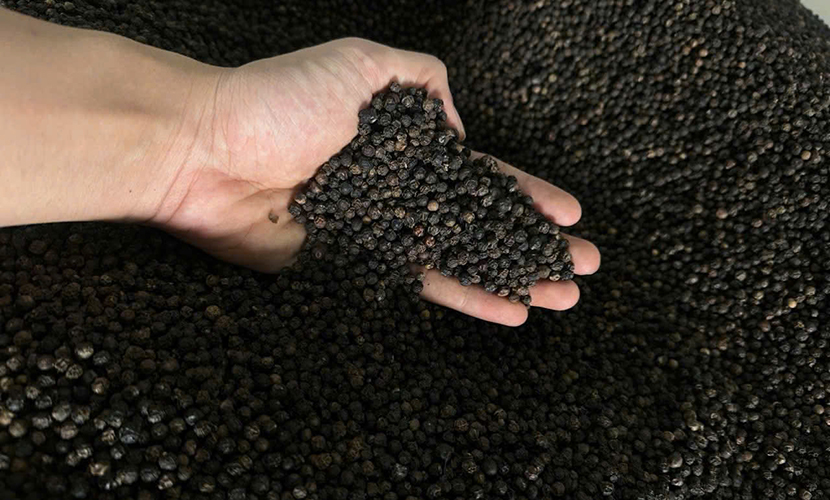
Black pepper from Vietnam
Lampung black pepper prices in late 2025 exceeded USD 7,000 per ton—higher than Vietnam’s but lower than India’s. As a result, Indonesia is positioned as a mid-range supplier of pepper directly competing with Vietnam in the mid-tier segment.
India recorded the steepest decline among major producers. Output in 2025 fell to about 85,000 tons due to adverse weather, disease outbreaks, high production costs, and reduced planting areas. Although India’s export volumes weakened, it continues to serve a premium niche segment with average export prices nearing USD 8,000 per ton.
With production estimated at around 195,000 tons in 2025—an increase compared to 2024—Vietnam remains the world’s largest producer and exporter of pepper. Supply has been relatively stable, supported by improved yields, younger plantations entering harvest, and increased investment amid favorable prices.
However, the 2026 crop outlook of Vietnamese pepper exports is more cautious. Early-year drought, heavy rains, and disease outbreaks during the rainy season have affected growing areas, leaving yields at only average levels in many regions. Production in 2026 is projected to decline by about 10% in comparison to 2025.
Despite strong global demand and leadership in exports, the Vietnamese pepper sector faces intensifying regulatory pressure. Key markets such as the EU and the United States are tightening sustainability standards, emphasizing chemical residue compliance, carbon footprint reduction, and traceability. Pepper cultivation is also grappling with soil degradation, emissions concerns, and disease risks, necessitating a transition toward regenerative farming practices and low-carbon value chains.
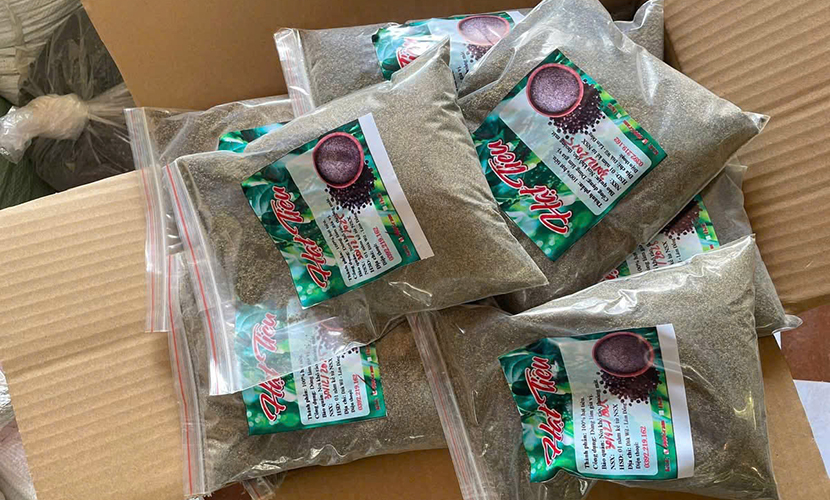
Vietnamese pepper powder
Ms. Lê Vũ Thùy Dung, Deputy Commercial Director of Simexco Đắk Lắk, noted that Vietnamese pepper exports reached approximately USD 1.66 billion in 2025—up 26% year-on-year. However, revenue growth has been accompanied by increasing technical risks, particularly in premium markets.
The EU, United States, South Korea, and Taiwan (China) have progressively tightened maximum residue limits (MRLs) for crop protection chemicals, expanding regulated substance lists. Of particular concern are alerts related to Sudan dyes—industrial colorants that can trigger shipment rejection or destruction. In 2025 alone, the EU recorded 66 alerts concerning pepper and spices, including six cases involving Vietnamese products.
In response, enterprises such as Simexco Đắk Lắk have prioritized close supply chain linkages and multi-layered quality control systems. They have also strengthened direct management of raw material zones. According to Ms. Dung, the competitive advantage of Vietnamese pepper now lies not only in volume or flavor but in trust, transparency, and compliance capability.
As global pepper trade enters a phase of restructuring, Vietnam’s leadership position brings both opportunity and responsibility. The alignment of the “five stakeholders”—the State, farmers, scientists, enterprises, and cooperatives—is considered essential to sustaining competitiveness.
Prices are likely to remain high in 2026 due to constrained supply. Long-term success will depend on upgrading production practices, strengthening compliance with international standards, and investing in sustainable farming models. It will also require building greater resilience against trade and regulatory risks.
In this transitional period, Vietnam’s pepper industry is striving to maintain its pivotal role as a global supply leader. At the same time, it is seeking to shape the next phase of the global pepper value chain through quality, sustainability, and strategic adaptation.