

Local authorities have strongly implemented crop restructuring. This is part of the broader restructuring of the agricultural sector toward higher value and greater market adaptability. In the province, many low-efficiency cultivation areas have converted to higher-value crops. These crops better match market demand. Among them, Vietnam’s seedless lime is delivering positive results. It is helping farmers improve incomes and stabilize production.
In recent years, in Song Loc, Tan An, Phong Thanh, and Tap Son communes, the shift from rice cultivation and low-efficiency mixed gardens to high-value crops has strongly promoted. Among these, Vietnamese seedless lime has gradually established itself as a key crop. This is due to its suitability to local soil conditions, ease of cultivation, high productivity, and stable market demand.
A typical example of this transition is the model implemented by the Seedless Lime Professional Association in Song Loc Commune and Thanh Chi Seedless Lime Cooperative (Tan An Commune). This model has demonstrated significantly higher efficiency than traditional farming methods. This is especially true when organized along a value-chain linkage from production to consumption.
In line with the orientation of developing a collective economy associated with agricultural restructuring, the Provincial Cooperative Alliance has actively supported the development of value-chain-based production models. This has strengthened linkages among farmers, cooperatives, and enterprises. It has also ensured output markets and reduced market risks.
Vietnam’s seedless lime
One of the standout models is Thanh Chi Seedless Lime Cooperative, established in 2022. It currently comprises 10 official members and 122 affiliated members planting Vietnam’s seedless lime. The cooperative has developed a raw material area of approximately 240 hectares in Tan An, Song Loc, Binh Phu, and other communes. Around 90 hectares are currently in harvest.
Across the entire linked production area, total cultivated land reaches more than 188 hectares. This involves 186 households across 16 communes.
The economic efficiency of Vietnam’s seedless lime cultivation has clearly demonstrated. Average profits reach VND 500–600 million per hectare per year, which is many times higher than rice farming.
In terms of yield, trees aged 18 to under 36 months produce about 6.5 tons per hectare. Trees over 36 months can reach 30–40 tons per hectare. In some cases, they even reach 50–70 tons per hectare per year under good cultivation practices.
Mr. Phan Duc Tai is the Director of Thanh Chi Cooperative. He stated initial investment costs range from VND 110–130 million per hectare. However, thanks to harvesting twice per month, farmers can recover their investment after 12–20 harvest cycles.
When joining the cooperative, members receive technical support and training on standard production procedures. They also gain access to preferential loans of around VND 50 million per household.
Currently, the cooperative purchases and supplies 120–150 tons of raw limes per month. During peak season, output can reach 200–250 tons per month. All products are stably contracted for consumption, helping farmers feel secure in production.
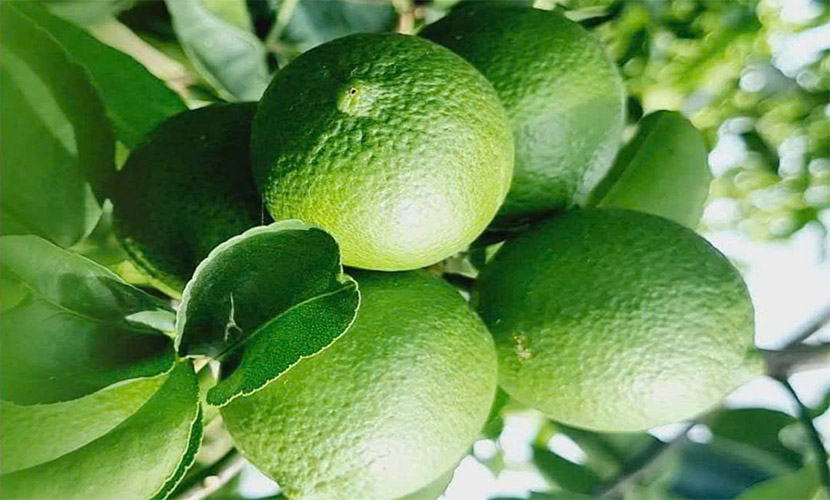
Green lime from Vietnam
The linkage between cooperatives and enterprises plays a crucial role in product consumption. Thanh Chi Cooperative has signed a contract with a Vietnam’s fruit company for export to the Netherlands market.
As a result, purchase prices remain stable and favorable for growers. A minimum purchasing price of no less than VND 10,000 per kilogram is guaranteed. When market prices rise, the enterprise purchases at market rates and adds a bonus based on export ratios. This creates strong incentives for farmers to improve product quality.
Mr. Son Hai Phong is the Head of the Song Loc Seedless Lime Professional Association. He said the association currently has 29 members cultivating nearly 31 hectares. All members have signed off-take contracts with the cooperative and receive technical production support.
According to him, participation in the linkage model helps farmers feel more secure due to stable market outlets. It also provides guidance in standardized production practices. This has contributed to forming a high-quality raw material zone that meets strict export requirements.
Mr. Tran Phuong Khanh is a member of the Song Loc Seedless Lime Professional Association. He shared that his family converted 1.7 hectares of rice land into Vietnam’s seedless lime cultivation. Since 2024, the orchard has produced stable yields of around 50 tons per hectare.
With a guaranteed purchase price of no less than VND 10,000 per kilogram, and at times reaching VND 25,000–30,000 per kilogram, his family earns an annual profit of VND 350–400 million per hectare after costs.
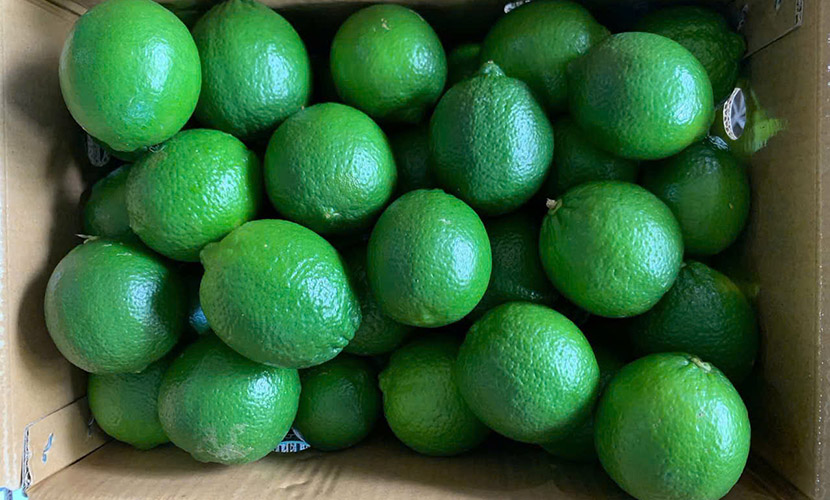
Vietnamese seedless lime box
According to him, participation in the model reduces pressure on both output and technical requirements. Planned production also helps avoid oversupply.
Given the clear effectiveness of the model, the province is orienting toward expanding seedless lime cultivation. This aims to form concentrated raw material zones for export.
Mr. Thai Phuoc Loc is the Director of the Provincial Cooperative Alliance. He stated that Vietnam’s seedless lime linkage model delivers economic efficiency 5–6 times higher than rice cultivation. It also creates stable employment for more than 150 workers. In addition, it contributes to changing farmers’ production mindset toward market-oriented linkages.
The province aims to reach 250 hectares by the end of 2026. It also plans to expand to 500 hectares in the 2027–2030 period. This will form a dedicated export-oriented raw material zone.
Vietnamese export enterprises have committed to product off-take and introduced quality-based incentive policies. These are intended to encourage standardized production. Farmers participating in the model are supported with preferential loans, seedlings, and cultivation techniques.

Loading Vietnam’s seedless lime
The provincial leadership highly valued the role of enterprises in connecting consumption channels and bringing agricultural products to global markets. The province also pledged to create favorable conditions for enterprise investment and production linkages.
Relevant departments will coordinate in developing cultivation zoning plans, high-quality seedling nurseries, and technical training programs. They will also work on improving support mechanisms for farmers and cooperatives.
In addition, the province will promote partnership networks to mobilize resources for raw material zone development. Effective models will be documented and replicated to spread best practices.
The export-oriented seedless lime model is gradually establishing its quality and reputation in Vĩnh Long’s agricultural sector. With coordinated efforts from authorities, enterprises, and farmers, seedless lime is expected to become a key agricultural industry. It will improve rural livelihoods and promote sustainable local economic development.
Vietnamese source: https://vinhlong.dcs.vn/chanh-khong-hat-khang-dinh-gia-tri-tren-thi-truong-xuat-khau-1006774.ngn
If you are interested in Vietnamese seedless lime, please contact us:
Company: Agrideco Vietnam Co., Ltd.
Address: No 02, Alley 325 Kim Nguu, Vinh Tuy Ward, Hanoi, Vietnam
Tel/Kakao Talk/Whatsapp: +84 989 649 804
Website: https://agridecovietnam.com
Email: agridecovietnam@gmail.com