
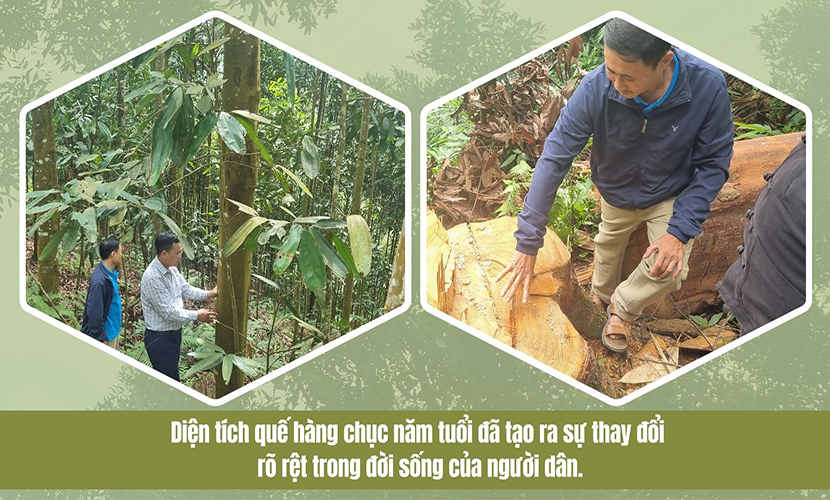
Bao Nhai is a remote commune in Bao Thang district, located in the mountainous province of Lao Cai. Seeking sustainable development models that generate high added value, Bao Nhai commune has emerged as a bright spot. Bao Nhai commune is home to thousands of hectares of Vietnam’s cinnamon trees. Among them, the most valuable are the decades-old cinnamon trees scattered across the villages and hamlets.
The clearest evidence of the value of decades-old cinnamon trees is the story of a local farmer, Mr. Vang. He recently harvested a cinnamon tree over 40 years old, standing more than 10 meters tall. Selling just the cinnamon barks brought his family 16 million VND. Including the value of the trunk wood, the total income from this ancient cinnamon tree reached 25 million VND.
Vietnam’s cinnamon trees
“The combination of soil and climate here has enabled the Vietnam’s cinnamon trees to accumulate significantly higher essential oil content. For example, a 10-year-old cinnamon tree of the same size will have heavier bark if grown in Bao Nhai. This is because it contains more essential oil than cinnamon from many other places. Currently, the selling price of fresh cinnamon bark ranges from 60,000 to 80,000 VND per kilogram,” he said.
Not only the bark and trunk, but decades-old cinnamon trees also provide farmers with significant income from selling seeds. On average, one kilogram of dried cinnamon seeds sells for 150,000 to 200,000 VND. Over the years, locals have believed that these decades-old cinnamon trees are not only a source of livelihood. They are also a valuable “savings asset,” which passed down through generations.
The economic value of cinnamon in Bao Nhai stems from its superior quality, which is determined by the commune’s unique soil and climate conditions. As a result, Bao Nhai cinnamon is always in high demand in the market, especially trees aged 30 to 40 years.
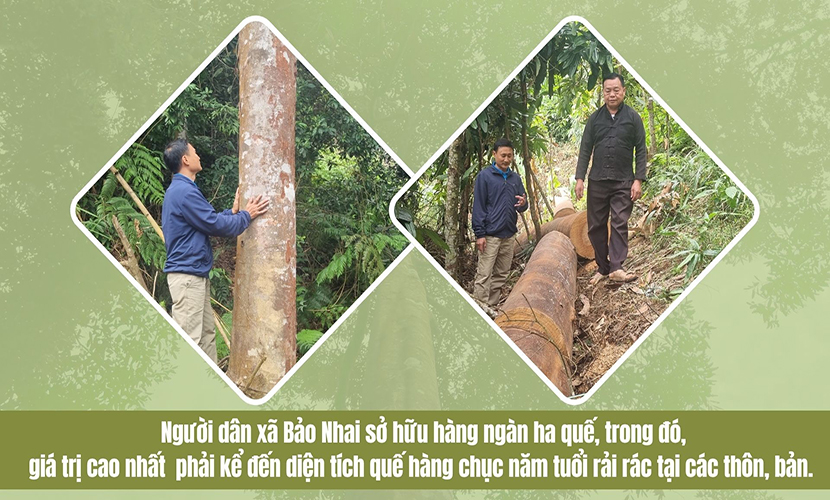
An ancient cinnamon tree in Bao Nhai commune
Currently, Bao Nhai commune has 4,325 hectares of cinnamon. Of this, 3,325 hectares are available for harvesting. Notably, the commune has developed 1,297 hectares of organic cinnamon and has one efficiently operating agricultural cooperative.
“Currently, all 38 villages and hamlets in Bao Nhai commune have areas of land dedicated to cinnamon cultivation. Cinnamon is mainly planted on family-managed production forest land according to planning. This approach not only ensures economic development but also complies with regulations on environmental protection and social welfare,” Mr. Cuong, Head of the Economic Department of Bao Nhai Commune
The sustainable value of Bao Nhai cinnamon is inseparable from the strategy of conserving its genetic resources. The Nam Det area not only has the best soil conditions but also preserves long-established cinnamon trees carrying pure genetic lines. “Currently, there are many decades-old cinnamon trees in Nam Det village.
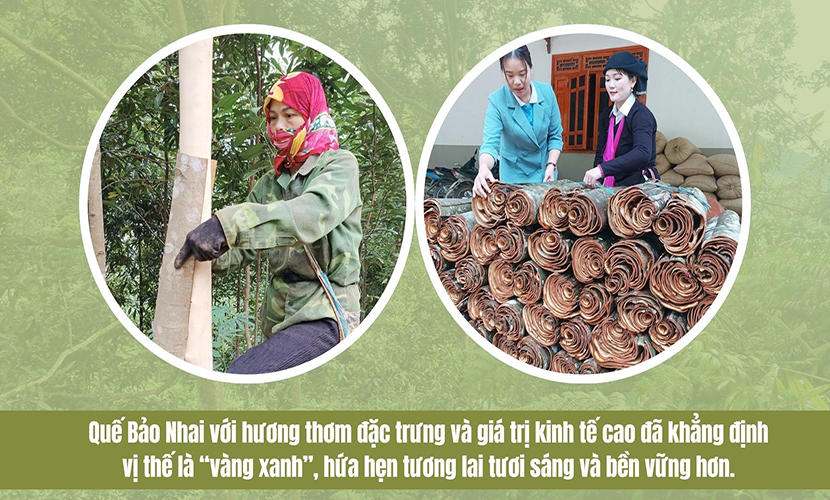
Vietnam’s cinnamon barks
Each year, households actively care for the trees and harvest seeds for propagation, helping to conserve these valuable genetic resources. The commune also assigns agricultural specialists to work with provincial authorities to inspect, review, and assess the quality of the cinnamon. This activity aims to enhance the economic efficiency of cinnamon cultivation while protecting the reputation of the Bao Nhai cinnamon brand,” added Mr. Cuong.
Given the great potential of cinnamon, Bao Nhai commune has developed a growth strategy focused on sustainability. The primary goal is to ensure a stable supply of cinnamon for cooperatives, maintain the value chain, and avoid situations of oversupply or shortage of raw materials. This includes zoning specific areas and expanding the area of controlled organic cinnamon cultivation.
Bao Nhai cinnamon, with its distinctive aroma and high economic value, has established itself as “green gold,” promising a brighter and more sustainable future. In particular, the conservation and development of decades-old trees today ensure the quality of the Bao Nhai cinnamon brand. They also help maintain its reputation for future generations.
Vietnamese source: https://baolaocai.vn/vang-xanh-o-bao-nhai-post885683.html
If you are interested in Vietnamese cinnamon products, please contact us:
Company: Agrideco Vietnam Co., Ltd.
Address: No 02, Alley 325 Kim Nguu, Vinh Tuy Ward, Hanoi, Vietnam
Tel/Kakao Talk/Whatsapp: +84 989 649 804
Website: https://agridecovietnam.com
Email: agridecovietnam@gmail.com