

The Philippines’ reduction in imports during its domestic peak harvest season is putting short-term pressure on Vietnamese rice exports. However, the impact will be able to be only temporary.
On February 27, the prices of Vietnamese rice exports declined slightly compared with the previous day. According to the Vietnam Food Association (VFA), the price of 5% broken rice is at 400–415 USD per ton. Meanwhile, 100% broken rice stands at 315–319 USD per ton, down 1 USD per ton.
Jasmine rice price reaches 432–436 USD per ton, down 1 USD per ton. This development reflects pressure from a sharp increase in domestic supply and slowing import demand from several major markets.
Notably, the Philippines—the largest market for Vietnam’s rice—is likely to reduce imports to about 150,000 tons per month in March and April 2026. This figure is significantly lower than the previous average of around 400,000 tons per month. This move aims to protect domestic farmers as the country enters the peak harvest season of its main crop. At the same time, it helps stabilize the local market.
The tightening of imports by this key market comes at a time when the 2025–2026 Winter–Spring crop in the Mekong Delta is entering its peak harvest period. As a result, this raises concerns about the risk of localized oversupply and downward pressure on domestic paddy prices.
According to the Department of Crop Production and Plant Protection, the entire Mekong Delta region has planted 1.266 million hectares of Winter–Spring rice. This area reaches 100% of the planned target. The expected output is more than 1.65 million tons.
Vietnamese rice exports
So far, about 250,000 hectares have been harvested, generating yields of 6.6 tons per hectare. Abundant supply, combined with temporarily slowing import demand, is creating short-term challenges for Vietnames rice exports.
However, according to international traders, the Philippines’ reduction in imports is only temporary. It is mainly intended for domestic market management. Therefore, it does not change the country’s role as a key long-term buyer of Vietnamese rice.
Despite short-term pressure, Vietnamese rice exports have shown positive signs in the early months of the year. In January 2026, Vietnam exported about 600,000 tons of rice worth 370 million USD. This was up 12.4% in volume and 16.9% in value in comparison with the same period last year. The average export price reached 616.6 USD per ton, an increase of 4%.
The Philippines remained the largest market for Vietnamese rice exports. It imported 331,770 tons of rice from Vietnam in the first month of the year. This accounted for more than 50% of total exports. This indicates that despite short-term policy adjustments, the Philippines continues to play a central role in Vietnam’s rice export market structure.
In addition, several other markets are increasing imports. As a result, dependence on a single market is gradually decreasing. In 2025, Vietnamese rice exports to Ghana rose by 21.3%. Exports to Côte d’Ivoire increased by 67.5%. Meanwhile, Bangladesh recorded a sharp surge.
Markets such as Singapore, Canada, the EU, and the Middle East are also considered to have strong growth potential. This is particularly true for high-quality rice and rice produced under sustainable standards.
From a business perspective, speaking with a reporter from Công Thương Newspaper, Nguyễn Văn Thành shared his view. He is the Director of Phước Thành IV Production and Trading Co., Ltd. in Vĩnh Long. He said the Winter–Spring crop is always the most important crop of the year. This is true both in terms of output and quality.
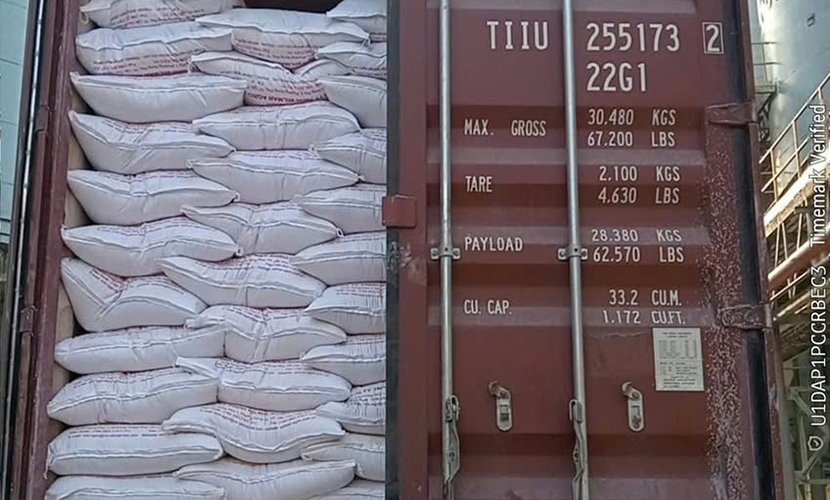
Vietnamese rice loading
The company has proactively prepared warehouses, financial resources, and commitments to purchase rice from farmers under contracts. At the same time, it is temporarily storing part of the output to regulate supply for the coming months.
Temporary stockpiling helps Vietnam’s rice enterprises take control of supply. It also ensures consistent quality for export orders and maintains credibility with international partners. This remains important even when the market fluctuates, Thành said.
In addition to fluctuations in the Philippine market, Vietnamese rice is also facing competitive pressure from increasing global supply. According to the Food and Agriculture Organization of the United Nations (FAO), global rice production in the 2025–2026 season is expected to reach a record level. India could export up to 23.6 million tons. This would maintain its position as the world’s largest rice exporter.
Meanwhile, importing countries are also adjusting policies to enhance food self-sufficiency. They are also trying to reduce reliance on external supply. As a result, competition is becoming increasingly intense.
Speaking with a reporter from Công Thương Newspaper, Lê Thanh Tùng shared his view. He is the Secretary General of the Vietnam Rice Industry Association (VIETRISA). He said that to maintain competitiveness, Vietnam’s rice sector needs to focus on improving quality. It must also meet market standards and build sustainable value chains.
To successfully sell Vietnamese rice exports, it is necessary to clearly understand the demand of each market. Producers must also meet standards related to quality, food safety, and the environment. These are decisive factors for increasing value and maintaining market share amid intensifying competition, Tùng emphasized.
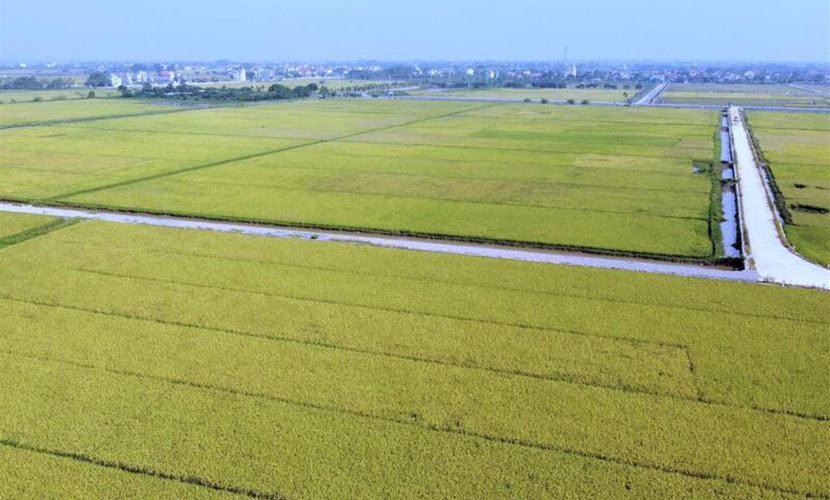
Vietnamese rice farms
Meanwhile, according to exporting enterprises, markets such as the EU, Japan, Canada, and Singapore are increasingly concerned about environmental factors and sustainability in production. Rice produced under low-emission standards not only enhances brand image. It can also achieve higher value compared with conventional rice.
The Philippines’ short-term reduction in imports is considered a test of the Vietnamese rice sector’s adaptability. However, Vietnam’s rice exports still has a solid foundation to maintain its position in the international market. This is thanks to advantages in production capacity, quality, and a well-developed processing system.
Amid market fluctuations, several fundamental solutions have been identified. These include improving quality, diversifying markets, developing high-value rice varieties, and strengthening linkages between farmers and enterprises. At the same time, efforts should be intensified to build the Vietnamese rice brand. This brand should be associated with green, sustainable, and environmentally responsible criteria.
If Vietnam effectively leverages trade agreements and expands markets, the rice sector will gain significant opportunities. At the same time, it must enhance product value. By doing so, the sector will not only overcome short-term challenges. It will also strengthen its position in the global food supply chain. This will help move the industry toward stable and sustainable long-term growth.
Vietnamese source: https://congthuong.vn/xuat-khau-gao-chiu-suc-ep-trong-ngan-han-444540.html
If you are interested in Vietnamese rice exports, please contact us:
Company: Agrideco Vietnam Co., Ltd.
Address: No 02, Alley 325 Kim Nguu, Vinh Tuy Ward, Hanoi, Vietnam
Tel/Kakao Talk/Whatsapp: +84 989 649 804
Website: https://agridecovietnam.com
Email: agridecovietnam@gmail.com