
In the first four months of 2026, Vietnam’s cashew enterprises imported more than 1.3 million tons. The import value of cashew raw materials reached about USD 2.17 billion. This represents an increase of 22.8% in volume and 32.2% in value compared to the same period in 2025. Cashew nuts have therefore become the country’s largest imported agricultural commodity in the early months of this year.
The paradox lies in the fact that Vietnam remains the world’s No.1 exporter of cashew kernels. However, most of its raw input materials depend on imports, mainly from Africa and Cambodia. This “import – process – re-export” model has helped the industry maintain multi-billion-dollar turnover for many years. However, it is also revealing strategic risks as supplying countries increasingly push for deeper domestic processing.
In the first quarter of 2026, Vietnam imported more than 810,000 tons of raw cashew nuts worth over USD 1.31 billion. March and April saw a sharp increase in procurement to serve year-end export processing demand. However, this growth far exceeded historical patterns.
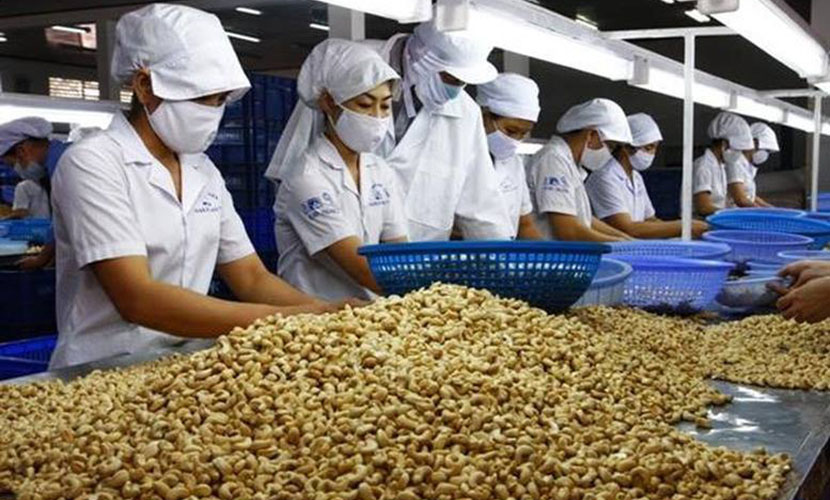
Vietnam’s cashew enterprises
In 2025, Vietnam’s cashew enterprises imported about 3.12 million tons of raw cashew nuts worth USD 4.66 billion. Meanwhile, they exported nearly 798,000 tons of Vietnamese cashew kernels worth USD 5.43 billion. This shows that the industry still generates significant value-added thanks to its processing capacity. It also reflects an export system built over more than three decades.
Mr. Bạch Khánh Nhựt is the Permanent Vice Chairman of VINACAS. He stated Vietnam still controls the most technically complex stages in cashew kernel processing, especially shelling and deep processing. These remain capabilities that many African countries have not fully mastered.
“In the processing chain, machinery handles about 70% of the workload. This is something African countries can already do. However, the remaining 30% requires manual processing, skill, and precision to meet international standards. Vietnam is still the best at this stage.”
However, heavy reliance on imported raw materials is creating long-term risks. According to VINACAS warnings at the 2026 cashew procurement conference, many African countries are shifting strongly from exporting raw cashew nuts. They are instead developing domestic processing industries to retain value-added.
In recent years, countries such as Côte d’Ivoire, Benin, and Burkina Faso have continuously adjusted policies to restrict raw cashew exports. Some impose high taxes, while others ban early-season exports to prioritize raw materials for domestic processing plants.
This trend is directly affecting Vietnam’s cashew enterprises, as input prices rise while processing profit margins narrow.

Vietnamese cashew nuts
Notably, imports of semi-processed cashew kernels from Africa to Vietnam have increased sharply. From only 10,000–15,000 tons in 2020, the volume reached about 150,000 tons by the end of 2025. This shows that supplying countries are no longer just exporting raw materials. Instead, they are increasingly participating in the processing chain.
Beyond raw material pressure, Vietnam’s cashew enterprises also face brand risks due to low-quality imported kernels being reprocessed, blended, and then re-exported. VINACAS has repeatedly proposed stricter control mechanisms for imported semi-processed cashew kernels to protect the “Vietnam Cashew” brand.
In an increasingly competitive environment, many experts argue that Vietnam’s cashew industry cannot continue relying on a traditional processing model. This is necessary if it wants to maintain its leading position.
Deputy Minister of Agriculture and Environment Phùng Đức Tiến stated that the agricultural sector must focus on improving processing quality. It must also diversify markets and strengthen resilience against global trade fluctuations.
For the cashew sector, the direction proposed by many businesses and experts is to accelerate deep processing rather than relying mainly on raw kernel exports. Products such as branded roasted cashews, cashew butter, cashew milk, cashew oil, and cosmetics derived from cashew by-products are considered to have significantly higher value-added potential.
Alongside this, direct investment in raw material regions in Africa is also seen as a long-term solution to secure supply. Some Vietnamese cashew companies have begun exploring opportunities to invest in factories and plantations in Côte d’Ivoire, Tanzania, and Ghana.
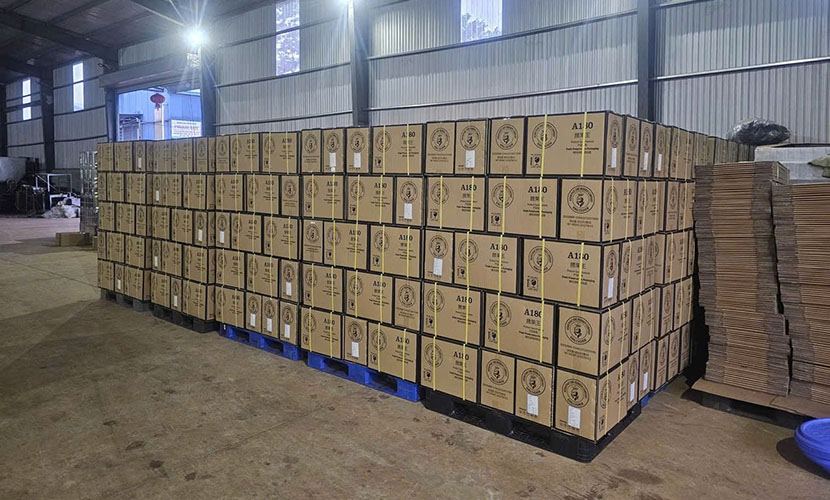
Vietnam’s cashew boxes
VINACAS has also proposed promoting trade agreements with African countries to build a more stable supply chain instead of relying solely on short-term commercial transactions.
Over the past 30 years, Vietnam’s cashew industry has built world-leading processing capacity. It has also created jobs for hundreds of thousands of workers and made major contributions to Vietnamese agricultural exports.
However, the record-high import volume of raw cashew nuts in April 2026 signals that the current growth model is reaching its limits. As raw material sources become more competitive and producing countries seek to retain more value, Vietnam’s advantage will not be sustainable. This will be the case if Vietnam’s cashew enterprises continue to rely mainly on processing outsourcing.
The current challenge is not to reduce raw material imports in the short term—something nearly impossible. Instead, it is to shift toward higher value chains based on technology, branding, and deep-processed products.
Vietnamese source: http://www.hoinongdan.org.vn/nha-nong-can-biet/nganh-dieu-viet-nam-tu-cong-xuong-che-bien-toi-bai-toan-thuong-hieu-380841
If you are interested in Vietnamese cashew exports, please contact us:
Company: Agrideco Vietnam Co., Ltd.
Address: No 02, Alley 325 Kim Nguu, Vinh Tuy Ward, Hanoi, Vietnam
Tel/Kakao Talk/Whatsapp: +84 989 649 804
Website: https://agridecovietnam.com
Email: agridecovietnam@gmail.com