
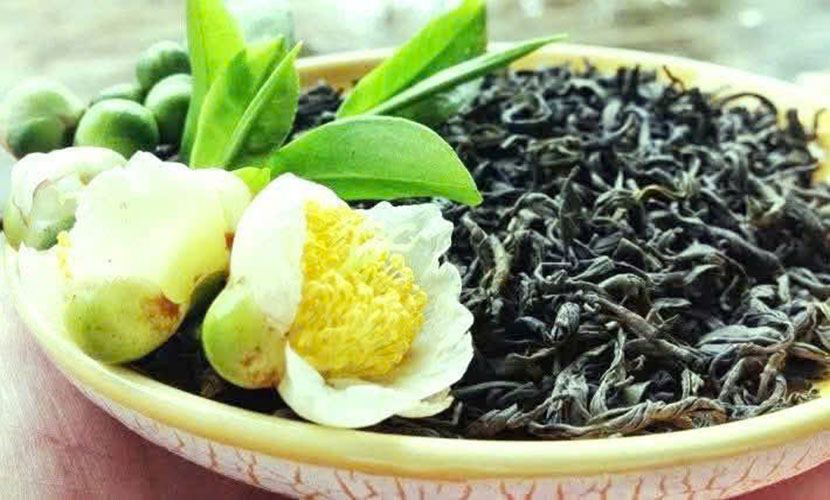
Assessing the potential of Vietnam’s tea exports, experts believe there is still significant room to increase the value. In order to achieve it, the industry should improve its product structure and market strategy.
Vietnam currently maintains its position as the world’s 5th largest tea producer and exporter. Its raw material regions stretch from the northern midlands and mountainous areas to the Central Highlands. Major production hubs are Thái Nguyên, Phú Thọ, Lâm Đồng, and several northern mountainous provinces.
According to the General Department of Customs, in 2025 Vietnam’s tea exports reached 136,952 tons. Accordingly, the export value reached nearly USD 238 million. This represents a decline of 7.07% in volume and 0.72% in value compared to 2024.
Despite maintaining a large scale, Vietnam’s average tea export price ranged from USD 1,644 to 1,737 per ton. This is equivalent to 55–65% of the global average, which was around USD 2,600 per ton in 2023.
Compared with countries that have successfully positioned themselves in the premium segment such as Sri Lanka or Kenya, the price gap remains significant. This shows that there is still ample room to increase value-added if the industry improves its product structure and market strategy.
Vietnam’s tea exports
In order to promote Vietnam’s tea exports to the Chinese market, the Trade Promotion Agency (Ministry of Industry and Trade) coordinated with the Vietnam Trade Office in Nanning and the Vietnam Tea Association. Together, they recently organized a trade delegation to participate in the “International Tea Day” event in Nanning, China. The program was attended by 40 representatives from well-known Vietnamese tea enterprises.
Participation in the event not only opened opportunities to promote Vietnamese tea brands but also helped strengthen trade connections and expand export markets. Through exhibitions, product showcases, and business matchmaking activities, many Vietnamese specialty tea products attracted strong interest from international partners.
The event also provided an opportunity for Vietnamese tea enterprises to update consumer trends and market standards. In addition, it helped enhance cooperation in the global tea supply chain, aiming for sustainable development and higher value for Vietnam’s tea industry.
The “International Tea Day” event attracted nearly 300 participants. These included international organizations and consuls general in Nanning. They also included Chinese central and local authorities, as well as business associations and enterprises from China and several Asian countries.
Mr. Lê Hoàng Tài is the Deputy Director of the Trade Promotion Agency. He stated within the framework of the event, Vietnamese enterprises showcased high-quality specialty tea products at the Vietnam national exhibition area. This space attracted many visitors from China and other Asian countries to experience Vietnamese tea.
Mr. Hoàng Vĩnh Long is the Chairman of the Vietnam Tea Association. Assessing the current situation and challenges of the tea industry, he stated that tea is not only an agricultural product generating economic value. It is also a cultural symbol that connects communities and promotes international exchange. Notably, Vietnam’s tea industry is gradually improving quality to meet international standards on food safety, traceability, and sustainable development.
He added that alongside market expansion, many Vietnam’s tea enterprises are investing more heavily in clean raw material areas, organic production, and brand building. This is also the direction chosen by many businesses as market requirements become increasingly stringent.

Vietnamese tea farm
However, from an industry-wide perspective, export performance still shows gaps that need to be addressed. Increasing output does not necessarily translate into higher value. While some enterprises have built strong brands and niche markets, many tea products are still exported mainly as raw materials. As a result, they compete primarily on price, leading to low value-added.
In the context of global market volatility driven by climate change, shifting consumer behavior, and increasingly strict technical standards, Vietnam’s tea industry must undergo stronger transformation. This transformation should focus on quality, technology, and market approach.
Seizing market trends, many Vietnamese enterprises are pursuing distinct strategies to enhance competitiveness internationally. In addition to expanding export markets, tea companies are increasingly focusing on developing clean raw material areas and organic production.
They are also working to meet international standards for food safety and traceability. At the same time, they are developing high-value products, investing in deep processing, and diversifying products instead of relying solely on raw exports.
Accompanying the trade delegation at the event in Yunnan, UT Tea Investment and Development Co., Ltd. showcased its strengths. The company has over 15 years of experience in tea processing and operates two factories in Phú Thọ and Lai Châu. It has a total capacity of around 3,000 tons of finished products per year. Its products are present in 15 countries, serving more than 60 customers worldwide.
To ensure quality-driven development and product control, the company has invested in certification systems including ISO, Halal, FDA, and VietGAP. Its Thanh Ba purple bud tea, which achieved Vietnam’s national 5-star OCOP certification, is one of its key highlights in expanding global markets.
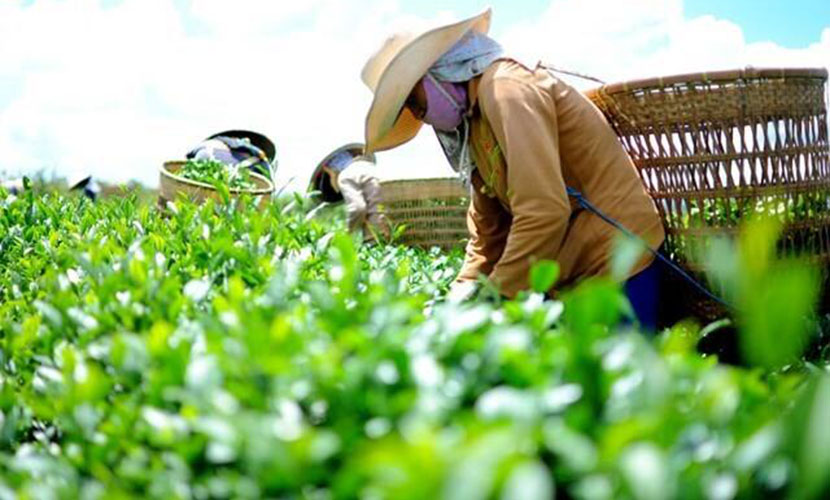
Harvesting tea at farms
Alongside quality and technology, many enterprises are also enhancing product value through brand storytelling, tea culture, and regional identity. Golden Dragon Tea Joint Stock Company, for example, develops products rooted in Vietnamese tea traditions.
Established in 1976 in Lâm Đồng, the company produces Oolong, green tea, black tea, and matcha from the Bảo Lộc raw material region. It combines traditional cultivation techniques with modern technology to improve product quality while building a distinctive brand identity.
Under the philosophy of “Preserving the essence of Vietnamese tea,” the company aims not only to expand market access. It also seeks to promote cultural values associated with Vietnam’s tea industry.
Đỗ Minh Hùng is the Director of Thái Hưng One-Member Co., Ltd. He said the company focuses on developing modern consumer-oriented tea products such as traditional milk tea, matcha, and convenient brewed tea products. To meet market demand, the company invests comprehensively from raw material areas to harvesting and processing. It also focuses on product research, aiming to deliver both high-quality and consumer-friendly products.
Assessing the industry’s potential, he noted that tea has strong development prospects thanks to Vietnam’s long-standing cultural foundation. Through surveys in markets such as Japan and China, the company found that global tea demand remains very large. This opens up significant opportunities for Vietnamese tea to integrate further into the international market.
In addition, Vietnam Tea Shop presented ancient Shan Tuyet tea from Suối Giàng at the “International Tea Day” event. It was accompanied by Vietnamese tea culture artisan and Master Đào Đức Hiếu. With the aspiration to bring Vietnamese tea to global markets while maintaining high quality standards and strong national identity, four tea lines received positive feedback from Chinese partners. These include Yellow Tea, Black Tea, White Tea, and Green Tea.
Notably, Black Tea and White Tea made a strong impression at Vietnam–China tea tasting events. The company is currently negotiating cooperation with manufacturers and traders in Nanning, Guangzhou, and jasmine-growing regions in Hangzhou.
Vietnamese source: http://www.hoinongdan.org.vn/nha-nong-can-biet/xuat-khau-che-nang-cao-nang-luc-canh-tranh-tu-chien-luoc-dai-han-380924
If you are interested in Vietnamese tea exports, please contact us:
Company: Agrideco Vietnam Co., Ltd.
Address: No 02, Alley 325 Kim Nguu, Vinh Tuy Ward, Hanoi, Vietnam
Tel/Kakao Talk/Whatsapp: +84 989 649 804
Website: https://agridecovietnam.com
Email: agridecovietnam@gmail.com