
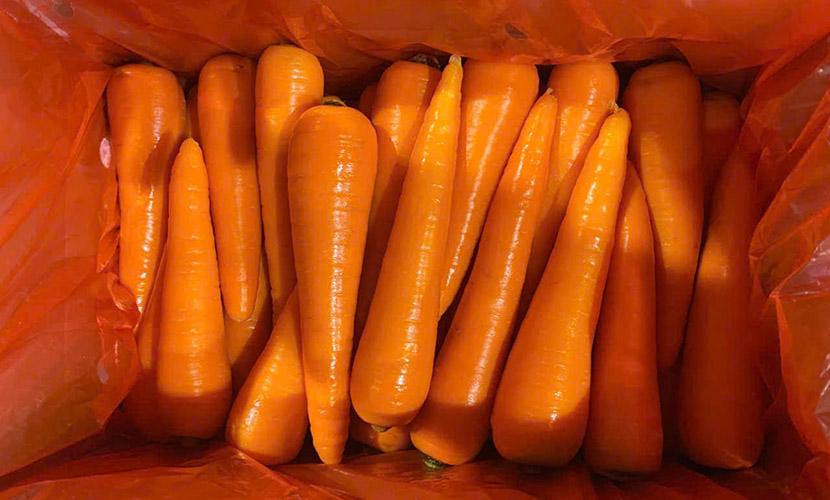
There are about 80% of Hai Phong’s carrot production that have exported to other countries. As a result, Vietnam’s carrots have become one of the key agricultural products generating high economic value for local farmers. The crop has affirmed its quality and successfully gained access to numerous export markets.
During the 2025–2026 winter crop season, Hai Phong is likely to harvest around 70,000 tons of carrots. Farmers have adopted clean production practices and complied with export market requirements. As a result, Vietnamese carrots have continued to maintain their strong reputation this year.
With 80% of total output destined for export markets, Vietnam’s carrots remain one of the region’s key agricultural products. They generate substantial economic value for local farmers. With 510 hectares under cultivation, Tuệ Tĩnh Commune is the carrot capital of Vietnam.
Vietnam’s carrots
Mr. Ngô Thanh Tùng is the Vice Chairman of the Commune People’s Committee. He stated Vietnam’s carrots have been identified as a priority crop. Therefore, from the beginning of the season, local authorities focused on directing production. They also upgraded irrigation canals to meet water demand and improved the overall irrigation system.
Mr. Nguyễn Văn Bấc is the Head of the Front Affairs Committee of Địch Tràng Village. He said: “By following Vietgap production standards, farmers strictly comply with the guidance of the agricultural sector. This helps ensure that their carrots meet the stringent requirements of export markets.”
The quality of carrots grown in Hải Dương—now part of Hai Phong—has widely recognized. As a result, selling prices have increased and demand has strengthened in both domestic and international markets.
Favorable weather conditions this year have resulted in high carrot yields and excellent quality. Market demand has remained strong since the beginning of the season. As a result, average prices have ranged from VND 10 million to VND 12 million per sào. After deducting production costs, farmers have earned profits of VND 6 million to VND 7 million per sào. This figure is about 1.5 times higher than in the previous season.
According to preliminary estimates, Vietnamese carrot yields this year are likely to reach 45–50 tons per hectare. Total output is likely to reach 20,000–25,000 tons. Of this volume, more than 60% is destined for export markets. Economic returns from carrot cultivation have exceeded the average level of previous years. Farmers are earning profits of VND 170 million to VND 190 million per hectare.

Vietnamese carrot farms
After harvesting, packing houses will wash and pack immediately. Tuệ Tĩnh Commune is home to one enterprise and more than 15 facilities engaged in purchasing, processing, and packaging carrots. These facilities are currently operating at full capacity. This helps ensure timely procurement, processing, and marketing of farmers’ produce.
This year has been successful not only in terms of output but also in product quality. Hai Phong carrots have once again demonstrated their high standards and strengthened their position in export markets.
Mr. Nguyen Duc Doan is the General Director of a Vietnamese carrot company. The company has purchased and processed approximately 7,000 tons of Vietnam’s carrots for export since the start of the season.
“Our company has many years of experience in Vietnamese agricultural exports. Its main markets are Japan, South Korea, Malaysia, and the Middle East. Customers have given very positive feedback on the quality of carrots grown in Hai Phong,” said Nguyen Duc Doan.
Carrot sales have generally remained favorable since the beginning of the season. However, exports have affected since March by tensions in the Middle East. In response, Vietnamese exporters have adjusted their market strategies to mitigate potential disruptions.
According to Mr. Đoàn, with the Middle Eastern market currently inaccessible, the company promptly shifted its focus to alternative markets. As a result, this year’s carrot export volume is likely to remain on par with last year’s level, at around 10,000 tons. The company has already secured carrot export orders extending through August 2026. This provides a stable outlook for production and exports in the coming months.

Vietnamese carrot harvest
While continuing to purchase carrots from farmers, the company is also seeking additional cold-storage facilities to preserve the produce. It is also negotiating with partners to secure stable orders at the best possible prices, thereby ensuring favorable purchase prices for growers.
Similarly, Hoang Nam Phat Cooperative has purchased, processed, and marketed around 30,000 tons of carrots since the beginning of the season. The volume includes carrots sourced from Hai Phong and several neighboring provinces. Purchase prices have been approximately 40% higher than those recorded in the previous season.
Mr. Ho Viet Hoan is the Director of Hoang Nam Phat Cooperative. He said that carrot exports to South Korea and the Middle East have recently faced difficulties due to high shipping costs. As a result, export volumes to these markets have declined by about 60% compared with the previous season.
Against this backdrop, the cooperative has diversified its sales strategy by strengthening domestic distribution. At the same time, it has expanded exports to Southeast Asian markets such as Laos, Cambodia, and Thailand. To date, 90% of the carrots purchased by the cooperative have already been out of stock.
There are approximately 1,030 hectares of Vietnam’s carrots that are across the city during this winter crop season. Cultivation is available mainly in the communes of Tuệ Tĩnh, Thái Tân, and An Phú, with total output estimated at 65,000–70,000 tons. Vietnamese carrot export enterprises had already contracted and purchased most of the carrot outputs.
There are approximately 80% of Hai Phong’s carrot production is for exports. The main markets are South Korea, Japan, Malaysia, and several countries in the Middle East. Among these destinations, South Korea is the largest market, accounting for around 40% of total Vietnamese carrot exports.

Vietnamese carrot factory
Since late February 2026, Hai Phong’s carrot exports have been affected by military tensions in the Middle East. At the same time, South Korea and Japan have tightened requirements on food safety, hygiene standards, and product traceability.
In response, Hai Phong has instructed local authorities to strengthen outreach and technical guidance for farmers managing unharvested carrot fields. This ensures strict compliance with production protocols and export standards.
The department has also urged businesses to adjust their marketing strategies and distribution channels more flexibly to reduce risks. In addition, enterprises should promote trade activities and strengthen links with domestic distribution networks. This will help introduce export-grade carrots to a wider range of consumers. In addition, it will expand domestic market share and stabilize demand for the city’s carrot production.
Meanwhile, the Sub-Department of Crop Production and Plant Protection has intensified inspections and monitoring activities. It has also conducted sampling of fresh carrots at production areas, collection points, processing facilities, and packing houses. This helps promptly detect and address any violations related to product quality and food safety.
The agency has also instructed plant protection product retailers not to sell pesticides for use on carrot crops during the remainder of the season. At the same time, inspections and enforcement measures have been strengthened to ensure strict compliance with regulations.
Looking ahead, promoting clean production and pursuing sustainable export growth will remain a key objective for Hai Phong’s agricultural sector and local authorities.
According to Nguyen Van Bac, farmers in Tuệ Tĩnh Commune hope that municipal authorities will provide greater support. They are seeking access to credit, improved seed varieties, technical training, stronger market linkages, and tighter oversight of agricultural input markets. This would allow growers to invest in production with greater confidence.

Vietnamese carrot carton boxes
He said: “Farmers in Tuệ Tĩnh hope that city authorities and relevant agencies will provide greater support. They are seeking preferential loans, quality seeds, technical guidance, market connections, and better control of agricultural input markets. This would enable farmers to produce with confidence.”
According to the Sub-Department of Crop Production and Plant Protection, efforts to improve product quality and safeguard the reputation and brand of Hai Phong carrots will continue in the coming years. The agency plans to coordinate closely with local authorities.
This cooperation will support the implementation of various management and production-area supervision measures in export-oriented carrot-growing regions. This will help enhance product quality and strengthen the reputation of Hai Phong carrots in international markets.
However, one of the key factors affecting the export performance of agricultural products, including carrots, is post-harvest processing and storage capacity. According to Luong Thi Kiem, this remains a significant constraint for Hai Phong’s agricultural sector.
Therefore, local authorities have called for support from central ministries and government agencies. This support would help establish dedicated facilities for the preliminary processing, processing, and deep storage of agricultural products.
In addition, they plan to enhance promotional activities for local agricultural products. At the same time, they hope to introduce export-oriented enterprises and attract investment in agricultural processing facilities. This would enhance the competitiveness and sustainability of the sector.
If you are interested in Vietnamese carrot exports, please contact us:
Company: Agrideco Vietnam Co., Ltd.
Address: No 02, Alley 325 Kim Nguu, Vinh Tuy Ward, Hanoi, Vietnam
Tel/Kakao Talk/Whatsapp: +84 989 649 804
Website: https://agridecovietnam.com
Email: agridecovietnam@gmail.com