
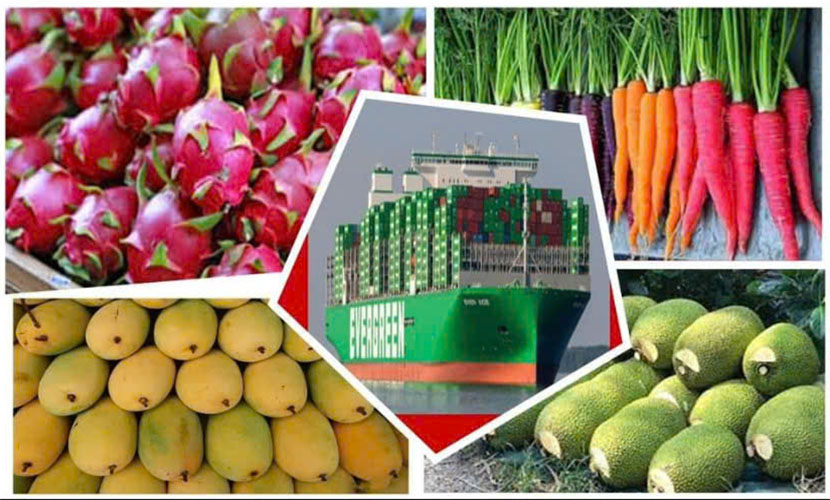
Major markets are simultaneously tightening SPS regulations, chemical residue limits, and traceability requirements. As a result, Vietnam’s agricultural exports should change their production methods in order to maintain export market share.
In the first half of May 2026, the World Trade Organization issued 53 notifications related to sanitary and phytosanitary measures. These included 43 draft regulations for consultation and 10 measures that have already taken effect. Notably, the key issue is not the number of notifications. Instead, it is the speed and increasing stringency of these new regulations.
China is the largest import market for Vietnam’s agricultural exports. China has continuously issued 29 draft national food safety standards. These cover a wide range of areas of Vietnamese agri-products. These include food labeling, additives, food contact materials, and contamination control during processing.
Notably, the draft revision of standard GB13432-2013 requires that actual nutrient content must not be lower than 80% of the declared value on product labels. For fat, sugar, and sodium, the actual levels must not exceed 120% of the labeled values. This reflects a regulatory trend that goes beyond simply asking whether food is “safe or not.” Instead, it moves toward controlling the accuracy and transparency of all product information.
Vietnam’s agricultural exports
At the same time, China is also drafting standards to control polycyclic aromatic hydrocarbons (PAHs) in food. These regulations apply to a wide range of Vietnam’s agricultural exports such as meat, seafood, oils and fats, grains, and dairy products. Notably, the regulation not only targets final products. It also extends to production processes, processing methods, fuel usage, and environmental contamination risks.
If previously businesses only needed to focus on “meeting output standards,” now the entire production chain should follow regulatory scrutiny. In Japan, the country continues to adjust maximum residue limits (MRLs) for many Vietnam’s agricultural exports. In particular, the default threshold of 0.01 ppm still applies to substances without specific regulations. This is a level almost equivalent to “non-detectable.”
Meanwhile, the EU is tightening regulations even further for Vietnam’s agricultural businesses. A notable shift is that the principle “substances banned in the EU must not be present in imported goods” is gradually replacing the previous more flexible approach. This means businesses can no longer assume that “using the correct dosage” is sufficient. Even trace residues of a banned substance, no matter how minimal, can result in warnings or product rejections.
Recently, a shipment of Vietnamese cinnamon powder was found by Croatian authorities to contain Bacillus cereus exceeding permitted levels. It was subsequently recalled and destroyed by the EU. This serves as a clear warning. In a context of increasing regulatory control, even minor errors in hygiene, storage, or processing can become extremely costly for exporters.
More importantly, SPS tightening is no longer limited to developed markets. From Türkiye and New Zealand to the East African Community, new standards are increasingly focusing on stricter control of quarantine measures, chemical residues, microbial toxins, and traceability. The global market is forming a “new standard baseline,” where SPS compliance capacity determines the survival of exporters.
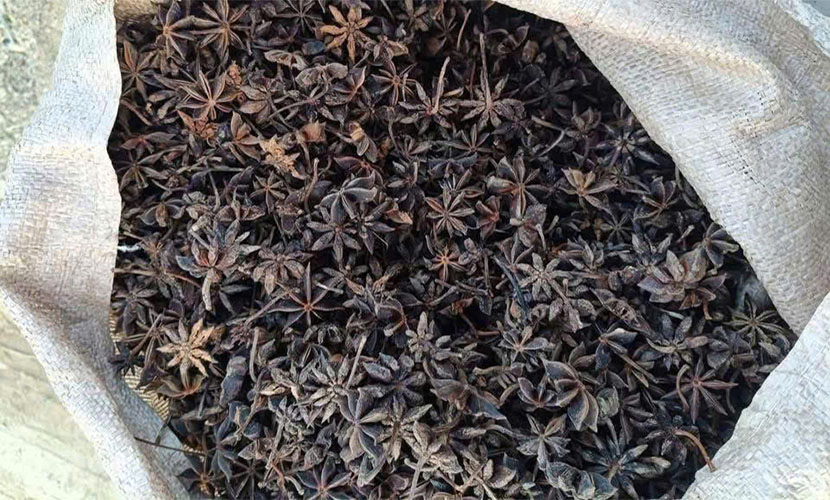
Black star anise from Vietnam
What is most concerning today is not only the rising standards but also the rapid pace of regulatory changes. If Vietnamese agricultural businesses are slow to access information, the entire production process can fall into a passive position.
Mr. Nguyễn Quý Dương is the Deputy Director of the Department of Crop Production and Plant Protection. He said that many key export agricultural products may be directly affected as the EU tightens pesticide residue regulations.
Notably, the EU’s new approach no longer relies mainly on actual exposure levels. Instead, it shifts toward assessing the hazard characteristics of active substances. If they identify a substance as having potential risks such as causing cancer, endocrine disruption, or ecological harm, they may ban.
This can occur without the need to prove specific risks under real-use conditions. This creates significant pressure for Vietnam’s agricultural exports, which still relies heavily on chemicals in cultivation.
The case of glyphosate shows that adaptation is far from simple. When the EU tightened regulations on this active ingredient, the coffee industry took many years to adjust farming practices. It also had to shift to alternative solutions and strengthen cultivation management.
However, even substances once considered “safe alternatives” continue to be reviewed for restriction. In other words, the game is no longer about replacing one chemical with another, but about reducing overall dependence on chemicals.

Vietnamese macadamia for export
Agricultural experts recommended that agricultural production in the new era must shift from a “react when warned” mindset to a “risk prevention from the outset” approach. This requires control from raw material zones, farming practices, harvesting, storage, packaging, to logistics.
However, this is also a major challenge for Vietnamese export enterprises, especially small businesses or those relying on fragmented raw material areas. Costs for testing, certification, restructuring production chains, and building traceability systems are not low.
Nevertheless, if there are no changes, the cost will be even higher. Once a warning issues, businesses may not only suffer losses from the current shipment but also face increased inspection frequency for future consignments. In this context, the issue is no longer whether a specific regulation can be met, but the long-term adaptability of the entire production chain.
Mr. Ngô Xuân Nam is the Deputy Director of the Vietnam SPS Office. He said that in the long term, SPS is no longer merely a “technical barrier.” It is becoming a tool for reshaping global supply chains and screening production capacity. In this process of selection, Vietnam’s agribusinesses that proactively transform early will retain their markets. Conversely, those that continue operating in the “old way” risk losing their competitive advantage.
If you are interested in Vietnamese agricultural exports, please contact us:
Company: Agrideco Vietnam Co., Ltd.
Address: No 02, Alley 325 Kim Nguu, Vinh Tuy Ward, Hanoi, Vietnam
Tel/Kakao Talk/Whatsapp: +84 989 649 804
Website: https://agridecovietnam.com
Email: agridecovietnam@gmail.com