
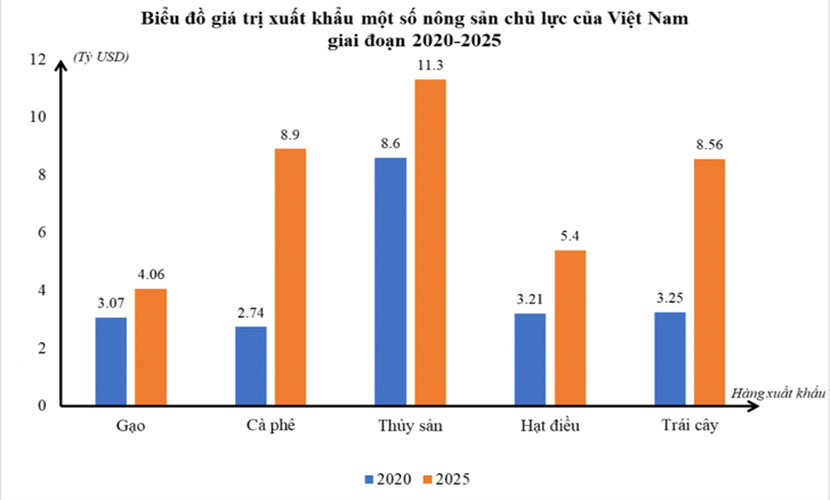
In recent years, the role of Vietnamese agricultural businesses has become increasingly significant in global value chains. This is reflected in the ranking and export value of Vietnam’s agricultural products.
Vietnam is the world’s third-largest rice exporter, accounting for 12–15% of global rice export volume. Its major export markets include the Philippines, Indonesia, Malaysia, China, Côte d’Ivoire, and the EU.
In addition, Vietnam is the world’s largest exporter of Robusta coffee, accounting for approximately 43% of global coffee export volume. Its key export markets include the EU, Japan, South Korea, the United States, and Southeast Asia.
Vietnam also ranks first in the world for cashew nut exports, holding around 75% of the global market share. In the fisheries sector, Vietnam is the world’s third-largest exporter of shrimp and dominates the global export market for pangasius.
Export items of Vietnamese agricultural enterprises
In reality, Vietnamese agricultural businesses are currently facing numerous challenges in bringing their products to global markets. These include increasingly stringent green regulations and technical trade barriers. Also, fragmented and small-scale production systems limit the adoption of advanced technologies and hinder the establishment of planting area codes.
In addition, weaknesses in post-harvest technology and logistics mean that most of Vietnamese agricultural exports remain raw products with relatively low added value. Meanwhile, the production of deeply processed agricultural goods still depends heavily on foreign-invested corporations.
To address these challenges and strengthen the global competitiveness of its agricultural products, Vietnam has implemented a range of important development strategies. These include national strategies on green growth, organic agriculture, and high-tech agricultural production, among others.
Farmers no longer rely on the excessive use of fertilizers and pesticides or on indiscriminate harvesting practices. Instead, they have mastered advanced processing technologies such as natural biological fermentation and temperature-controlled greenhouse drying.
These techniques help unlock the rich layers of flavor hidden within each coffee bean. As a result, consumers can experience notes ranging from the lingering sweetness of honey and the aroma of ripe fruits to the bold, full-bodied character for which Robusta is renowned.
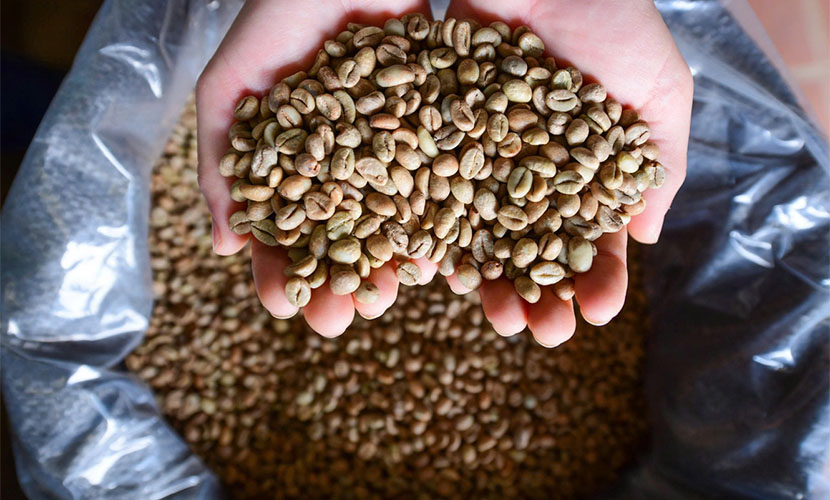
Vietnamese coffee beans
Every cup of Robusta coffee delivered to international consumers today offers more than just the caffeine needed to boost energy. It also tells a meaningful story of sustainable livelihoods for local communities, the rich biodiversity of Vietnam’s natural landscapes, and a strong commitment to achieving Net Zero emissions.
This has become a new strategic advantage, enabling Vietnam’s agricultural products to confidently enter premium specialty coffee chains in demanding markets such as Europe, Japan, and the United States. Moreover, it helps secure fairer valuations and establish a more independent position in the global market.
International integration has brought both opportunities and challenges for Vietnamese agricultural businesses. Through new-generation free trade agreements (FTAs), Vietnam is no longer merely opening its markets passively. Instead, it is proactively penetrating global markets through a sophisticated strategy of “agricultural diplomacy.”
Trade agreements such as the EVFTA, CPTPP, and RCEP serve as powerful launchpads for Vietnamese exports. They open access to some of the world’s most demanding markets, including the United States, the European Union, and Japan.
However, Vietnamese export enterprises must fully capitalize on these opportunities. To do so, they need to move beyond the practice of remaining in the background by exporting raw products that are later packaged and branded by foreign corporations.
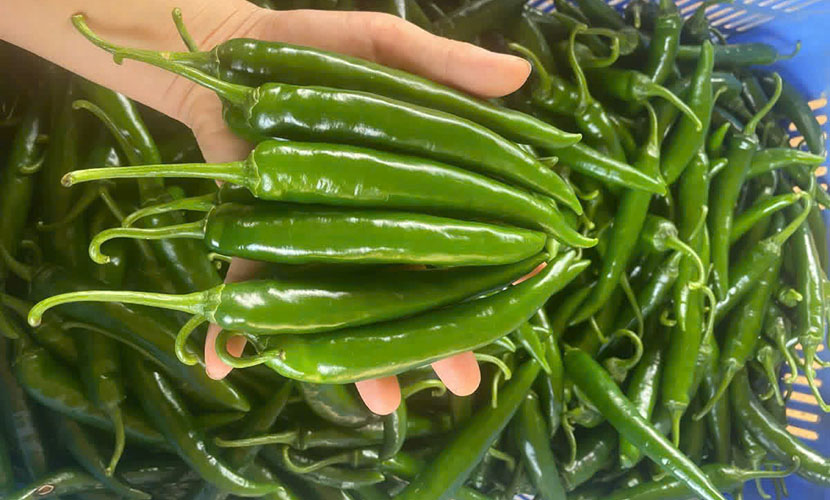
Green chili from Vietnam
Instead, they must assert their own identity and position in the global marketplace. This means ensuring that Vietnam’s agricultural exports appear prominently on the shelves of major international retailers under independent Vietnamese brands protected by global intellectual property rights.
To turn the vision of strong agricultural brands into reality, standardization is the only passport to success. Traditional, unstructured farming practices can no longer meet the requirements of international markets. The adoption and integration of rigorous international standards into everyday farming practices is essential.
These standards include Globalgap (Good Agricultural Practices), Organic certification (EU and U.S. standards), and Halal certification for Muslim markets. They must become a universal framework embraced by every farmer.
Production standardization is the most effective way to overcome technical trade barriers and build lasting trust with consumers worldwide.
The global shift toward a green, circular economy and lower carbon emissions should not be viewed as a challenge. Rather, it represents a valuable opportunity for Vietnamese agricultural businesses to transform itself and strengthen their competitiveness. At the same time, it provides a pathway to establish a distinct presence on the world stage under the shared brand of “Green Vietnam.”
Vietnamese sourcce:https://tuoitre.vn/thoat-xuat-khau-tho-dua-nong-san-viet-chinh-phuc-thi-truong-cao-cap-20260602181846278.htm
If you are interested in Vietnamese agricultural exports, please contact us:
Company: Agrideco Vietnam Co., Ltd.
Address: No 02, Alley 325 Kim Nguu, Vinh Tuy Ward, Hanoi, Vietnam
Tel/Kakao Talk/Whatsapp: +84 989 649 804
Website: https://agridecovietnam.com
Email: agridecovietnam@gmail.com