
Vietnam’s agricultural exports are shifting strongly from “quantity” to “quality” as the foundation of competitiveness in the context of 2026. Despite positive growth, the sector is facing increasing pressure from green standards, traceability requirements, and stricter international markets. This transition is considered inevitable. It aims to enhance added value, strengthen branding, and improve sustainable competitiveness.
Vietnam’s agricultural, forestry, and fishery exports in the first months of 2026 continued to record positive growth. At the same time, they faced mounting pressure from green standards, traceability requirements, and fierce competition in international markets. These factors are forcing Vietnamese agricultural sector to accelerate its transformation from a growth model based on output volume to one driven by quality, branding, and added value.
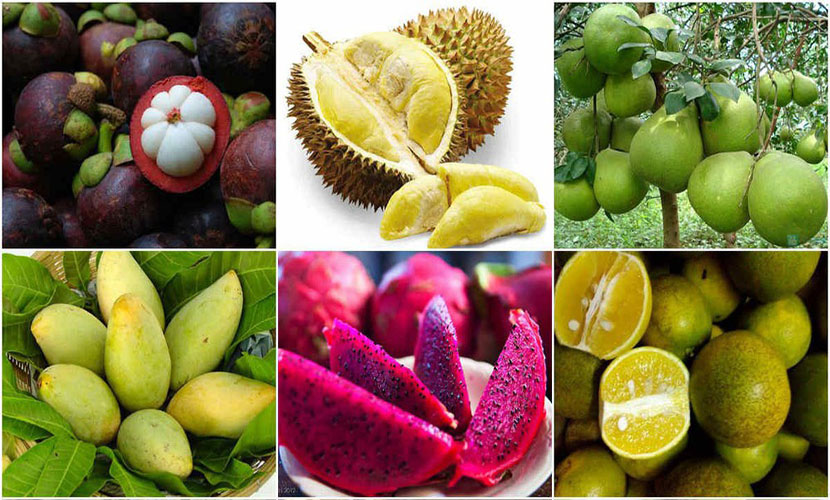
In the first four months of 2026, the export turnover of agricultural, forestry, and fishery products reached USD 23.04 billion. They went up 5.4% compared to the same period in 2025. Many key export categories maintained strong growth momentum. Notably, Vietnamese fruits and vegetables generated approximately USD 2.05 billion, up 21.6%.
Seafood also performed well, reaching USD 3.54 billion, up 10.4%. Although imports for the entire sector rose 12% to USD 17.65 billion, the trade balance remained in surplus. This reflected the sector’s adaptability amid global economic fluctuations.
Vietnam’s agricultural exports
In terms of markets, Asia remained the largest export destination for Vietnamese agricultural businesses, accounting for 44.1% of total export turnover. China, the United States, and Japan continued to be the three key markets for Vietnam’s agricultural exports. Notably, exports to China surged by 28.8% thanks to recovering demand for products such as fruits and vegetables, cassava, and seafood. In contrast, exports to the United States declined by 4.8%. This reflected tightening consumer spending and increasing trade barriers in developed economies.
Regarding product categories, fruits and vegetables continued to be a bright spot, driven by the strong performance of durian exports. Pepper exports recorded increases in both volume and value due to high global prices. However, several major export products such as wood products, rice, cashew nuts, and tea showed signs of stagnation or decline. Notably, in many sectors, export volumes increased while added value remained relatively low. This highlighted the ongoing dependence on raw exports.
According to the Ministry of Agriculture and Environment, current export growth still contains unsustainable elements due to dependence on seasonal factors and market volatility. Meanwhile, the capacity for deep processing, brand building, and value chain development remains limited in many sectors. This weakens long-term competitiveness.
More importantly, the global trend toward “green trade” is creating significant pressure on Vietnamese agricultural products. New regulations from the EU, the United States, and Japan regarding carbon emissions, anti-deforestation measures, food safety, and traceability are becoming increasingly stringent. This requires Vietnamese agricultural enterprises to comprehensively transform both production methods and supply chain management. Meanwhile, domestic production remains fragmented, weakly connected, and lacking standardized practices.
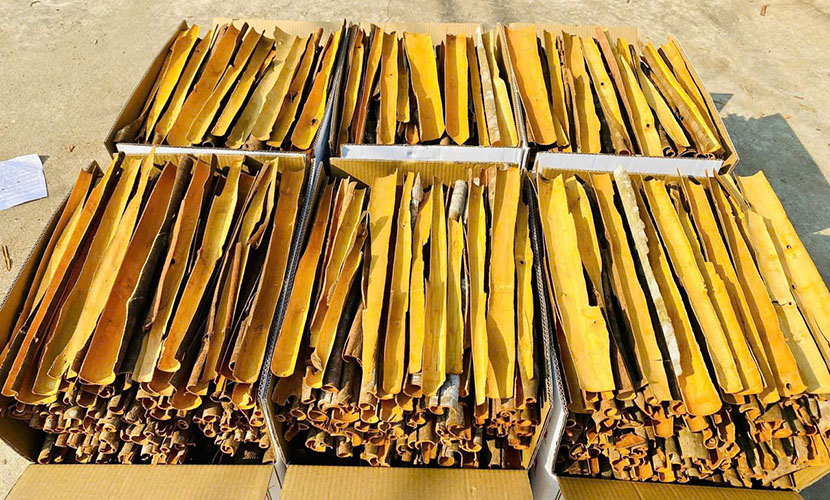
Vietnamese split cassia
In response to these challenges, and in order to achieve the target of more than USD 74 billion in exports in 2026, the Ministry of Agriculture and Environment has clearly defined an export development strategy focused on shifting from “quantity” to “quality.” In this strategy, quality, branding, green standards, and added value serve as the foundation of competitiveness. Key export sectors such as wood products, seafood, fruits and vegetables, coffee, and cashew nuts are all being oriented toward deeper growth through processing and product value enhancement.
At the same time, the agricultural sector will continue restructuring production and developing standardized raw material zones. In addition, it will strengthen value chain linkages and expand into potential markets such as the Middle East, Africa, and the Halal market. Measures related to logistics, credit support, trade promotion, and green transformation will also be implemented in a synchronized manner. These measures aim to support businesses.
In the context of rapidly changing global trade and increasingly strict standards, agricultural export growth is no longer simply a race for higher output. The transition from “quantity” to “quality” is becoming an inevitable requirement. It is also a crucial foundation for enhancing competitiveness and ensuring the sustainable development of Vietnamese agricultural exports in the new era.
Vietnamese source: https://chongbanphagia.vn/xuat-khau-nong-san-chuyen-manh-tu-luong-sang-chat-lam-nen-tang-canh-tranh-n30963.html
If you are interested in Vietnamese agricultural exports, please contact us:
Company: Agrideco Vietnam Co., Ltd.
Address: No 02, Alley 325 Kim Nguu, Vinh Tuy Ward, Hanoi, Vietnam
Tel/Kakao Talk/Whatsapp: +84 989 649 804
Website: https://agridecovietnam.com
Email: agridecovietnam@gmail.com