
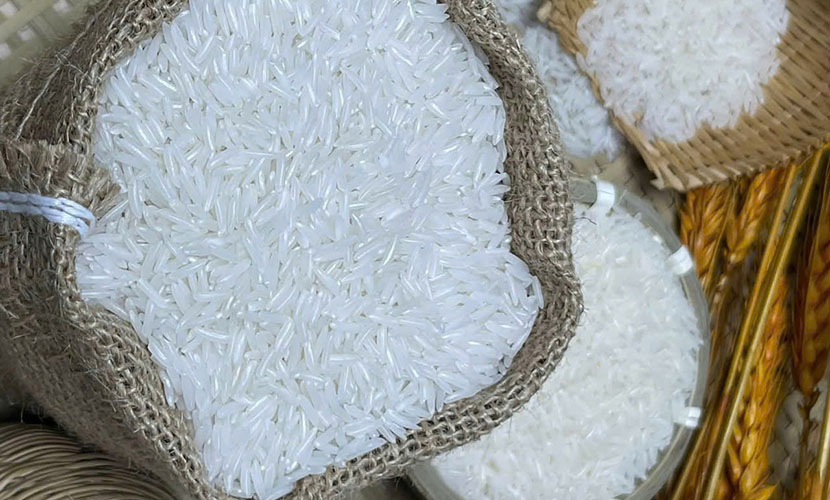
Vietnam’s rice exports are likely to recover from the second quarter of 2026. A rebound in import demand and a growing global preference for high-quality, low-emission rice are driving their growth.
According to the Vietnam Food Association, the Oryza White Rice Index closed the second week of May 2026 at USD 406 per ton. This represented an increase of USD 16 per ton from the previous month. However, it remained USD 40 per ton lower than the level recorded during the same period last year. This development reflects an export rice market characterized by a combination of short-term pressures and expectations of a medium-term recovery.
In recent months, geopolitical tensions in the Middle East have significantly disrupted global agricultural supply chains, including the rice sector. As a result, many farmers in the world should reconsider input investments or adjust planting plans. The International Grains Council (IGC) has warned that rice planting areas in Southeast Asia could decline by 1.8–2.2% in the 2026/27 crop year. This could occur if fertilizer shortages persist.
At the same time, climate risks continue to cast a shadow over global agricultural production. International climate models currently forecast a 90–94% probability of a strong to “super” El Niño event emerging by late 2026. South Asia could experience rainfall deficits of 10–25%. Meanwhile, many parts of Southeast Asia are likely to record temperatures 1.2–1.8°C above average during key rice-growing periods.
The combined impact of rising input costs, extreme weather, and logistics disruptions has already begun to influence rice prices across Asia. Thailand’s white rice prices surged by nearly 10% during a single week in April 2026. Meanwhile, Vietnam’s 5% broken rice prices increased by 6–8%.
Vietnam’s rice exports
Despite these pressures, the global rice market continues to benefit from relatively abundant supplies and inventories. The Food and Agriculture Organization (FAO) forecasts world rice production for the 2025/26 season to reach a record 563.3 million tons. This would bring total available supply to approximately 773.6 million tons. Global rice stocks are likely to rise to 219.3 million tons. This is equivalent to a stock-to-use ratio of around 39%—the highest level since 2018.
The U.S. Department of Agriculture (USDA) also notes that global rice consumption growth is slowing. Meanwhile, inventories are likely to increase by an additional 1.5–2 million tons during the 2025/26 season. This stock cushion is likely to help prevent sharp price spikes in the near term.
However, the market faces a paradox. Despite ample inventories, global supply chains have become increasingly vulnerable to external shocks. A major disruption related to climate, logistics, or geopolitics could rapidly reverse current market conditions and trigger price volatility.
Against this backdrop, many countries are accelerating food security initiatives. Indonesia has emerged as a notable example in Southeast Asia through a series of agricultural reforms. The country has expanded cultivation areas, invested in irrigation systems, and increased the use of mechanization.
Supported by strong government policies, Indonesia’s rice production increased by more than 13% in 2025. As a result, national rice reserves reached approximately 5 million tons, a record high. The country halted rice imports in 2025 and aims to remain import-free in 2026.
Meanwhile, the Philippines and Bangladesh continue to face significant challenges from extreme weather and rising production costs. The Philippines is likely to import around 4.8 million tons of rice in 2026. This would be a record level intended to secure domestic supplies amid El Niño risks and rising food inflation.
Notably, the Philippines remains the largest market for Vietnam’s rice exports, accounting for approximately 87% of the country’s total rice imports. Consequently, any changes in Philippine import demand or trade policies have a direct impact on Vietnam’s rice industry.
Amid global market uncertainties, Vietnam’s rice industry has an opportunity to shift decisively from a volume-based export model toward one focused on quality and value addition.

ST25 rice from Vietnam
According to official statistics, Vietnam’s rice exports reached more than 3.3 million tons of rice during the first four months of 2026. Accordingly, these exports generated approximately USD 1.57 billion in export revenue. Both export volume and value declined compared with the same period last year. However, import demand in many markets has begun to recover from the second quarter of 2026. This trend has emerged as concerns over potential supply shortages intensify.
Experts believe this presents a favorable opportunity for Vietnamese rice to reposition itself in the global market. In particular, the premium and low-emission segments are becoming increasingly preferred by international buyers. One encouraging sign is that the first shipment of more than 400 tons of rice was exported to Japan just one year ago.
Since then, approximately 70,000 tons of “Green, Low-Emission Vietnamese Rice” have reached international markets. This demonstrates the growing acceptance of Vietnam’s environmentally friendly, high-quality rice within global supply chains.
Dr. Nguyễn Đỗ Anh Tuấn is the Director General of the Department of International Cooperation under the Ministry of Agriculture and Environment. He emphasized that low-emission rice could become more than just an agricultural product if implemented effectively. It could also serve as a climate solution, a national branding story, and a driver of improved livelihoods for millions of farmers.
Experts also point to the One Million Hectares of High-Quality, Low-Emission Rice Project in the Mekong Delta as a promising pathway for the future of Vietnam’s rice sector. The initiative helps reduce emissions and improve production efficiency. In addition, it aligns with the rapidly growing global demand for sustainable and environmentally responsible food products.

Vietnamese rice materials
Market studies indicate a growing willingness among international consumers to pay premium prices for high-quality rice. In particular, rice that meets stringent standards of safety and sustainability is becoming increasingly attractive to buyers.
Mr. Đỗ Hà Nam is the Chairman of the Vietnam Food Association. He noted that Vietnamese rice enterprises have already developed numerous high-quality aromatic rice varieties recognized internationally. However, the global reputation of Vietnamese rice has yet to fully reflect the actual quality of these products.
According to Mr. Nam, enhancing the position and pricing power of Vietnamese rice requires a focus on several core factors. These include maintaining varietal purity and ensuring consistent quality control. They also involve establishing robust traceability systems and developing distinct brands for specialty rice varieties.
Industry experts and business leaders agree that global markets are increasingly prioritizing green standards, transparency, and sustainability. As a result, competition is no longer determined primarily by production volume.
Instead, success depends on product quality, brand strength, and the ability to meet evolving market requirements. This transition presents a significant opportunity for Vietnam’s rice exports. It can transform its growth model, increase export value, and strengthen its position in international markets.
Vietnamese source: https://congthuong.vn/xuat-khau-gao-viet-ky-vong-phuc-hoi-tu-quy-ii-2026-457029.html
If you are interested in Vietnamese rice exports, please contact us:
Company: Agrideco Vietnam Co., Ltd.
Address: No 02, Alley 325 Kim Nguu, Vinh Tuy Ward, Hanoi, Vietnam
Tel/Kakao Talk/Whatsapp: +84 989 649 804
Website: https://agridecovietnam.com
Email: agridecovietnam@gmail.com