

Vietnamese cassia cinnamon is undergoing a period of significant transformation, reinforcing its strong position in international markets. It is also opening up promising strategic opportunities for future growth, despite the challenges that still lie ahead.
From a business perspective, Vietnam’s cinnamon enterprises have experienced remarkable growth in recent years. In 2024, the country exported 99,874 tons of cinnamon worth USD 274.5 million. These figures represented increases of 11.7% in volume and 5.2% in value compared with 2023.
This strong momentum continued into the first months of 2025. Specifically, Vietnam’s cinnamon exports reached more than USD 123 million and 47,710 tons during the first five months. Accordingly, they went up 42.3% in volume and 27.8% in value year-on-year.
This impressive performance has been supported by Vietnam’s position as the world’s third-largest cinnamon producer. It ranks behind only Indonesia and China.
Cinnamon cultivation area has expanded significantly, from 13,863 hectares in 2000 to approximately 186,000 hectares in 2023. The provinces of Yen Bai and Lao Cai serve as the country’s largest cinnamon-growing hubs. They account for 47.8% and 33.3% of the total cultivation area, respectively.
Vietnamese cassia cinnamon
The export markets of Vietnamese cassia cinnamon are now highly diversified. It has spanned India, China, Bangladesh, the United States, the European Union, and the Middle East. India remains the largest export destination, accounting for 35.9% of total cinnamon export volume in 2024 with 35,885 tons. However, shipments to this market declined by 5.7% compared with the previous year.
The United States ranked second and recorded a 9% increase in import volume. Meanwhile, Bangladesh ranked third, posting a strong growth rate of 42.5% during 2024.
Notably, demand for cinnamon in the nutraceutical, cosmetics, and pharmaceutical industries is rising rapidly across developed markets. This creates significant opportunities for Vietnamese cinnamon companies to enhance product value.
In addition, commitments under free trade agreements are helping reduce tariffs and facilitate expansion of Vietnamese cassia cinnamon into premium markets. These include the European Union–Vietnam Free Trade Agreement (EVFTA) and the Comprehensive and Progressive Agreement for Trans-Pacific Partnership.
Despite these achievements, the industry faces significant strategic challenges in maintaining its growth momentum and elevating its global position. One of the most pressing issues is the heavy reliance on raw cinnamon exports, which limits value addition.
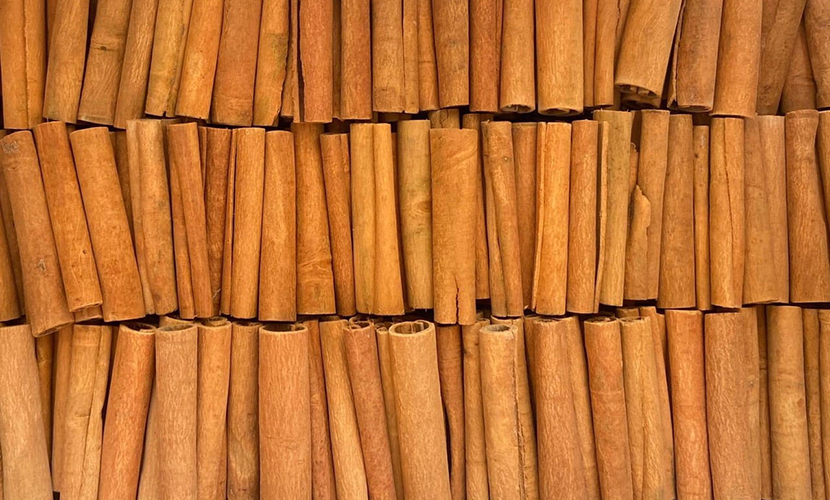
Cinnamon sticks from Vietnam
This puts Vietnam at a disadvantage compared with major competitors such as Indonesia, Sri Lanka, and India. These countries have invested heavily in deep processing and supply-chain development. At the same time, importing markets are imposing increasingly stringent requirements regarding traceability, organic certification, technical standards, and food safety compliance.
These demands require Vietnamese enterprises to invest more heavily in raw material production areas, processing technologies, and quality control systems.
In response, many domestic companies have begun shifting toward a more sustainable development model. They are actively collaborating with farmers to establish organic cinnamon-growing regions. At the same time, they are implementing internationally recognized production standards such as HACCP and GMP.
In addition, they are obtaining certifications including USDA Organic and EU Organic. This transformation is widely viewed as an essential pathway for enhancing competitiveness and increasing export for Vietnamese cassia cinnamon.
If you are interested in Vietnamese cassia cinnamon, please contact us:
Company: Agrideco Vietnam Co., Ltd.
Address: No 02, Alley 325 Kim Nguu, Vinh Tuy Ward, Hanoi, Vietnam
Tel/Kakao Talk/Whatsapp: +84 989 649 804
Website: https://agridecovietnam.com
Email: agridecovietnam@gmail.com