
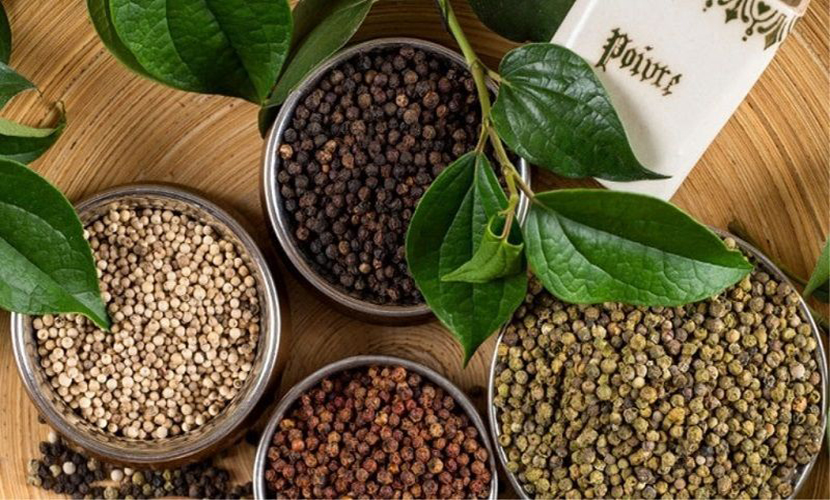
In the first five months of 2026, Vietnam’s pepper exports reached nearly 122,600 tons. Accordingly, they generated USD 789.2 million in export revenue. This represented an increase of 21.7% in volume and 13.9% in value compared with the same period in 2025.
According to the Vietnam Pepper and Spice Association, exports of pepper and several other spices maintained relatively strong growth during the first five months of 2026. This occurred despite market volatility and a decline in export performance in May, 2026.
In May 2026 alone, Vietnam exported 25,180 tons of pepper worth USD 166.2 million. Compared with April 2026, export volume fell by 18.9%, while export value declined by 13.9%. Compared with May 2025, export volume was down 4.8%.
Most of Vietnam’s major pepper exporters recorded lower shipment volumes in May compared with the previous month. This reflected the broader downward trend across the industry.
Vietnam’s pepper exports to the United States declined by more than 19% compared with April. However, the country remained the largest export market for Vietnamese pepper, accounting for more than 23% of total export volume. The United Arab Emirates ranked second and continued to maintain stable import demand.
Vietnam’s pepper exports
Meanwhile, China imported only 1,512 tons of Vietnamese pepper in May. It showed a sharp decline of 66.8% from the previous month. This significant drop was the main factor behind the overall decrease in Vietnam’s pepper exports during the month.
Other major markets continued to import substantial volumes of Vietnamese pepper. They include India, Germany, Netherlands, Türkiye, and Thailand. Among these regions, Europe remained the most dynamic market, showing the strongest positive trends in demand.
The strong growth recorded during the first five months of 2026 was largely driven by robust export performance in the first quarter and the early part of the second quarter. Import demand improved across many key markets, while global pepper supplies remained relatively tight. As a result, conditions became more favorable for Vietnam’s pepper exports.
The export volume in May declined compared with the previous month. However, the cumulative results for the first five months of 2026 indicate that Vietnam’s pepper exports have continued to maintain a solid growth trajectory.
Overall, the United States remained the largest single export market for Vietnamese pepper, importing nearly 30,000 tons during the five-month period. This accounted for 24.5% of total export volume and represented a year-on-year increase of 30.2%. The U.S. continued to be the biggest contributor to the sector’s export growth during the period.
Asia remained the largest consuming region, importing 56,570 tons of Vietnam’s pepper. It was equivalent to 46% of total exports and up 24% compared with the same period in 2025. Within the region, China stood out as a particularly strong growth market, importing 14,636 tons, a remarkable increase of 145.4% year-on-year. As a result, it became the second-largest destination for Vietnamese pepper exports.
Thailand also recorded a sharp increase in imports, reaching 5,376 tons, up 133.8% from the previous year. Meanwhile, exports to the United Arab Emirates remained largely unchanged, while shipments to India declined significantly by 33.3%.
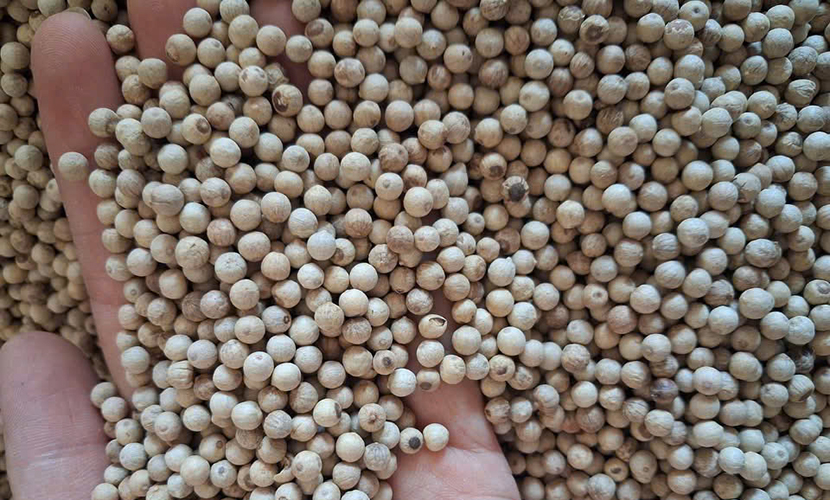
White pepper from Vietnam
In Europe, Vietnam’s pepper exports reached 25,176 tons, up 5.1% year-on-year. Exports to the Netherlands surged by 51.6%, reflecting stronger import demand and re-export activities. Meanwhile, exports to Germany fell by 30.7% compared with the same period last year.
On the import side, Vietnam imported 8,745 tons of pepper worth USD 49.8 million in May. It represented increases of 7.4% in volume and 6.0% in value compared with the previous month.
During the first five months of 2026, total pepper imports reached 38,086 tons, with a value of USD 217.8 million. This represented a substantial increase of 69% in volume and 60% in value compared with the same period in 2025.
The sharp rise in imports reflects growing demand for raw materials used in processing and re-export activities, at a time when Vietnam’s pepper exports continue to perform strongly. It also reinforces Vietnam’s position as one of the world’s leading centers for pepper processing and trade.
Regarding supply sources, Cambodia remained the largest supplier of pepper to Vietnam, accounting for 54.6% of total import volume. Imports from Cambodia surged by 344.3% compared with the same period last year.
Brazil ranked second, supplying 29.1% of total imports. Although it remained Vietnam’s most important supplier outside Southeast Asia, pepper imports from Brazil declined slightly by 3.4% year-on-year. Imports from Indonesia also fell by 16% compared with the same period in 2025.
The influx of imported pepper has contributed to downward pressure on domestic prices. Over the past week, pepper prices in key producing regions declined by VND 1,000–2,000 per kilogram. As a result, domestic purchasing prices fell to between VND 137,000 and VND 140,000 per kilogram. This marked the third consecutive week of price declines in the domestic market.
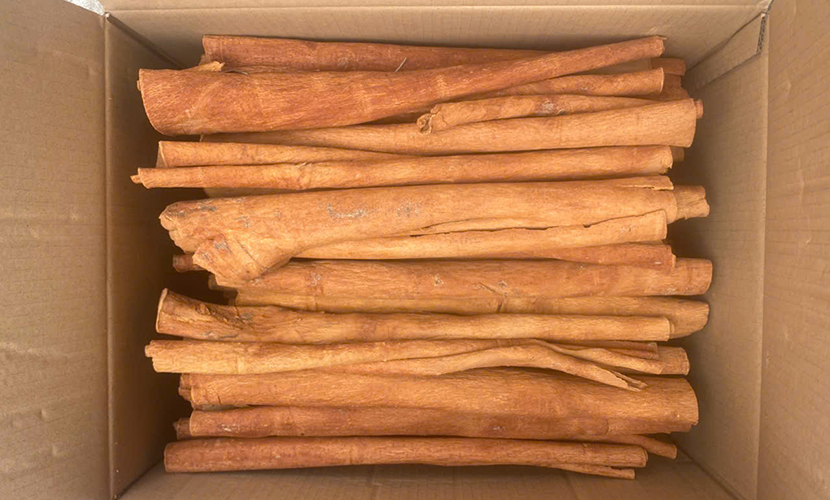
Vietnamese cinnamon exports
Specifically, prices in Dak Lak and Lam Dong fell by VND 2,000 per kilogram from the previous week to VND 140,000 per kilogram. In Ho Chi Minh City, prices decreased by VND 1,000 per kilogram to VND 138,000 per kilogram. Meanwhile, pepper prices in Dong Nai and Gia Lai remained unchanged at VND 137,000 per kilogram.
In addition to pepper, Vietnam’s cinnamon exports also recorded growth despite fluctuations in global demand. By the end of May 2026, the country had exported 48,686 tons of cinnamon worth USD 124.3 million. It represented increases of 2% in volume and 1% in value compared with the same period in 2025.
Asia remained the largest market for Vietnamese cinnamon, accounting for 67.8% of total export volume, although exports to the region declined by 4% year-on-year. Within Asia, India continued to be the leading destination, with imports increasing by 9.8% compared with the same period last year, while imports by Bangladesh rose slightly by 0.8%.
In contrast, exports to the United Arab Emirates and China declined significantly, falling by 32.5% and 38.7%, respectively, reflecting weaker import demand in both markets.
The Americas recorded the strongest growth among all regions, with export volume increasing by 35% compared with the same period in 2025 and accounting for 22.4% of total cinnamon exports. The United States alone imported 6,892 tons, up 25.4% year-on-year. This made it the second-largest single market for Vietnamese cinnamon after India.
Strong growth in the Americas helped offset declines in several Asian markets. Meanwhile, exports to Europe fell by 15.5% compared with the same period last year. Therefore, they indicated that demand in the region has yet to recover significantly.
By contrast, Vietnamese cinnamon exports to Africa increased by 10.6%. Although the market remains relatively small, it is showing promising growth potential. As a result, it could become an increasingly important destination for Vietnamese cinnamon exports in the future.
Vietnamese source: https://www.vietnamplus.vn/xuat-khau-ho-tieu-cua-ca-nuoc-trong-5-thang-nam-2026-duy-tri-tang-truong-kha-post1115244.vnp
If you are interested in Vietnamese pepper exports, please contact us:
Company: Agrideco Vietnam Co., Ltd.
Address: No 02, Alley 325 Kim Nguu, Vinh Tuy Ward, Hanoi, Vietnam
Tel/Kakao Talk/Whatsapp: +84 989 649 804
Website: https://agridecovietnam.com
Email: agridecovietnam@gmail.com