
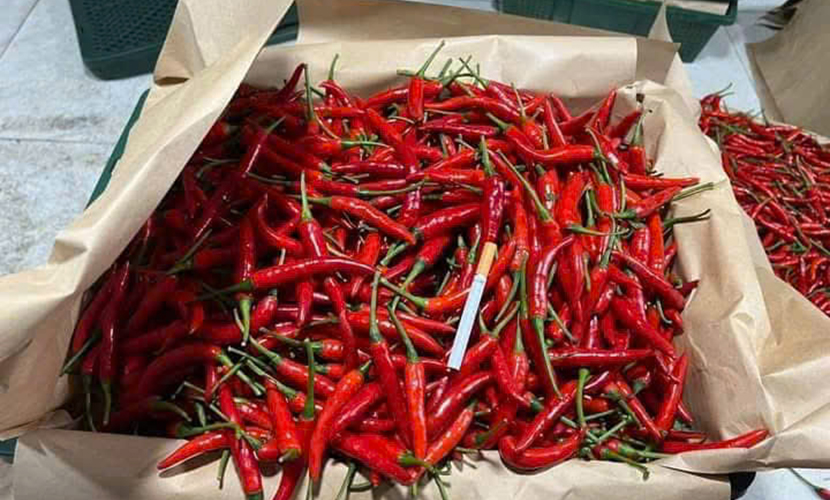
In recent years, Vietnam’s chili peppers have generated significant economic benefits in Lang Son Province. As a result, they have helped increase incomes for many local households. However, to become a key Vietnamese agricultural product, the province needs to improve the planning of specialized cultivation areas. It also needs to strengthen production–consumption linkages to ensure stable market outlets for farmers.
In less than a month, this year’s chili pepper harvest in Chi Lang District, Lang Son Province, will begin ahead of the main season. The main harvest season typically starts in mid-May. Ms. Lang Thi Deo is a resident of Quang Lang Commune. She stated Vietnam’s chili peppers are easy to cultivate and well suitable for the mountainous climate. Her family grows chili peppers on nearly 0.3 hectares of land, producing more than one tonne per crop. In recent years, favorable prices and strong demand have generated a significant source of income for local farmers.
“I hope prices of Vietnamese chili this season will remain at the same level as in previous years. Farmers can make a profit if prices stay between VND 20,000 and 30,000 per kilogram. This year, yields are likely to be good, and just one heavy rainfall can help the crop thrive. Chili cultivation provides relatively high income, and during harvest season, buyers come directly to the fields to purchase the produce. Because Vietnam’s chili peppers are easy to sell, almost every household here grows them. If we switched to other vegetables, it would be much harder to find buyers,” Ms. Deo said.
Vietnam’s chili peppers
Chi Lang District currently has the largest chili-growing area in Lang Son Province, with more than 750 hectares under cultivation. Of this total, around 350 hectares have received planting area codes. In addition, many farms are producing Vietnam’s chili peppers in accordance with VietGAP standards.
Mr. Luong Thanh Chung is the Head of the District Department of Agriculture and Rural Development. He said that since 2022, fresh chili peppers have been officially exported to China through regular trade channels. However, export volumes remain modest. To boost exports, the district has developed specialized chili-growing zones oriented toward commercial production. It has also strengthened linkages between farmers and buyers. In addition, it has expanded technical training programs covering cultivation, crop management, and harvesting practices.
“To ensure the best possible conditions for this year’s harvest, our department advised farmers to apply scientific and technical advances. At the same time, we encouraged them to adopt VietGAP production standards. The district has also issued planting area codes and packing facility codes to facilitate Vietnam’s chili exports to the Chinese market.”
“We guide farmers to strictly follow the production procedures introduced during training sessions. In addition, the department conducts rigorous inspections of pesticide residues and harmful pests on the fruit. This helps ensure that exported Vietnamese chili peppers meet all required standards,” Mr. Chung said.
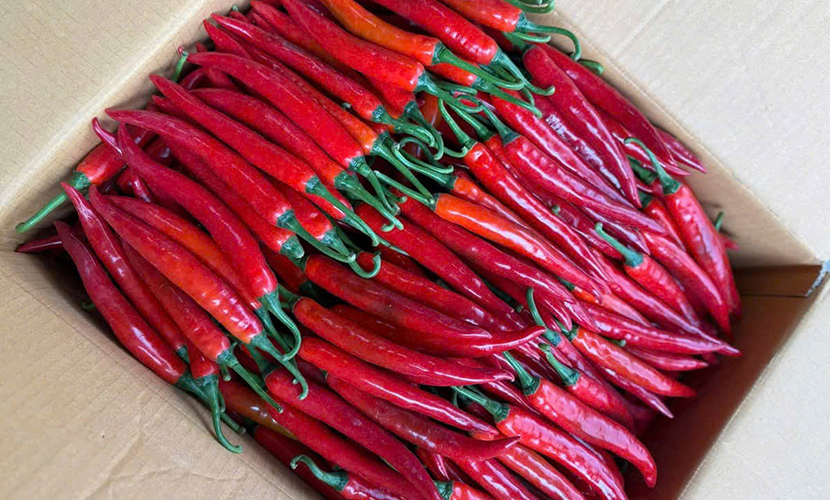
Vietnamese big chili
This year, Chi Lang District alone is likely to harvest approximately 5,000 tonnes of Vietnam’s chili peppers. To ensure stable market outlets and improve economic returns for growers, local authorities have compiled a list of potential buyers. They are also working to sign cooperation agreements for the procurement and marketing of fresh chili peppers.
Mr. Phung Van Nghia is the Vice Chairman of the Chi Lang District People’s Committee. He noted that chili peppers have provided a relatively stable source of income for local residents in recent years. As a result, they have helped many households improve their livelihoods. Average prices range from VND 20,000 to 25,000 per kilogram, while peak-season prices can reach as high as VND 50,000 per kilogram.
To support the development of the crop, Chi Lang District has instructed relevant agencies to coordinate with provincial departments in obtaining planting area codes. It has also encouraged the establishment of partnerships with businesses to secure stable market outlets for farmers.
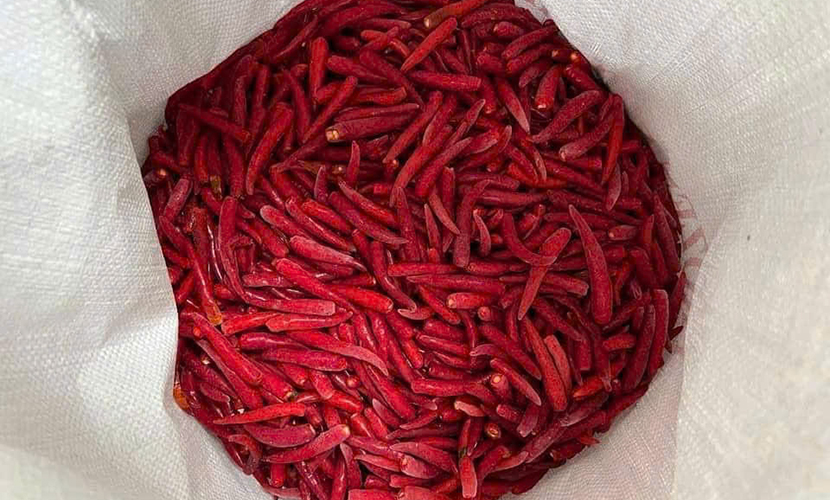
Frozen chili peppers from Vietnam
“Several Vietnamese chili companies that have been granted packing facility codes have already contacted local authorities. They are also working to establish long-term purchasing arrangements for farmers. We hope that in 2024, Chi Lang will build on its achievements. It should also take a more proactive role in securing product off-take agreements and find ways to maintain stable prices for chili growers,” Mr. Nghia said.
The high-yield, safe chili production model in Lang Son has created new opportunities for local farmers, helping reduce poverty and promote economic development in the province. Expanding specialized chili-growing areas geared toward commercial production will further support product marketing and consumption.
In addition, strengthening linkages with businesses and cooperatives will help create more stable market outlets for farmers. These efforts are expected to enhance the economic value of chili peppers. They will also strengthen the reputation of Lang Son’s agricultural products among consumers nationwide.
Vietnamese source: https://vov.vn/kinh-te/lang-son-phat-trien-vung-ot-chuyen-canh-thanh-nganh-hang-nong-san-co-the-manh-post1090214.vov
If you are interested in Vietnamese chili peppers, please contact us:
Company: Agrideco Vietnam Co., Ltd.
Address: No 02, Alley 325 Kim Nguu, Vinh Tuy Ward, Hanoi, Vietnam
Tel/Kakao Talk/Whatsapp: +84 989 649 804
Website: https://agridecovietnam.com
Email: agridecovietnam@gmail.com