
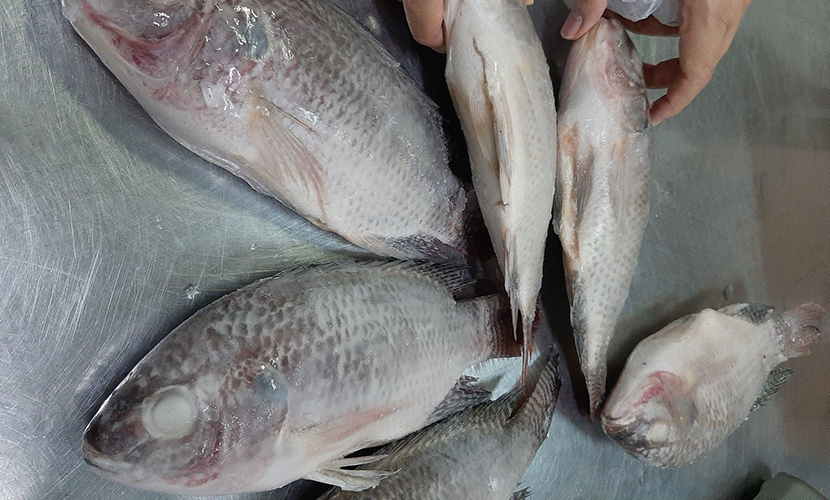
Vietnam is accelerating disease control efforts and stepping up international market negotiations. It is also developing a strategy to transform Vietnamese exported tilapia into a billion-dollar export industry by 2030.
This was the key directive issued by Deputy Minister of Agriculture and Environment Vo Van Hung at a meeting held on July 2. The meeting assessed the current situation and discussed technical solutions. It also reviewed response scenarios following recent policy developments in Brazil affecting Vietnam’s tilapia exports.
Mr. Tran Dinh Luan is the Director General of the Department of Fisheries and Fisheries Surveillance. Presenting a report at the meeting, he said Vietnamese exported tilapia has maintained steady growth throughout the 2015–2025 period. In 2025, tilapia production reached approximately 420,000 tonnes, representing an average annual growth rate of 8.4%.
Vietnam currently has around 420,000 hectares of specialized tilapia farming areas and 300,000 hectares of integrated farming systems. It also has approximately 3 million cubic meters of commercial cage culture. Export turnover has also expanded rapidly, rising from USD 17 million in 2023 to USD 41 million in 2024. It then reached nearly USD 100 million in 2025.
Brazil has emerged as a key market for Vietnamese exported tilapia. Specifically, it imported USD 26 million worth of the product during the first four months of 2026 alone. This accounted for approximately 54% of Vietnam’s total tilapia export turnover. However, the market has recently introduced a series of stricter control measures related to the Tilapia Lake Virus (TiLV).
Specifically, Brazil’s Ministry of Agriculture and Livestock now requires all imported shipments to be accompanied by certification confirming they are free from TiLV. In addition, a bill to ban tilapia imports has passed its initial reading in Brazil’s Chamber of Deputies. Several states have also introduced measures restricting the circulation and distribution of Vietnamese tilapia products.
Vietnamese exported tilapia
Dr. Ngo Xuan Nam, Deputy Director of the Vietnam SPS Office. From his view, Brazil clarified during a technical meeting of the WTO’s SPS Committee that the proposed legislation has not yet taken legal effect. The Brazilian federal government also emphasized that individual states do not have the authority to regulate international trade. It stated that the country’s market remains fully open to Vietnamese tilapia.
Both sides agreed to continue holding technical meetings to review disease risk assessment reports in accordance with WTO regulations. Brazil is also awaiting Vietnam’s response to the proposed veterinary health certificate template.
According to industry representatives, the new technical requirements have significantly prolonged customs clearance for many shipments. This has resulted in additional storage costs ranging from several hundred million to more than VND 1 billion per shipment. Changes to designated ports of entry have also increased logistics costs by around 30%.
Nevertheless, strong demand in Brazil has supported higher export prices. Vietnamese tilapia companies are therefore continuing to optimize their production chains. They are also exploring investments in cold storage facilities and tilapia seed production programs in Brazil to strengthen long-term cooperation.
Concluding the meeting, Deputy Minister of Agriculture and Environment Vo Van Hung instructed relevant agencies to implement four key priorities in a coordinated manner.
First, the Department of Fisheries and Fisheries Surveillance, in cooperation with the Department of Livestock Production and Animal Health, directed to urgently complete Vietnam’s national disease control dossier for tilapia, with particular emphasis on TiLV. The agencies also tasked with developing a transparent database covering farming areas and broodstock. This would support future international negotiations.
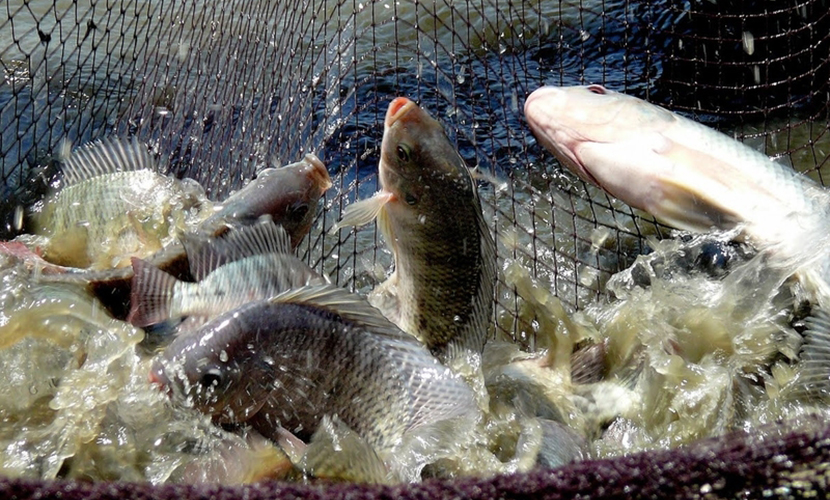
Vietnamese tilapia
The Deputy Minister further called for stronger engagement with Brazilian authorities. The Department of International Cooperation instructed to work closely with the Ministry of Industry and Trade and the Ministry of Foreign Affairs. It tasked with promptly sending an official diplomatic note while preparing comprehensive scientific evidence and technical data for upcoming bilateral discussions.
Meanwhile, the Department of Quality, Processing and Market Development asked to coordinate with the Vietnam Association of Seafood Exporters and Producers (VASEP). The two sides will assist Vietnam’s tilapia exporters in reviewing production processes and improving product quality. They will also help diversify product portfolios and expand into new export markets to reduce dependence on any single destination.
The Department of Fisheries and Fisheries Surveillance was also assigned to formulate a comprehensive, long-term development strategy for Vietnam’s tilapia industry. The plan will include completing technical standards for different farming systems, addressing fragmented production, and laying the foundation for transforming tilapia into a billion-dollar export industry by 2030.
As importing countries continue to tighten technical barriers, close cooperation among government agencies, industry associations, and businesses will be essential. This will help Vietnam’s tilapia industry overcome emerging challenges, strengthen its competitiveness, and achieve sustainable export market expansion.
Vietnamese source: https://congthuong.vn/xay-dung-chien-luoc-dua-ca-ro-phi-thanh-nganh-hang-xuat-khau-ty-do-463765.html
For more information about Vietnam’s tilapia exports, please contact us:
Company: Agrideco Vietnam Co., Ltd.
Address: No 02, Alley 325 Kim Nguu, Vinh Tuy Ward, Hanoi, Vietnam
Tel/Kakao Talk/Whatsapp: +84 989 649 804
Website: https://agridecovietnam.com
Email: agridecovietnam@gmail.com