
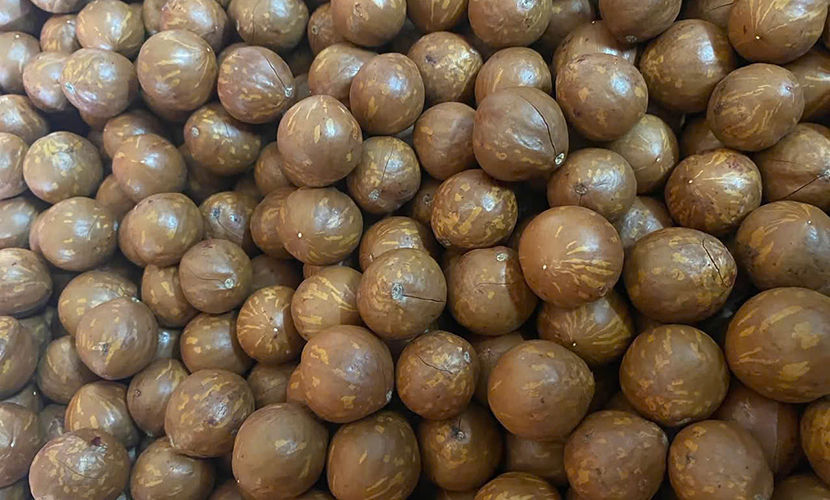
In late June, macadamia trees across the hillsides in Điện Biên Province began entering the harvest season. More than a decade ago, when the crop came here on a trial basis, many local residents remained skeptical about its economic potential. Today, however, confidence in Vietnam-produced macadamia has gradually taken root.
As part of its agricultural restructuring strategy, Điện Biên Province has identified Vietnamese macadamia as a key crop due to its high economic value. The crop is also well suitable for the local climate and soil conditions. It has strong potential for developing large-scale raw material areas.
Vietnam-produced macadamia
Compared with many short-term crops, macadamia trees have a harvesting cycle lasting for decades. Their maintenance costs gradually decline once the canopy closes. Meanwhile, the commercial value of the nuts remains consistently high. Experiences from several localities have demonstrated that this is a promising development direction.
Since 2013, households in Quài Cang, Quài Nưa, and Pú Nhung communes of the former Tuần Giáo District have boldly planted macadamia trees on a trial basis. After only three years, the trees began producing their first fruits. By the fifth year, yields gradually stabilized, helping improve local incomes.
In Pha Nàng Village, Tuần Giáo Commune, Là Văn Chanh is busy tending his Vietnam-produced macadamia during the harvest season. Having cultivated the crop for more than 10 years, he considers it a stable source of income. Standing among branches heavily laden with nuts, Chanh could not hide his excitement.
“In the first year, I sold Vietnamese macadamia nuts for VND 100,000 per kilogram. For about the past five years, the price has remained stable at VND 40,000 per kilogram. Each tree produces between 10 and 25 kilograms of nuts, equivalent to nearly VND 1 million. Vietnam-produced macadamia nuts are easy to store and transport, and traders come directly to purchase them. Therefore, the economic returns are much higher than growing maize or cassava,” he said.
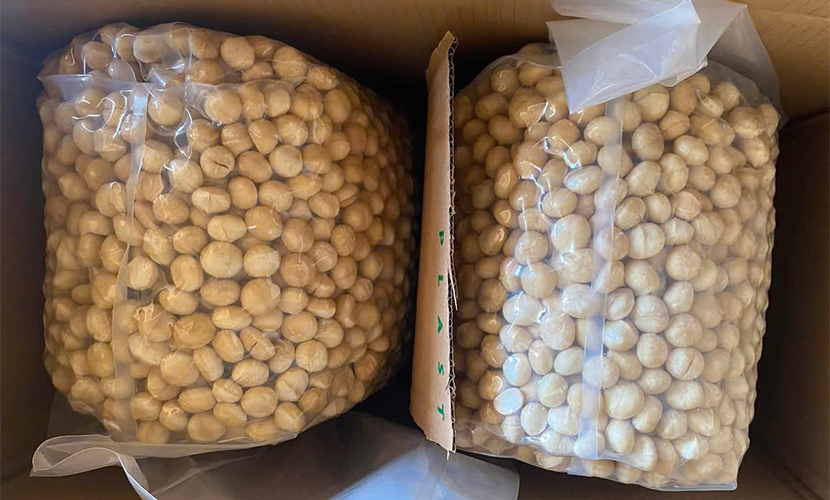
Off-shell macadamia from Vietnam
The economic benefits generated by macadamia orchards are helping reinforce the province’s decision to develop the crop as a key agricultural product. However, the expansion process has not been entirely smooth. In the early years, some cultivation projects faced difficulties due to limited resources and ineffective implementation methods.
This left a number of planted areas abandoned. In addition, some farmers purchased seedlings from unknown sources. As a result, some trees failed to bear fruit after six to seven years or produced very low yields. This situation significantly affected local people’s confidence in the crop of Vietnam-produced macadamia.
Drawing on practical lessons, Điện Biên Province has proactively reviewed its planning, tightened control over seed quality, and selected capable investors. At the same time, it is focusing on attracting businesses to invest in deep processing and sign product purchasing agreements. This will gradually complete the value chain from production to consumption.
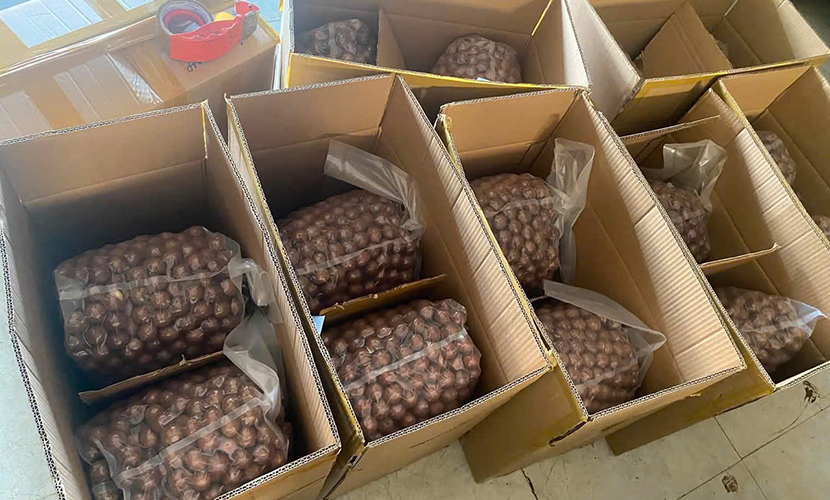
Vietnamese macadamia exports
All development projects are linked with Vietnamese macadamia enterprises committed to purchasing farmers’ output. For example, TH Group has pledged to purchase products from 10,000 hectares of macadamia plantations in the former Tuần Giáo District. Meanwhile, the Vietnam Macadamia Association has committed to supporting a scale of 50,000 hectares across the province over a 50-year period at prices based on the global market.
Vietnamese macadamia businesses have also committed to investing in processing plants in Chiềng Sinh and Thanh Yên communes. This will help ensure stable market outlets while increasing the value of local agricultural products. The completion of an on-site processing system is considered a crucial step. It allows farmers to feel more secure in production and reduces concerns over price pressure or dependence on small-scale traders.
Mr. Lê Xuân Cảnh is the Director of the Department of Agriculture and Environment. He said: “The province remains committed to making macadamia one of its four key crops. By 2030, Điện Biên aims to develop approximately 40,000 hectares of Vietnam-produced macadamia. This will make it the locality with the largest macadamia cultivation area in the country.”
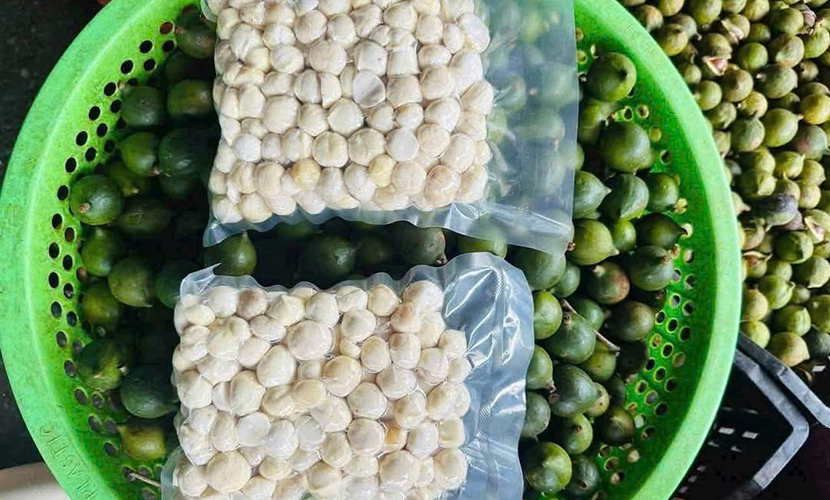
Fresh macadamia from Vietnam
To realize this vision, the province is strengthening communication efforts to raise public awareness while strictly managing seed quality and issuing planting area codes. Once raw material zones, processing facilities, and consumer markets are effectively connected, macadamia will truly become a high-value crop. This is considered a key pathway toward sustainable agricultural development. It will enable people in Điện Biên’s mountainous areas to improve their livelihoods and build stable, prosperous lives by making the most of their homeland’s existing potential.
Vietnamese source: https://thuonghieusanpham.vn/mac-ca-dien-bien-mo-huong-phat-trien-moi-tren-vung-dat-doc
If you are interested in Vietnamese macadamia exports, please contact us:
Company: Agrideco Vietnam Co., Ltd.
Address: No 02, Alley 325 Kim Nguu, Vinh Tuy Ward, Hanoi, Vietnam
Tel/Kakao Talk/Whatsapp: +84 989 649 804
Website: https://agridecovietnam.com
Email: agridecovietnam@gmail.com