
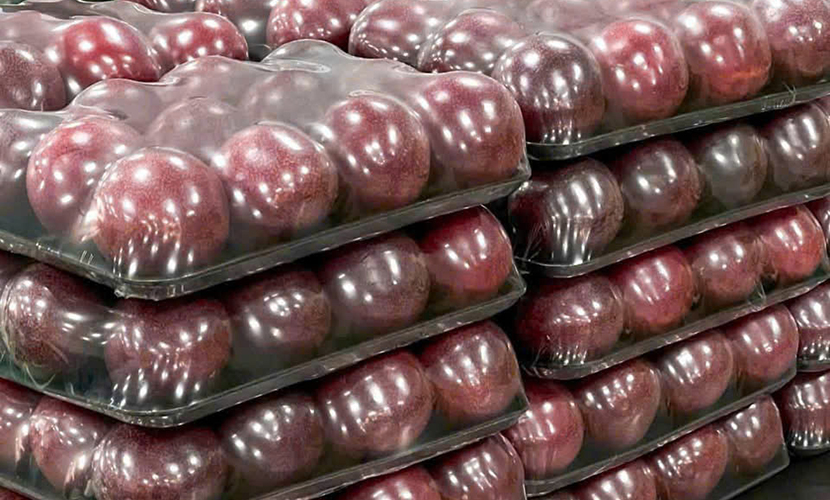
The first batches of Vietnamese exported passion fruits from Hướng Hóa District, produced under a partnership model between farmers and businesses, have met European export standards. This achievement has opened up a promising new development path for the region.
Mr. Hồ Quốc Long is a resident from Hướng Phùng Commune, Hướng Hóa District, Quảng Trị Province. He spoke with conviction when describing the economic benefits of passion fruit cultivation. Mr. Long said: “Vietnamese passion fruit is the crop that has helped us escape poverty.” He was referring to the significant income it has generated for his own family. It has also benefited many other households in the area since the cultivation model was introduced.
In July 2019, Mr. Long converted 3,000 square meters of pepper-growing land into a passion fruit orchard. By using the existing support posts from his pepper plantation, he invested around VND 15 million. This investment covered an irrigation system and additional trellis infrastructure. With half of the seedling cost subsidized, the initial investment remained well within his family’s financial capacity.
After more than six months of cultivating the crop, Mr. Long harvested his first crop in early February. He estimated that, after deducting expenses for fertilizer, seedlings, and other inputs, he earned an average profit of VND 13,000 per kilogram. He sold 500 kilograms of Vietnam’s passion fruit, generating VND 6.5 million in revenue.
Vietnamese exported passion fruits
“I will soon harvest my second crop, which is likely to produce both higher yields and better-quality fruit. As long as growers follow the recommended production procedures and continue to benefit from guaranteed purchasing contracts, Vietnamese exported passion fruits can become a key crop. It can help pepper and coffee farmers in Hướng Phùng overcome their current challenges.,” Mr. Long said.
In 2017, prices of many Vietnamese agricultural commodities—including pepper and coffee—declined sharply. As a result, Quảng Trị province began exploring alternative export-oriented crops with higher economic value. In 2018, the province signed a memorandum of understanding on cooperation in passion fruit cultivation and procurement.
Under the Hướng Hóa passion fruit model, the province provided technical training while closely monitoring compliance with strict cultivation standards. Meanwhile, a Vietnamese fruit company advanced 50% of the seedling costs to participating farmers. The farmers repaid the amount through deductions from the proceeds of fruit sales at the end of the season.
The company also committed to purchasing 100% of the harvest at market prices. It guaranteed a minimum procurement price of VND 4,000 per kilogram should market prices fall below that level. Honoring its commitment, the company purchased approximately 2 tonnes of fresh passion fruit from local growers during the very first harvest.
To date, nearly 50 households in Hướng Hóa District have adopted passion fruit cultivation across more than 35 hectares. The growing area is available mainly in Hướng Phùng, Tân Liên, and Tân Lập communes. Total annual production is likely to reach around 500 tonnes, with an average yield of 15 tonnes per hectare. Farms participating in the production linkage with the company have achieved significantly higher performance.
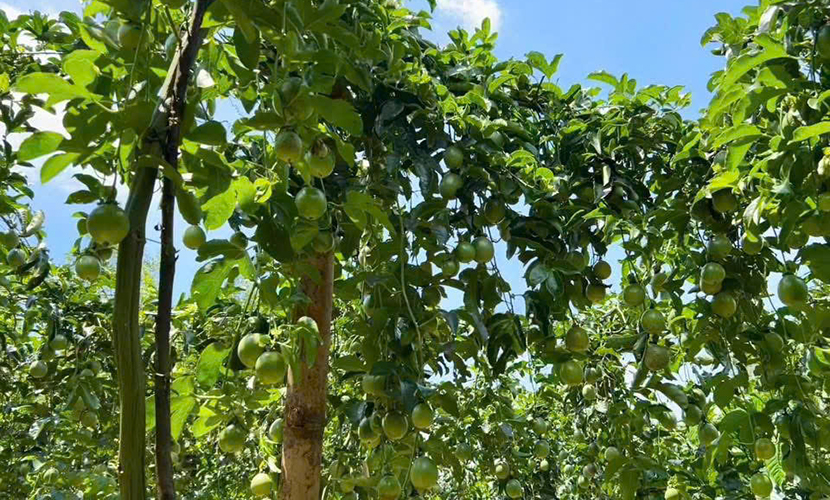
Vietnamese passion fruit trees
The initial success of these newly established passion fruit cultivation models in several communes of Hướng Hóa District has created new opportunities for local farmers to increase their incomes. It has also provided a solid foundation for expanding the model to other parts of Quảng Trị Province.
Thanks to the close partnership between farmers and businesses in both production and marketing, growers have the confidence to invest in proper crop management. This enables them to achieve the highest possible yields and fruit quality.
Mr. Hồ Minh Phong is a farmer from Đại Độ Village, Hướng Phùng Commune, who joined the contract farming model in 2018. He said: “Throughout the cultivation and harvesting process, we do our best to ensure that as much of the fruit as possible meets the quality standards required for export.”
He added: “When harvesting passion fruit, workers must wear gloves and handle the fruit carefully to prevent scratches. They should carry out the packing process with great care. Our greatest hope is that a passion fruit processing plant will be built in Quảng Trị. That would help address these challenges and ensure the fruit’s value truly reflects the effort and investment made by local growers.”
In the near future, once these projects become operational, Vietnamese exported passion fruits are likely to gain a stronger presence in both domestic and international markets. In particular, they are likely to strengthen its position in Europe, one of the world’s most demanding markets for Vietnamese agricultural products.
For more information about Vietnamese exported passion fruits, please contact us:
Company: Agrideco Vietnam Co., Ltd.
Address: No 02, Alley 325 Kim Nguu, Vinh Tuy Ward, Hanoi, Vietnam
Tel/Kakao Talk/Whatsapp: +84 989 649 804
Website: https://agridecovietnam.com
Email: agridecovietnam@gmail.com