
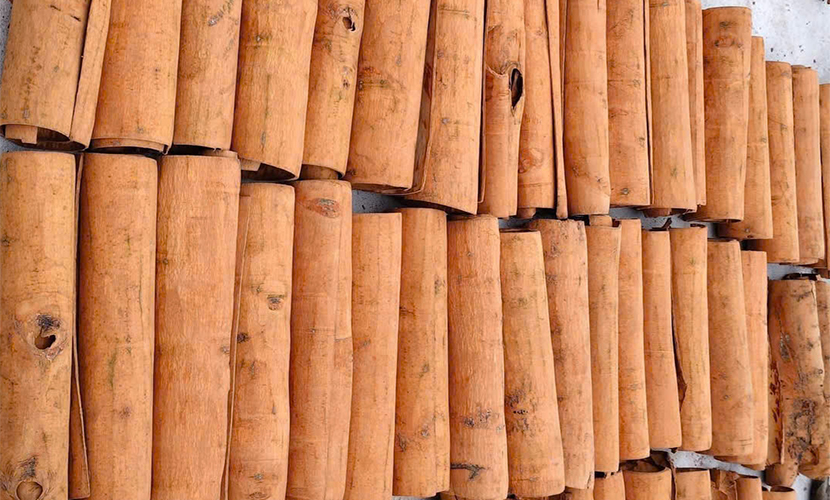
After the merger, Lào Cai became the province with the largest cinnamon-growing area in Vietnam. As a result, finding ways to ensure the sustainable development of Vietnam’s cassia cinnamon has become more urgent than ever. The challenge is to improve the livelihoods of growers while also protecting the environment.
In early September 2025, we visited Xuân Ái Commune, once regarded as the “capital” of the cinnamon-growing region. On the way to Khe Dứa, newly paved concrete and asphalt roads stretched toward the mountains. Solidly built houses lined both sides of the road.
This prosperity has been made possible by Vietnam’s cassia cinnamon cultivation. Today, many Dao households own vast cinnamon forests stretching across hill after hill. Some families have just a few hectares, while others own dozens of hectares. They earn annual incomes ranging from several hundred million to over one billion VND.
Walking beneath the endless green cinnamon forests, it is easy to understand why the Dao people regard cinnamon as their “green gold.” The newly built, spacious homes are also a clear sign of the prosperity by this valuable crop.
Vietnam’s cassia cinnamon
Mr. Trần Văn Cháng, a resident of Khe Dứa Village, owns more than 20 hectares of Vietnamese cinnamon forest. Some of these cinnamon stands are over 20 years old. He earns more than one billion VND each year from Vietnam’s cassia cinnamon sales.
According to Mr. Cháng, in 1960 Viễn Sơn was home to two well-known cooperatives specializing in cinnamon production and processing: Công Tâm and Cộng Lực. Six Dao villages belonging to the Cộng Lực Cooperative were awarded the title of Hero of Labor by the Vietnamese government. This recognition honored their outstanding achievements in expanding Vietnamese cinnamon cultivation.
Mr. Lê Văn Long is the Head of the Sustainability Department at a Vietnamese cinnamon company. Notably, this company has invested in an organic cinnamon-growing area in Xuân Ái Commune. Mr. Long said that the former Văn Yên District had more than 57,000 hectares of cinnamon cultivated across all communes. By the end of 2024, more than 15,200 hectares will be organic cinnamon.
The company currently purchases and processes more than 10,000 tons of Vietnam’s dried cinnamon each year. It also provides stable employment for 150 local workers with reliable incomes. Xuân Hòa Commune is another major cinnamon-producing area, with 4,453 hectares of cinnamon planted across all 30 villages.
Mr. Lưu Vĩnh Đĩnh shared, “My family used to struggle financially. Since we started growing cinnamon, our living conditions have improved significantly. We own more than five hectares of Vietnam’s cassia cinnamon, including three hectares that we recently harvested. The income allowed us to build a new house and achieve financial security. We still have two hectares left, and we plan to sell them when market prices are favorable. We expect to earn more than another VND 1 billion.”
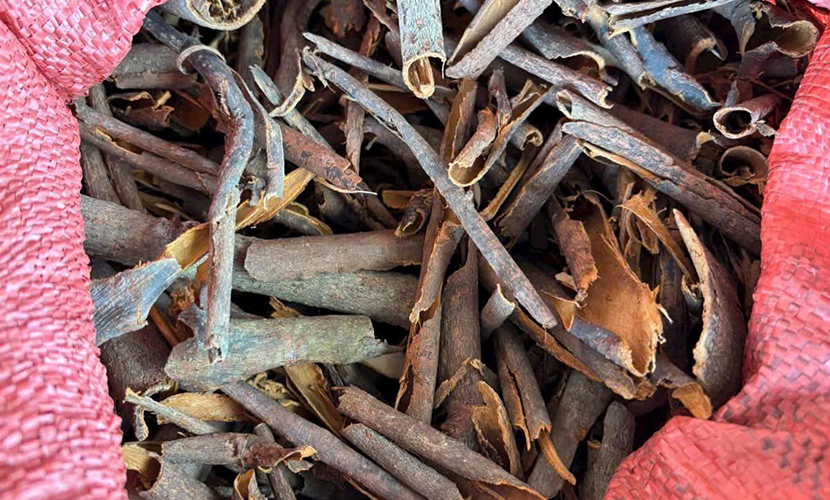
Broken cassia from Vietnam
Thanks to Vietnam’s cassia cinnamon cultivation, living standards in Mỏ Đá Village have continued to improve. The poverty rate has fallen from more than 10 percent to just 0.2 percent. The village is likely to eliminate poverty entirely by the end of this year.
According to the Lào Cai Department of Agriculture and Environment, the province now has approximately 146,800 hectares of cinnamon. This includes about 97,000 hectares of Vietnamese cinnamon cassia in concentrated production areas. In which, more than 24,000 hectares have received organic certifications.
Each year, Lào Cai harvests and processes around 40,000–45,000 tons of dried cinnamon barks and more than 200,000 tons of cinnamon branches and leaves. The province is home to 46 processing facilities, which mainly produce cinnamon essential oil and cinnamon bark products.
Among them are 16 relatively large essential oil extraction plants that use boiler technology. They have a combined annual production capacity of 1,000 tons of cinnamon essential oil. In addition, more than 400 small-scale household producers have engaged in cinnamon essential oil processing.
On average, Vietnam’s cassia cinnamon generates an annual income of around VND 50–60 million per hectare. This figure is significantly higher than that of conventional forestry species or traditional agricultural crops. As a result, the rural landscape of Lào Cai has been transformed.
The remarkable growth of cinnamon cultivation in Lào Cai can be attributable to the province’s cool climate, high humidity, fertile soils, and mountainous terrain. In addition, the provincial government has introduced proactive support policies and a clear development strategy for forestry in general and cinnamon cultivation in particular.
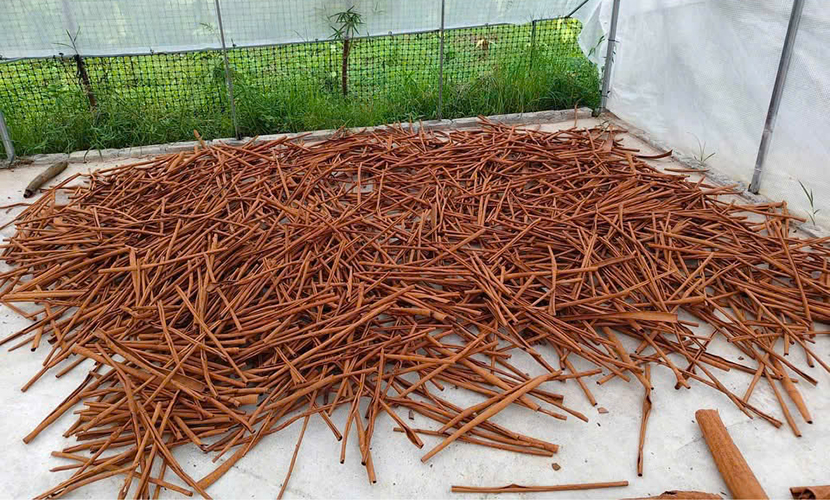
Cinnamon cassia sticks from Vietnam
For Vietnam’s cinnamon, the province has shifted its support policy from providing seedlings to expand concentrated cultivation areas. It now supports organic cinnamon production linked to value chains. Global demand for cinnamon essential oil and other cinnamon products consistently exceeds supply, particularly in the United States, Japan, and the European Union.
The province’s main cinnamon products, including cinnamon bark and crude essential oil, already have stable export markets in China, South Korea, and Taiwan. Meanwhile, local communities have established permanent settlements and remain closely connected to forest land. Today, 15 of the province’s 29 ethnic groups are engaged in Vietnam’s cassia cinnamon cultivation.
However, despite its remarkable success, Vietnamese cinnamon cultivation in Lào Cai still faces a number of challenges. Cinnamon plantations have expanded without fully aligning with the province’s overall development strategy. In many areas, plantations of acacia, Styrax, eucalyptus, and Manglietia have been cleared and replaced with cinnamon. This has altered the structure of planted forests and reduced the area of timber plantations. It has also affected the wood processing and other forest product industries.
Unsustainable harvesting practices also remain a concern. In some cases, cinnamon is harvested without following proper technical procedures, and even immature plantations are clear-cut. These practices seriously affect tree growth and reduce the quality of Vietnamese cinnamon products. In addition, cooperation between cinnamon growers, processing facilities, and purchasing companies remains weak.
Mr. Nguyễn Văn Long is the Chairman of the People’s Committee of Xuân Hòa Commune. He said that cinnamon production and processing have yet to be fully optimized. Cultivation remains fragmented, with limited integration across the value chain, from seedling supply to product purchasing and marketing.
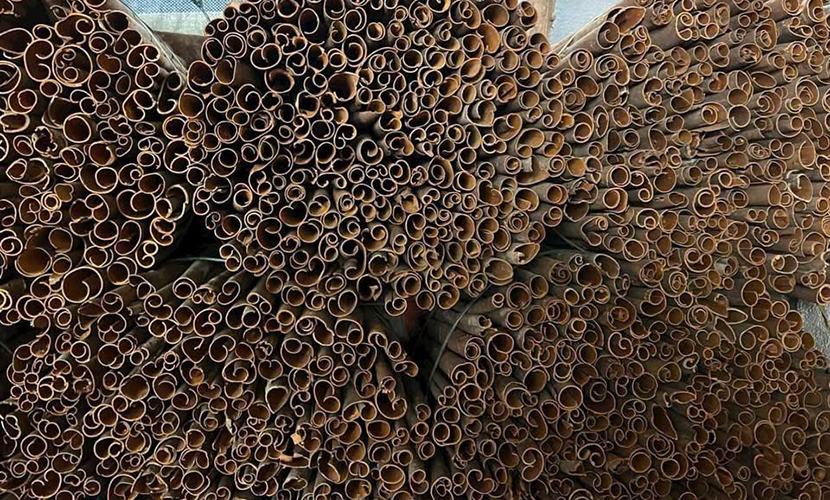
Vietnamese cinnamon cassia tube
To address these issues, the province plans to implement a more rational and efficient harvesting strategy. By 2030, Lào Cai aims to maintain approximately 150,000 hectares of Vietnam’s cassia cinnamon. More than 30,000 hectares are likely to follow sustainable forest management standards. These areas will also be registered with official growing area codes, including organic and UEBT certification.
To achieve these goals, Lào Cai is implementing a range of key measures. These include maintaining a stable supply of high-quality cinnamon-growing areas. They also include strengthening the management of planting materials through the use of elite trees and improved seed forests. The province also plans to combine cinnamon cultivation with ecotourism to create distinctive tourism products.
Mr. Nguyễn Văn Vĩnh is the Deputy Director of the Lào Cai Department of Agriculture and Environment. He emphasized that the sector will continue to work closely with commune authorities to mobilize resources. It will also leverage local strengths and expand cooperation with businesses and organizations. These efforts aim to develop a modern, efficient, and internationally integrated cinnamon value chain.
Vietnamese source: https://nhandan.vn/duoi-nhung-canh-rung-que-o-lao-cai-post908108.html
For more information about Vietnam’s cassia cinnamon, please contact us:
Company: Agrideco Vietnam Co., Ltd.
Address: No 02, Alley 325 Kim Nguu, Vinh Tuy Ward, Hanoi, Vietnam
Tel/Kakao Talk/Whatsapp: +84 989 649 804
Website: https://agridecovietnam.com
Email: agridecovietnam@gmail.com