
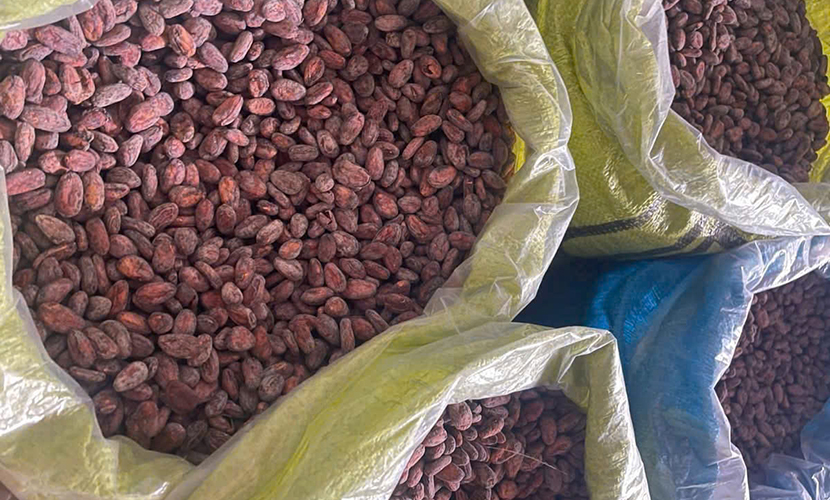
Vietnamese cocoa exports are highly proud for their rich flavor, balanced natural acidity, and distinctive fruity notes. These qualities make them particularly well suited to artisanal chocolate, single-origin chocolate, and other premium cocoa products.
Vietnam has officially been recognized by the International Cocoa Organization (ICCO) as a producer of Fine Flavor Cocoa (FFC). As a result, it has become only the second country in Asia to receive this distinction.
Vietnam therefore possesses a rare combination of advantages. It belongs to the Fine Flavor Cocoa category and benefits from diverse ecological conditions. In addition, it can develop cocoa-growing areas through agroforestry intercropping systems that align with the trend toward low-carbon agriculture. In other words, Vietnam does not need to compete on volume. Instead, it can pursue a strategy centered on high value, strong branding, and unique identity.
Fine Flavor Cocoa (FFC) is a designation used by the International Cocoa Organization (ICCO) for cocoa varieties with distinctive flavors and superior quality. This category accounts for only about 10–15% of global cocoa production. It is primarily raw materials in premium and artisanal chocolate products.
For many years, cocoa in Vietnam was a small-scale crop. As a result, it was rarely included in major agricultural development strategies. Agricultural restructuring efforts are increasingly focused on green growth, emissions reduction, and international market integration. In this context, cocoa is gradually emerging from the shadows.
Vietnamese cocoa exports
Ms. Nguyen Thi Thanh Mai comes from the Western Highlands Agriculture and Forestry Science Institute (WASI). According to her, Vietnamese cocoa exports are highly proud for their rich flavor, balanced natural acidity, and distinctive fruity notes. These characteristics are particularly well suitable for artisanal chocolate, single-origin chocolate, and other premium products.
“Fine flavor is not a story of production volume. It is a story of quality, traceability, and the cultural identity of the growing region,” Ms. Mai said.
Globally, the cocoa and chocolate market is undergoing significant transformation. According to Market Research Future (MRFR), the global cocoa bean market was worth at approximately USD 17.17 billion in 2024. It is likely to exceed USD 37 billion by 2035, with a compound annual growth rate (CAGR) of around 7.3%.
Importantly, growth is no longer being driven by mass-market products. Instead, it is being fueled by premium segments such as dark chocolate, artisanal chocolate, organic cocoa, traceable cocoa, and sustainably produced cocoa.
Ms. Doan Thi Kim Xuyen is the Director of Cacao Land Co., Ltd. in Dak Lak Province. She noted that North America remains the largest market for Vietnamese cocoa exports. However, the Asia-Pacific region is emerging as the fastest-growing area, particularly in Japan, South Korea, and major Chinese cities. Consumers are increasingly concerned about ethics, environmental sustainability, and health. Consequently, demand for cocoa certified under sustainable production standards, regenerative agriculture, and circular economy models is rising.
The Central Highlands is Vietnam’s largest cocoa-producing region. Among the provinces, Dak Lak is demonstrating the strongest potential for developing a well-structured cocoa industry.
In addition to having the country’s largest cocoa-growing area, Dak Lak enjoys several unique advantages. These include fertile basalt soil, a stable highland climate, extensive experience in cultivating industrial crops, and an emerging ecosystem of businesses and cooperatives.
More importantly, cocoa cultivation in Dak Lak is not based on monoculture. Instead, it primarily intercrops beneath coffee trees, fruit trees, and forest canopies, fully consistent with the principles of regenerative agriculture.
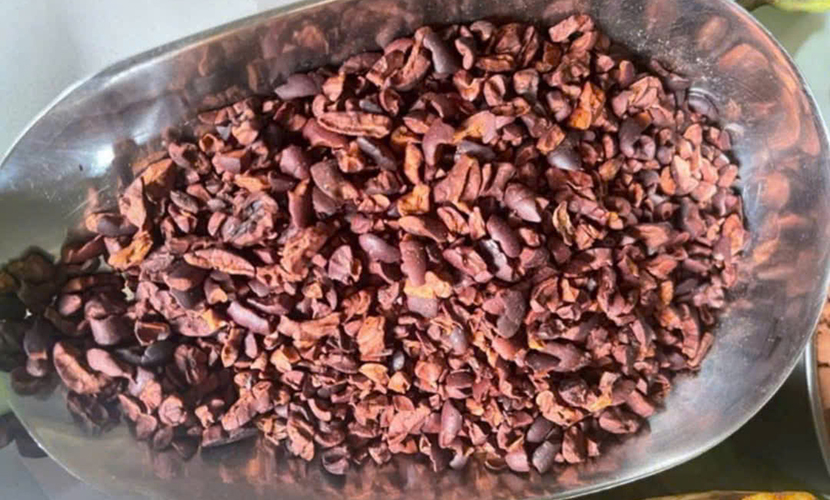
Vietnamese cocoa nibs
Cocoa helps protect soil cover, improve organic matter content, absorb carbon, and avoid excessive competition for nutrients. Therefore, it is highly suitable for long-term sustainable farming systems.
Dak Lak currently has seven cooperatives involved in Vietnamese cocoa exports. These organizations have achieved encouraging results through partnerships with companies.
In recent years, value-chain-based agricultural production linkages in the province have delivered positive initial results. Many cooperatives, farmer groups, and individual growers have partnered with enterprises in cocoa production and marketing. As a result, market access has become more stable and product quality has improved.
However, compared with its potential, the scale of these linkages remains limited. Cooperation is not yet sufficiently sustainable, and activities are still available mainly in raw material production. In addition, deep-processing rates remain low, resulting in only modest value addition.
Recognizing these challenges, Dak Lak’s agricultural sector is developing a cocoa industry value-chain strategy. The strategy aims not only at raw material production but also at deep processing, brand building, and export market development.
Ms. Doan Thi Kim Xuyen explained: “Established in 2021, Cacao Land has defined its mission as contributing to the sustainable development of Vietnamese cocoa exports. The company seeks to enhance value throughout the supply chain from raw beans to processed products, while protecting the environment and improving farmers’ livelihoods. It plans to invest in a modern processing plant capable of producing cocoa powder and chocolate. The facility will have an annual processing capacity of approximately 8,000–10,000 tonnes of cocoa beans from the Central Highlands.”
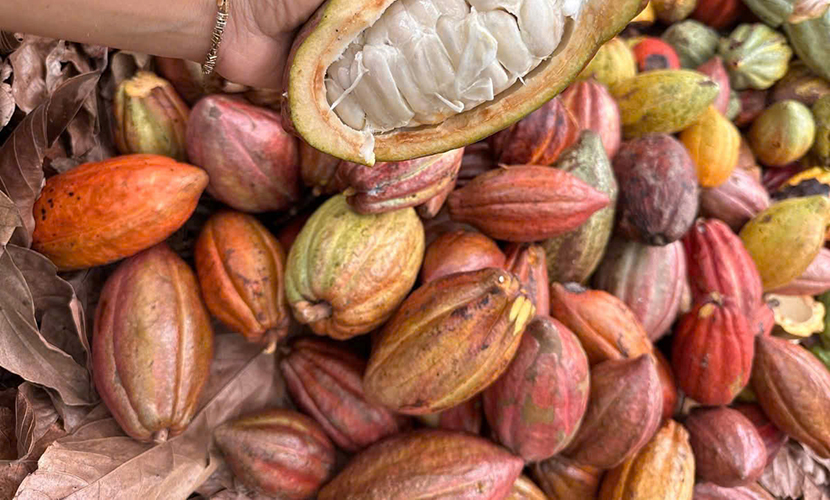
Vietnamese fresh cocoa
With the shared vision of transforming Dak Lak into Vietnam’s cocoa and chocolate hub, cocoa enterprises in the province are working alongside farmers. Together, they aim to turn the region’s red basalt soil into a symbol of green, high-value agriculture capable of competing in global export markets.
Benefiting from the growing participation of businesses across the value chain, agricultural authorities in the Central Highlands have outlined strategies to strengthen cocoa linkages in the coming years. These efforts will focus on implementing coordinated measures to consolidate and develop cooperative economic models within the cocoa sector.
They will also encourage the establishment and strengthening of specialized cocoa cooperatives. At the same time, they will reorganize production around concentrated raw-material zones that closely link with processing and marketing enterprises.
Like many other signature products of the Central Highlands, the greatest value of cocoa does not lie in the raw bean itself. Rather, it lies in its potential for deep processing and its ability to tell the story of the region and its people.
“A chocolate bar can generate many times more value than Vietnamese cocoa exports. More importantly, it enables Vietnam to enter the market as a creator of value rather than merely a supplier of raw materials,” Ms. Xuyen said.
Vietnamese source: https://www.vietnamplus.vn/dinh-hinh-thuong-hieu-cacao-viet-tren-ban-do-the-gioi-post1090769.vnp
If you are interested in Vietnamese cocoa exports, please contact us:
Company: Agrideco Vietnam Co., Ltd.
Address: No 02, Alley 325 Kim Nguu, Vinh Tuy Ward, Hanoi, Vietnam
Tel/Kakao Talk/Whatsapp: +84 989 649 804
Website: https://agridecovietnam.com
Email: agridecovietnam@gmail.com