
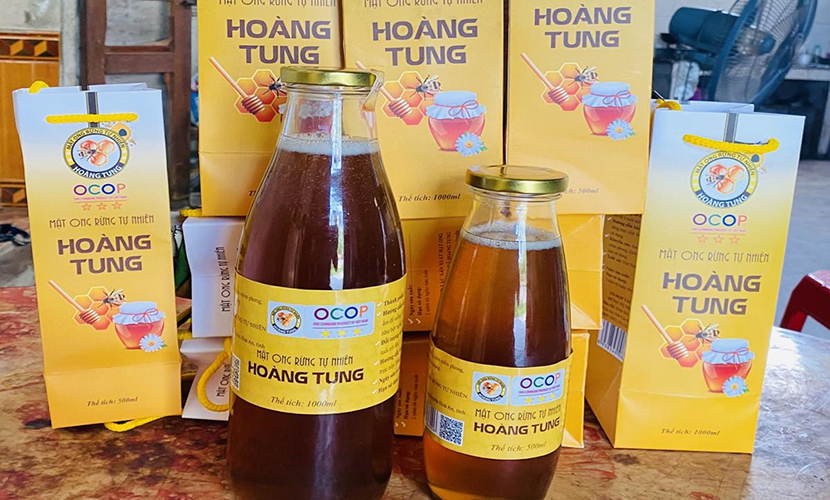
Once a traditional livelihood closely tied to local natural resources, beekeeping in Cao Bằng is undergoing a remarkable transformation toward a more professional and sustainable industry. Standardizing production practices, investing in traceability systems, and achieving OCOP (One Commune One Product) certification have become the key drivers. These efforts are enhancing the value and reputation of Vietnamese natural honey in Cao Bằng Province.
According to Cao Bằng Newspaper, beekeeping has evolved in recent years from a traditional livelihood into an important source of stable income for many households. It also makes effective use of the province’s rich natural resources. Cao Bằng is now home to more than 300 beekeeping households, each managing between 20 and 300 bee colonies. The annual production output of Vietnamese natural honey exceeds 900,000 liters. Beyond its economic value, beekeeping also supports natural pollination. It improves crop yields and helps preserve local ecosystems and biodiversity.
The main honey harvest season typically runs from March to June, coinciding with the period when forests are lush and abundant with flowering plants. This rich diversity of native flora gives Cao Bằng honey its distinctive characteristics. These include a delicate floral aroma, a golden color, and a naturally mild sweetness that is difficult to replicate. As a result, the product enjoys a unique competitive advantage in the market.
Vietnamese natural honey
From a production perspective, Vietnamese natural honey farming requires relatively modest investment because bees obtain most of their nutrition from wild forest flowers and blossoms in fruit-growing areas. During peak flowering seasons, beekeepers move their colonies to locations with abundant nectar sources. This helps maximize Vietnamese natural honey yields. Although production costs are relatively low, successful beekeeping demands careful management, diligence, and extensive experience. Beekeepers must monitor weather conditions and predict flowering cycles.
The sector’s shift toward more professional production and management is clearly reflected in the development of local cooperatives. Mr. Lý Văn Thư is thee Director of Hoàng Tung Natural Forest Honey Cooperative in Thục Phán Ward.
He said: “By raising bees in harmony with the natural forest environment, our honey has a distinctive flavor, a bright golden color, and high nutritional value. Vietnamese natural honey is harvested and stored under safe production procedures. This allows both output and quality to improve continuously. We focus on natural beekeeping practices and carefully select areas with clean floral resources. This ensures consistent honey quality of Vietnamese honey. As a result, our products have gained increasing recognition and trust among consumers. They have enhanced the value of local honey while providing stable incomes for cooperative members.”
To strengthen and elevate the Cao Bằng honey brand over the long term, the province has intensified its support for cooperatives and beekeepers. It encourages participation in the OCOP (One Commune One Product) program, promotes the adoption of modern production technologies, develops product branding, and implements systematic marketing strategies. Moving beyond small-scale production, many natural honey producers have proactively embraced value chain integration.
They place greater emphasis on packaging, traceability labels, and food safety standards. At the same time, trade promotion efforts have expanded through partnerships with businesses, retail stores, supermarkets, and e-commerce platforms. This has enabled Cao Bằng honey to gradually establish a stronger presence in the marketplace.
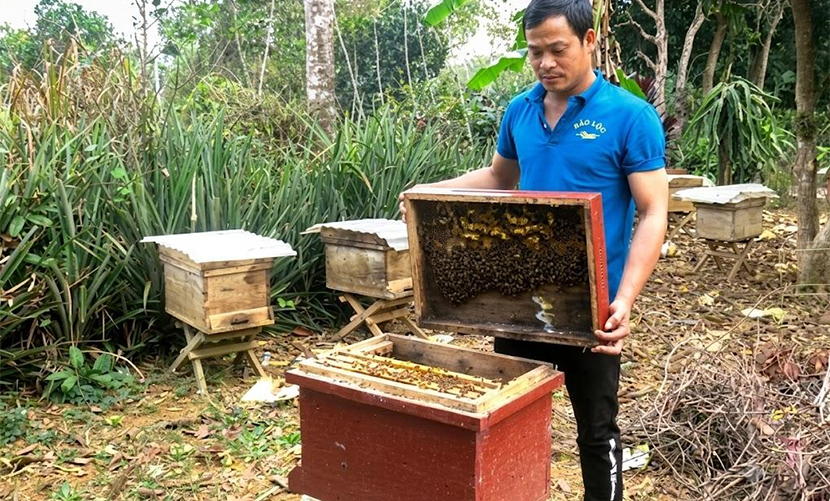
Vietnamese natural honey production
This growing commitment to product quality and brand management has significantly strengthened consumer confidence. Đỗ Vân Trang, a visitor from Phú Thọ Province, shared: “Cao Bằng forest honey is a local specialty with great branding potential. The honey is of excellent quality, with a mild flavor that is pleasant to enjoy. More importantly, it is a natural product closely connected to the local ecosystem and cultural identity. This gives it a distinctive advantage over many other honey products on the market today.”
As Cao Bằng honey continues to build its brand, OCOP certification has become an important gateway to enhancing market competitiveness and earning consumer trust. More than a mark of quality, the certification reflects a fundamental shift in production practices. It marks the transition from small-scale operations to a more professional approach that prioritizes quality standards, traceability, and product presentation. This transformation has helped bring Cao Bằng honey closer to consumers. It has also left a lasting impression on visitors.
“What impressed me most is that many local honey products have now earned OCOP certification,” Vân Trang added. “When I choose products like these, I feel much more confident about their quality. I am also happy to buy them as gifts because they truly represent the unique specialties of Cao Bằng.”
Vietnamese source: https://thuonghieusanpham.vn/nang-chat-luong-de-gia-tang-gia-tri-mat-ong-cao-bang
For more information about Vietnamese natural honey, please contact us:
Company: Agrideco Vietnam Co., Ltd.
Address: No 02, Alley 325 Kim Nguu, Vinh Tuy Ward, Hanoi, Vietnam
Tel/Kakao Talk/Whatsapp: +84 989 649 804
Website: https://agridecovietnam.com
Email: agridecovietnam@gmail.com