
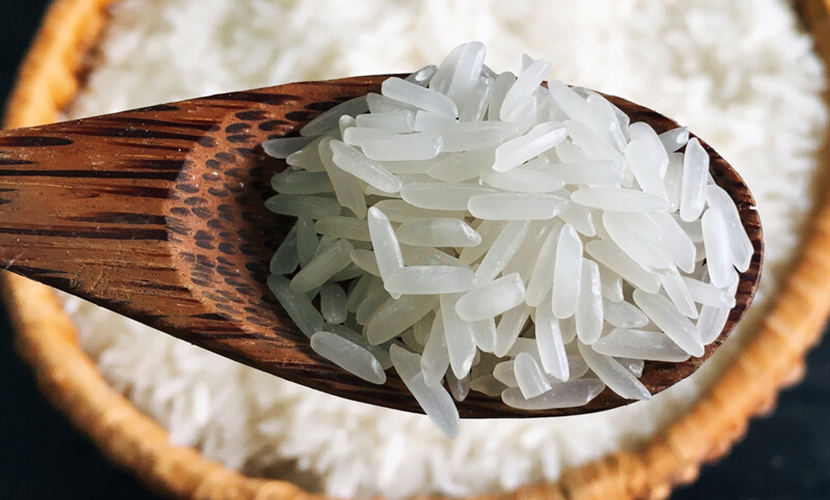
The export structure of Vietnamese rice products in 2026 continues to lean heavily toward fragrant and high-quality varieties. These varieties account for approximately 75% of total Vietnam’s rice exports, affirming the strategic shift toward value enhancement.
The total rice cultivation area nationwide in 2026 will reach approximately 7.09 million hectares. This figure goes down by more than 36,000 hectares compared to the previous year.
However, thanks to an increase in average yield to 6.14 tons per hectare (61.4 quintals per hectare), total paddy output for the year is likely to reach about 43.55 million tons. Accordingly, it is slightly higher than in 2025.
This development reflects a consistent trend of Vietnamese rice products. The sector is gradually reducing cultivated area while offsetting the decline through improved productivity and higher quality.
Within the production structure, the Mekong Delta continues to play a pivotal role as the key region determining the supply of Vietnamese rice exports. According to an estimate in 2026, the rice cultivation area in the region will reach 3.84 million hectares. Accordingly, this area is likely to produce around 24.34 million tons of paddy.
Vietnamese rice products
After deducting domestic consumption demand, total domestic consumption can be more clearly assessed. In addition, rice used for seeds, animal feed, and other purposes must also be subtracted. As a result, the estimated total domestic consumption amounts to about 8.9 million tons of paddy. The remaining 15.46 million tons of commercial paddy will be available for export. This volume is equivalent to roughly 7.73 million tons of Vietnamese rice products.
According to the Ministry of Agriculture and Environment, the 2026 export structure will continue to lean heavily toward high-quality and fragrant rice. The estimated volume is 5.8 million tons, accounting for 75% of total exports. Glutinous rice is likely to reach about 773,000 tons, representing 10%. The remaining 15% will consist of rice for processing.
This orientation reflects a clear shift in development thinking. Instead of directly competing in the ordinary white rice segment priced at only USD 300–350 per ton, Vietnamese rice is shifting its strategic focus. It is increasingly moving toward fragrant and specialty varieties to enhance value and competitiveness. These varieties offer higher value and face less competitive pressure.
At a press conference reviewing 2025 performance and outlining key tasks for 2026, Mr. Do Ha Nam, Chairman of the Vietnam Food Association, delivered an overview of the sector’s achievements. He stated that in 2025 Vietnam exported more than 8 million tons of rice, generating over USD 4.06 billion.
The average price of Vietnamese rice exports was about USD 510 per ton. Vietnam surpassed Thailand to rank second globally in rice exports, behind India. “We are cultivating more fragrant rice varieties, thereby reducing direct competition with ordinary white rice and building higher-value niche markets,” he emphasized.
Vietnamese rice exports
However, alongside advantages, market risks are also evident. Currently, nearly 45% of Vietnam’s rice exports depend on the Philippines. Any policy adjustment in this market immediately impacts Vietnam’s rice sector. In 2026, as the global rice market is forecast to remain volatile, increasing the share of fragrant rice production to around 70% is viewed as a sound strategic direction.
Amid complex market developments, the Ministry of Agriculture and Environment has proposed boosting exports during peak harvest months while ensuring compliance with minimum circulating stock requirements. Strict inventory reporting is also a foundation for building digital tools. These tools will help monitor and provide early warnings of supply-demand risks in the rice market.
The ministry also requires Vietnamese rice enterprises to be ready to supply the domestic market when necessary. This approach links export management with food security objectives. At the same time, trade promotion, market and product diversification, and digital transformation in management are being strengthened. In parallel, authorities are also developing rice export–import management scenarios to better respond to market fluctuations.
Another pressing issue concerns procurement and payment practices. According to Mr. Do Ha Nam, regulations requiring non-cash payments for transactions exceeding VND 5 million have created obstacles in rural and remote areas. Many farmers must travel dozens of kilometers to withdraw cash. As a result, some refuse to sell paddy unless paid directly, thereby disrupting the supply chain.
From a policy perspective, the Ministry has proposed amendments to Decree 107/2018/ND-CP on rice export business. It is also developing mechanisms to manage rice imports in order to protect domestic production and the rice value chain amid intensifying international competition.
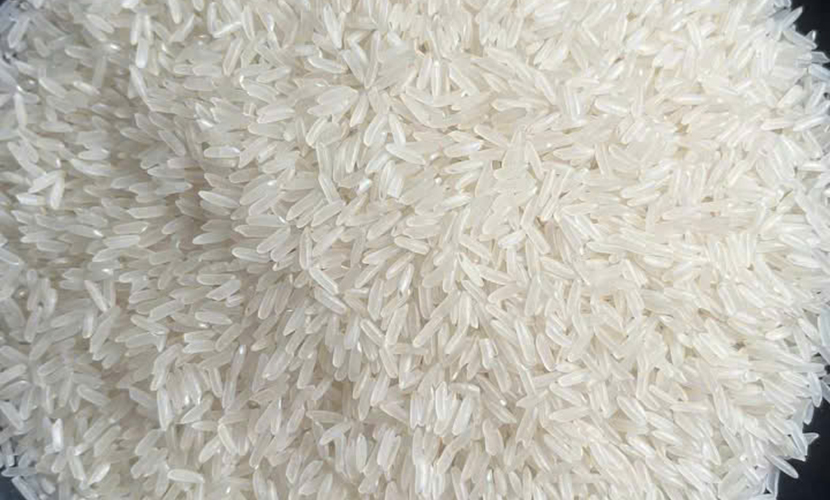
Vietnamese rice
In the long term, many experts believe that prioritizing fragrant rice, specialty rice, and “low-emission green rice” is an appropriate path. Agricultural expert Hoang Trong Thuy described this as a “reverse positioning” strategy. This strategy focuses not on volume but on quality to penetrate premium, less competitive, and more sustainable segments.
In fact, Vietnam is among the pioneering countries implementing large-scale low-emission rice production. According to the Ministry, high-quality rice now accounts for about 89% of total exports. Of this share, 60–70% consists of fragrant and specialty varieties. Brands such as ST24, ST25, Hạt Ngọc Trời, and VJ Pearl Rice are gradually strengthening their positions in the EU, the United States, and Japan.
From a state management perspective, Deputy Minister Phung Duc Tien acknowledged that overlapping administrative procedures and high logistics costs continue to undermine the competitiveness of Vietnamese rice. These challenges are particularly evident in the Mekong Delta.
However, over the next two years, several major transport infrastructure and regional logistics center projects are expected to be completed. Consequently, this will help reduce circulation costs and improve connectivity between raw material areas and export markets.
As cultivated rice areas continue to shrink while output remains stable thanks to higher productivity, Vietnamese rice industry faces a strong restructuring imperative. Increasing the share of fragrant and high-quality rice in total exports in 2026 is as a strategic pillar. It is likely to enhance value, mitigate market risks, and solidify the global standing of Vietnamese rice.
Vietnamese source: https://congthuong.vn/xuat-khau-gao-2026-gao-thom-chat-luong-cao-giu-vai-tro-chu-luc-440499.html